Does CMR improve aetiological sub-phenotyping beyond echocardiography in patients with elevated LV filling pressure? A prospective registry study (PREFER-CMR)
Aradhai Bana, Rui Li, Zia Mehmood, Craig Rogers, Ciaran Grafton-Clarke, Tiya Bali, David Hall, Mustapha Jamil, Liandra Ramachenderam, Uwais Dudhiya, Hilmar Spohr, Victoria Underwood, Rebekah Girling, Bahman Kasmai, Sunil Nair, Gareth Matthews, Pankaj Garg

TL;DR
This study shows that CMR provides better diagnostic accuracy than echocardiography in patients with high heart filling pressure, identifying conditions often missed by standard tests.
Contribution
The study demonstrates CMR's superior ability to sub-phenotype heart conditions compared to TTE in patients with elevated LV filling pressure.
Findings
CMR showed diagnostic discordance with TTE in 74% of cases.
CMR identified HFpEF and IHD in patients with normal or non-diagnostic TTE results.
CMR detected specific cardiomyopathies in cases with non-specific TTE findings.
Abstract
To evaluate the incremental diagnostic value and sub-phenotyping capability of Cardiovascular Magnetic Resonance (CMR) compared with Transthoracic Echocardiography (TTE) in patients with elevated left ventricular filling pressure (LVFP). Prospective registry study. [Results from ClinicalTrials.gov ID NCT05114785] A single NHS hospital in the UK. The primary outcome was the rate of diagnostic discordance between TTE and CMR. Secondary outcomes included the characterisation of specific pathologies identified by CMR where TTE was normal, non-diagnostic or provided a non-specific diagnosis. CMR demonstrated diagnostic discordance with TTE in 74% (n=194) of cases. In patients with a normal TTE (n=54), CMR identified heart failure with preserved ejection fraction (HFpEF) in 46% (n=25) and ischaemic heart disease (IHD) in 19% (n=10). For non-diagnostic TTE cases (n=15), CMR detected HFpEF…
Genes, proteins, chemicals, diseases, species, mutations and cell lines named across the full text — each resolved to its canonical identifier and authoritative record.
Click any figure to enlarge with its caption.
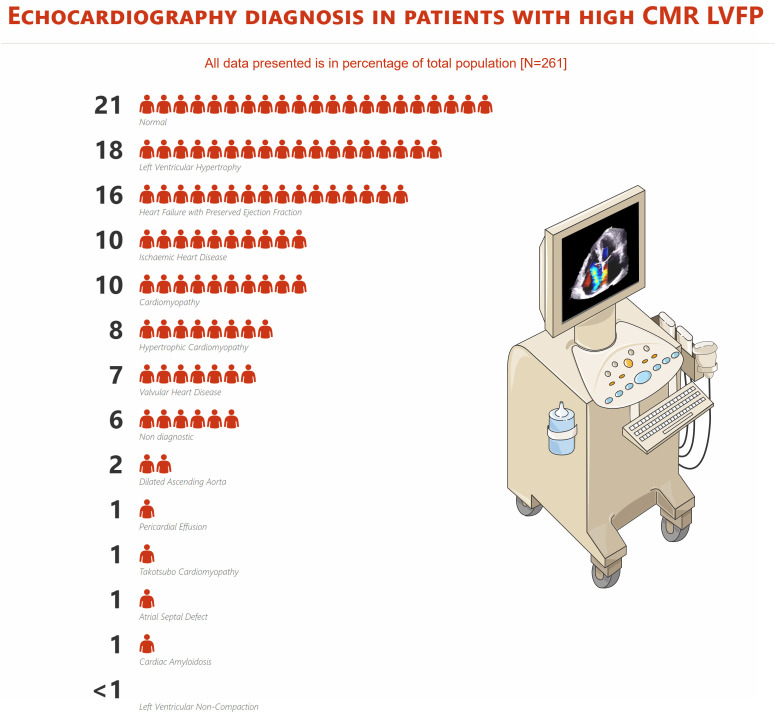 Figure 1
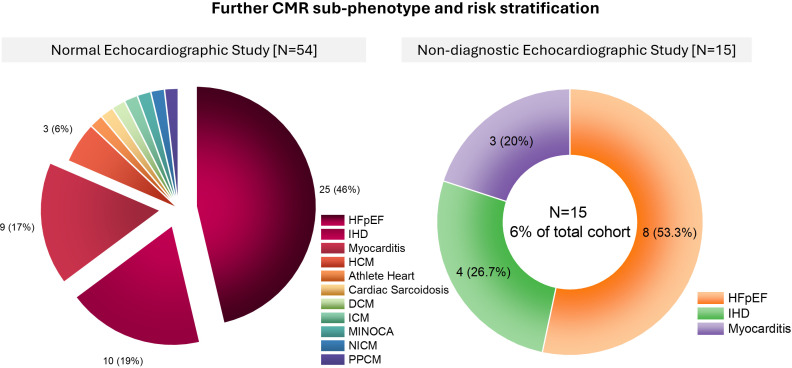 Figure 2
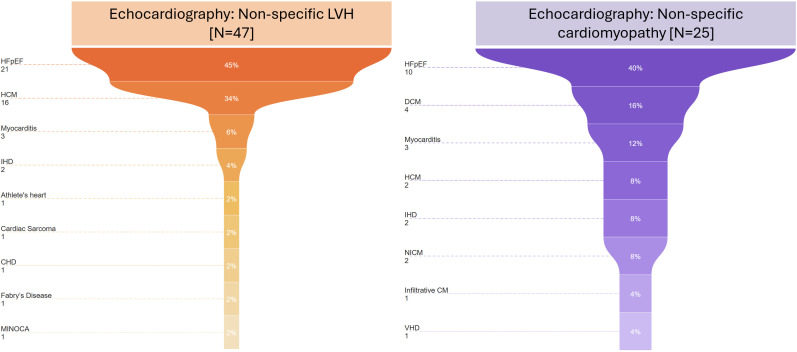 Figure 3
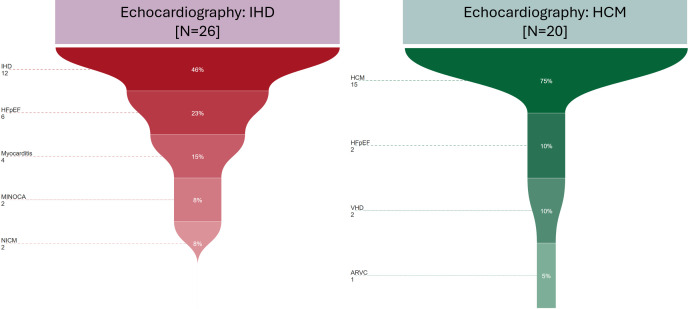 Figure 4
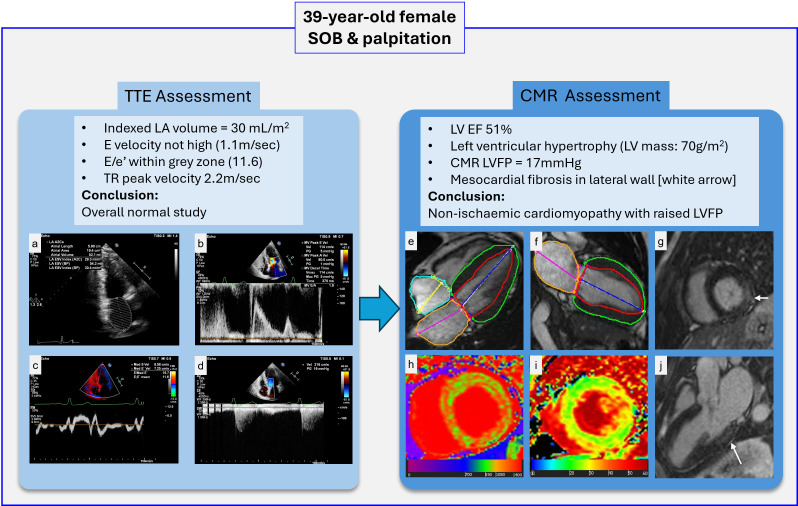 Figure 5
Peer Reviews
No public reviews on file for this paper yet. If you reviewed it on a platform where reviews are public (OpenReview, ICLR, NeurIPS, ICML), you can paste yours below so the community can read it here.
Videos
No videos yet. Explain this paper in a talk, walkthrough, or lecture? Add one.
Taxonomy
TopicsCardiovascular Function and Risk Factors · Cardiac pacing and defibrillation studies · Cardiac Imaging and Diagnostics