Decomposing gender gaps in HIV service outcomes
Gary Gaumer, Collins Gaba, Elad Daniels, Deborah Valerie Stenoien, Monica Jordan, VS Senthil Kumar, William Crown, Moaven Razavi, Allyala Nandakumar

TL;DR
This study explores why men have worse HIV outcomes than women in 13 African countries and identifies factors like stigma and gender norms as key barriers.
Contribution
The study uses the Blinder-Oaxaca decomposition method to quantify and analyze gender disparities in HIV outcomes across multiple indicators.
Findings
Males have poorer HIV outcomes than females in awareness, treatment, and viral suppression.
Structural barriers like stigma and gender norms significantly contribute to the gender gap.
The gender gap in HIV outcomes has decreased over time, especially due to improvements in structural barriers.
Abstract
This study uses Population-based HIV Impact Assessments survey data to examine factors associated with gender disparities in HIV outcomes. The analysis examined the share of adult males and females living with HIV who are aware of their status, are on treatment and have achieved viral load suppression across 13 African countries. The study then used the Blinder-Oaxaca statistical method to decompose these gaps into three core elements: (1) the part caused by observed differences in characteristics between the two groups, (2) the part caused by unobservable differences between the groups, often attributed to structural barriers and (3) the unexplained portion of the gap. The study then compares how these gaps and decompositions have changed over time. The model confirms that males have poorer outcomes than females across all three indicators. Factors contributing to these gender…
Genes, proteins, chemicals, diseases, species, mutations and cell lines named across the full text — each resolved to its canonical identifier and authoritative record.
Click any figure to enlarge with its caption.
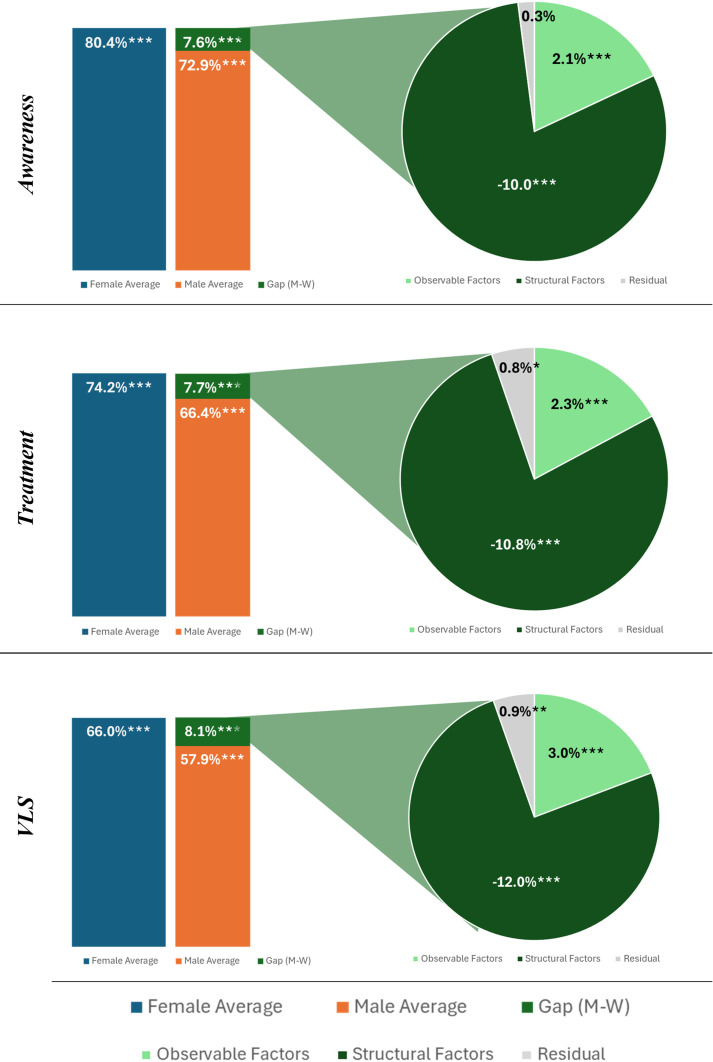 Figure 1
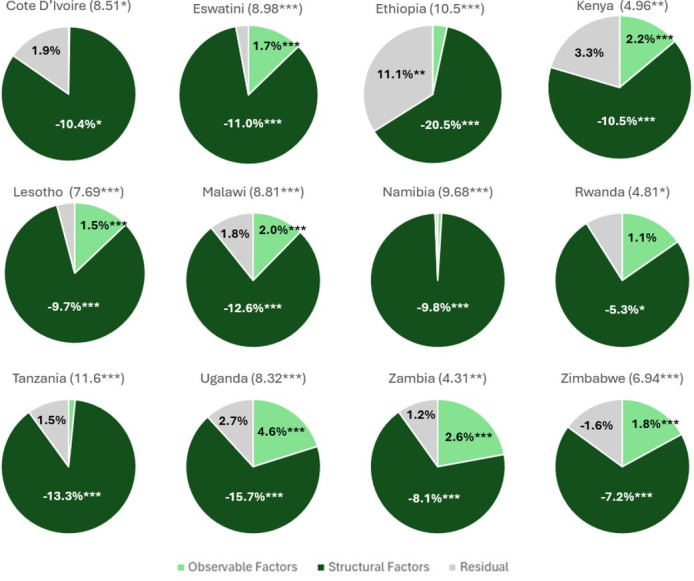 Figure 2
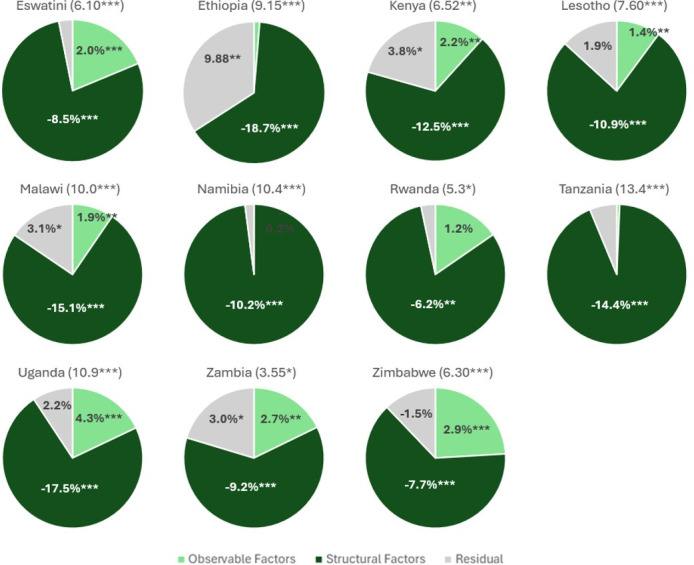 Figure 3
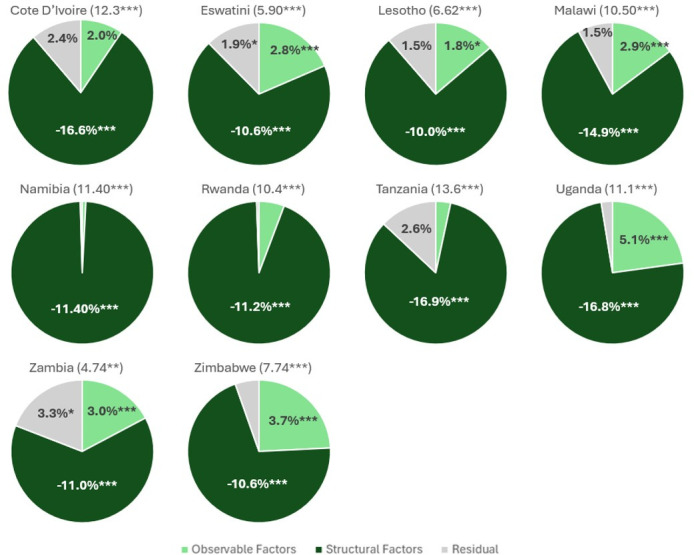 Figure 4
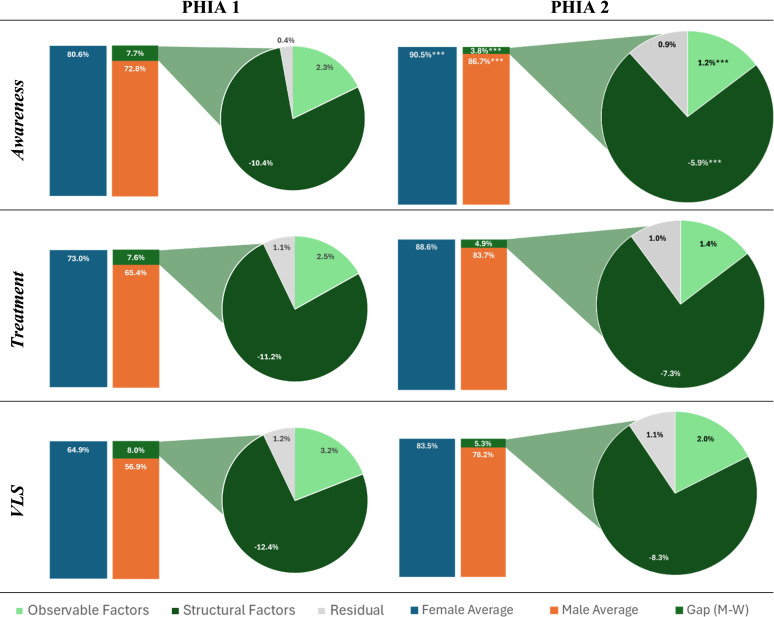 Figure 5
Peer Reviews
No public reviews on file for this paper yet. If you reviewed it on a platform where reviews are public (OpenReview, ICLR, NeurIPS, ICML), you can paste yours below so the community can read it here.
Videos
No videos yet. Explain this paper in a talk, walkthrough, or lecture? Add one.
Taxonomy
TopicsHIV/AIDS Research and Interventions · Adolescent Sexual and Reproductive Health · Global Maternal and Child Health