Understanding barriers and facilitators to education and rehabilitation interventions for South Asian people with long-term conditions: a systematic review and meta-ethnography
Emma Victoria Shiel, Jahanara Miah, Tapan Chattopadhyay, Abdur Rauf, Christopher Dalton, Nusrat Husain, Amy Blakemore

TL;DR
This study explores why South Asian people in the UK struggle to access health education and rehabilitation programs, and how cultural sensitivity can help improve their engagement.
Contribution
The study identifies specific cultural and societal barriers and facilitators for South Asian populations in accessing group health interventions.
Findings
Four themes emerged: faith, culture, communication, and safe space and professional relationship, each containing barriers and facilitators.
Current interventions often lack cultural sensitivity, especially for South Asian women, who face additional societal barriers.
Culturally tailored strategies, such as flexible scheduling and gender-sensitive adaptations, could improve engagement and outcomes.
Abstract
South Asian populations in the UK experience increased health risks related to long-term conditions, exacerbated by underdiagnosis, cultural differences in help-seeking behaviours, language barriers, low health literacy and a lack of culturally sensitive services. We know that group interventions that include education and rehabilitation, such as cardiac and pulmonary rehabilitation, are highly effective, but people from diverse communities often face barriers to access and engage with them. This review aims to synthesise evidence on the barriers and facilitators to education and rehabilitation interventions experienced by South Asian people living with long-term conditions. A systematic review of qualitative studies using meta-ethnography as the analytical approach to synthesis was conducted, following Noblit and Hare’s approach, eMERGe Reporting Guidance for Meta-Ethnography, and…
Genes, proteins, chemicals, diseases, species, mutations and cell lines named across the full text — each resolved to its canonical identifier and authoritative record.
Click any figure to enlarge with its caption.
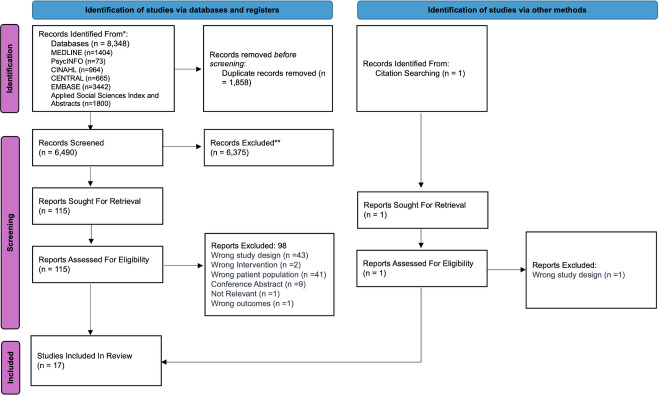 Figure 1
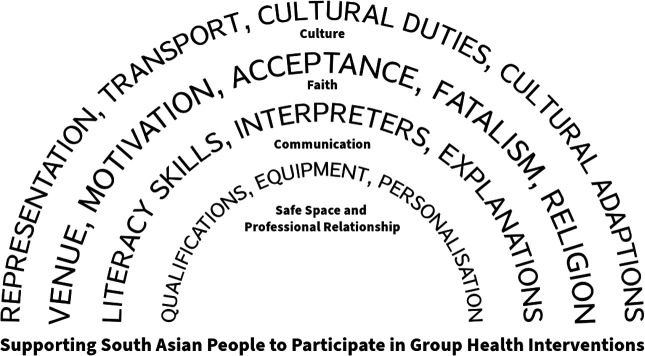 Figure 2
Peer Reviews
No public reviews on file for this paper yet. If you reviewed it on a platform where reviews are public (OpenReview, ICLR, NeurIPS, ICML), you can paste yours below so the community can read it here.
Videos
No videos yet. Explain this paper in a talk, walkthrough, or lecture? Add one.
Taxonomy
TopicsOccupational Therapy Practice and Research · Assistive Technology in Communication and Mobility · Stroke Rehabilitation and Recovery