Microencapsulated Quercetin and Bifidobacterium animalis Independently Preserve Jejunal Enteric Neurons During Colorectal Carcinogenesis
Lucas Casagrande, Carla Cristina de Oliveira Bernardo, Sabrina Silva Sestak, Maysa Pacheco Alvarez da Silva, Marcos Yudi Nagaoka Godoy, Jean‐Pierre Timmermans, Cesar Agostinho Ferreira, Tânia Cristina Alexandrino Becker, Erick Guilherme Stoppa, Waldiceu Aparecido Verri

TL;DR
This study shows that colorectal cancer harms neurons in the small intestine, and treatments with quercetin and B. animalis help protect these neurons.
Contribution
First evidence that colorectal carcinogenesis damages jejunal neurons and that quercetin or B. animalis can independently preserve them.
Findings
Colorectal carcinogenesis significantly reduced jejunal neuronal density and size.
Microencapsulated quercetin and B. animalis independently preserved neuronal density and improved nitrergic neurons.
Combined treatment did not enhance neuroprotective effects, suggesting independent mechanisms.
Abstract
Colorectal cancer (CRC) is a leading cause of cancer‐related deaths, significantly disrupting enteric neurotransmission within the colon. While the effects of CRC on the enteric nervous system (ENS) of the colon are well documented, its impact on the small intestine remains underexplored. This study aims to investigate the influence of colorectal carcinogenesis on the small intestine's ENS and evaluate the individual neuroprotective effects of microencapsulated quercetin and Bifidobacterium animalis . Wistar rats were subjected to chemically induced colorectal carcinogenesis, followed by 14 weeks of treatment with microencapsulated quercetin and B. animalis . Gastrointestinal transit times were assessed, and colonic and jejunal samples underwent histopathological and immunohistochemical analyses to evaluate neuronal markers (HuC/D, nNOS, VIP). Cholinergic neurons were not directly…
Genes, proteins, chemicals, diseases, species, mutations and cell lines named across the full text — each resolved to its canonical identifier and authoritative record.
Click any figure to enlarge with its caption.
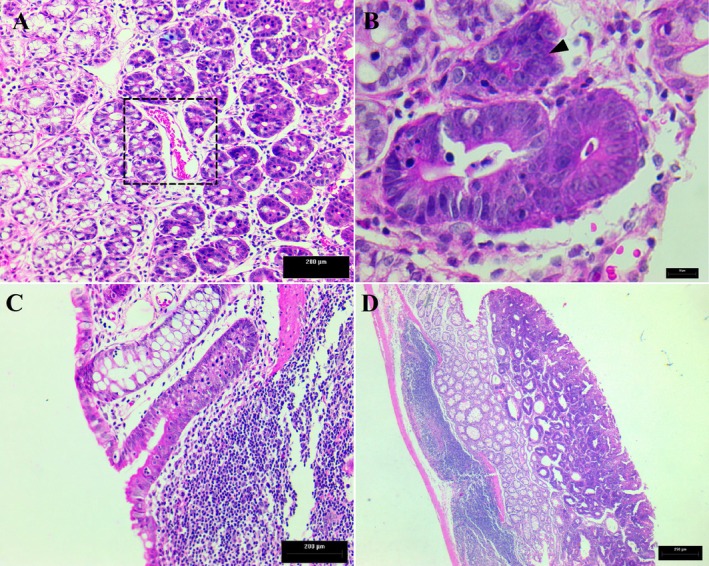 Figure 1
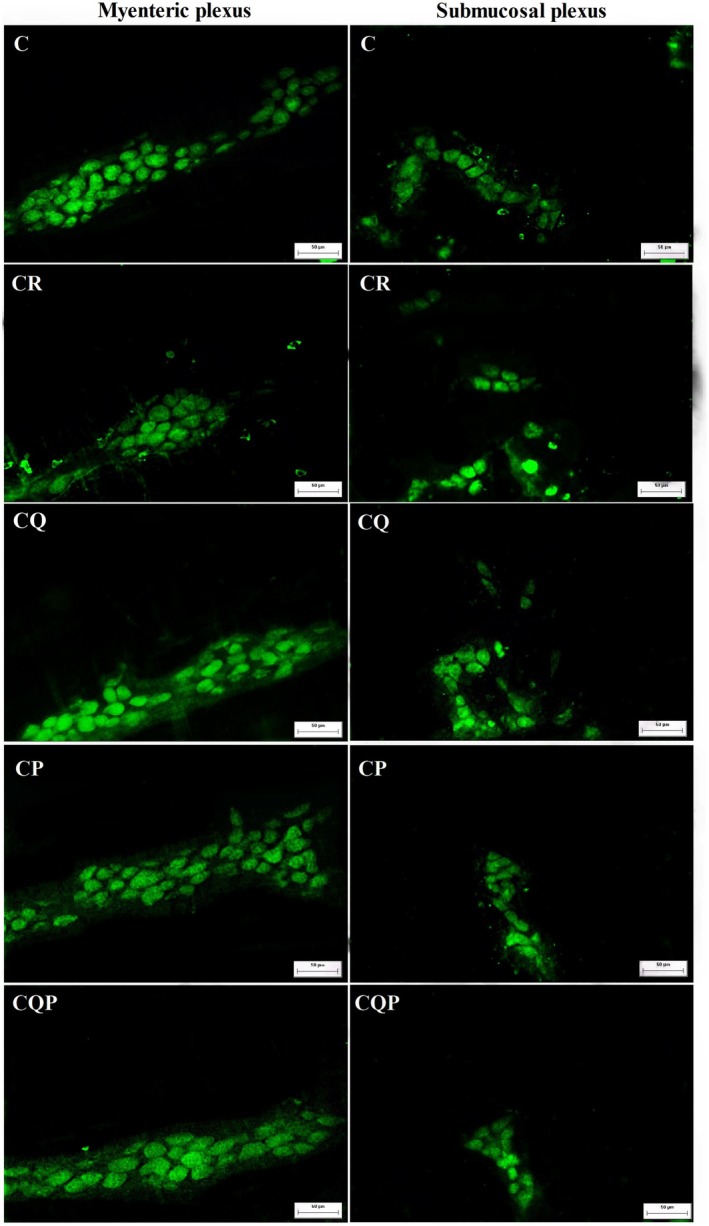 Figure 2
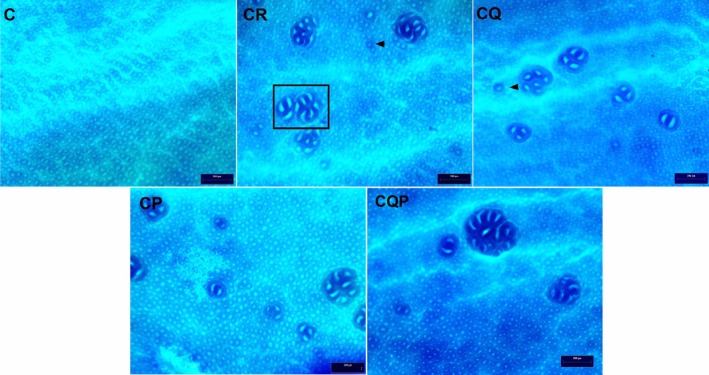 Figure 3
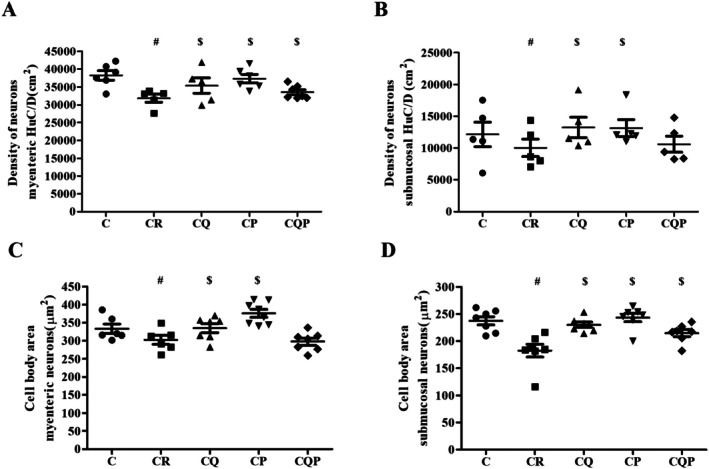 Figure 4
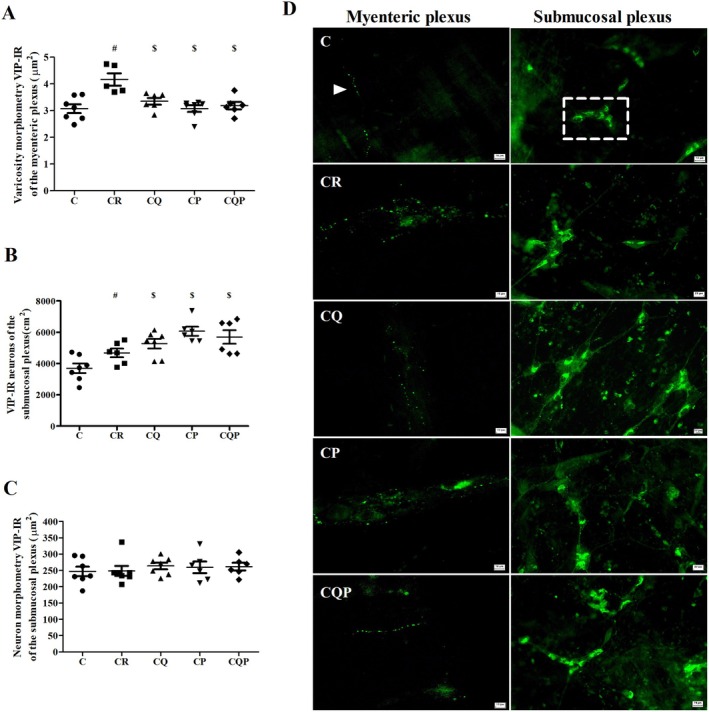 Figure 5
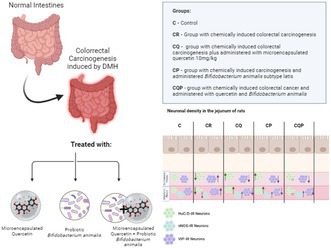 Figure 6
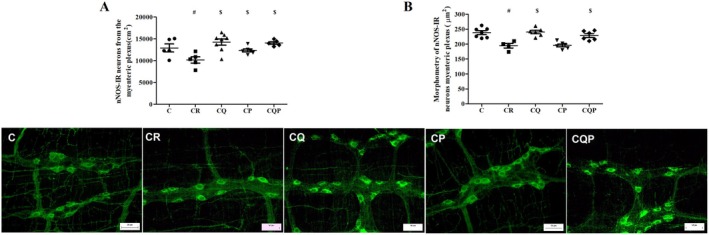 Figure 7
Peer Reviews
No public reviews on file for this paper yet. If you reviewed it on a platform where reviews are public (OpenReview, ICLR, NeurIPS, ICML), you can paste yours below so the community can read it here.
Videos
No videos yet. Explain this paper in a talk, walkthrough, or lecture? Add one.
Taxonomy
TopicsGastrointestinal motility and disorders · Congenital gastrointestinal and neural anomalies · Enhanced Recovery After Surgery