ASTWAS: modeling alternative polyadenylation and SNP effects in kernel-driven TWAS reveal novel genetic associations for complex traits
Yan Wang, Lei Wang, Nan Sheng, Jie Hong, Yunzhi Liu, Pengze Wu, XinFei Wang, Shuyan Zhang, Chen Cao

TL;DR
This paper introduces ASTWAS, a new method that improves genetic association studies by modeling alternative polyadenylation and SNP effects, uncovering novel genes linked to complex diseases like type 1 diabetes and rheumatoid arthritis.
Contribution
ASTWAS introduces a kernel-driven framework that models both linear and nonlinear SNP effects on APA, outperforming traditional TWAS methods in detecting genetic associations.
Findings
ASTWAS shows higher statistical power than linear APA-TWAS in simulations with various genetic architectures.
ASTWAS identifies novel candidate genes like GABBR1 and RGL2 in immune-related pathways for complex diseases.
The method is implemented in Python and available on GitHub.
Abstract
Alternative polyadenylation (APA) of \documentclass[12pt]{minimal} \usepackage{amsmath} \usepackage{wasysym} \usepackage{amsfonts} \usepackage{amssymb} \usepackage{amsbsy} \usepackage{upgreek} \usepackage{mathrsfs} \setlength{\oddsidemargin}{-69pt} \begin{document} \end{document}untranslated regions (\documentclass[12pt]{minimal} \usepackage{amsmath} \usepackage{wasysym} \usepackage{amsfonts} \usepackage{amssymb} \usepackage{amsbsy} \usepackage{upgreek} \usepackage{mathrsfs} \setlength{\oddsidemargin}{-69pt} \begin{document} \end{document}UTRs) is a pervasive mechanism that regulates mRNA stability, localization, and translational efficiency by generating isoforms with distinct \documentclass[12pt]{minimal} \usepackage{amsmath} \usepackage{wasysym} \usepackage{amsfonts} \usepackage{amssymb} \usepackage{amsbsy} \usepackage{upgreek} \usepackage{mathrsfs}…
Genes, proteins, chemicals, diseases, species, mutations and cell lines named across the full text — each resolved to its canonical identifier and authoritative record.
Click any figure to enlarge with its caption.
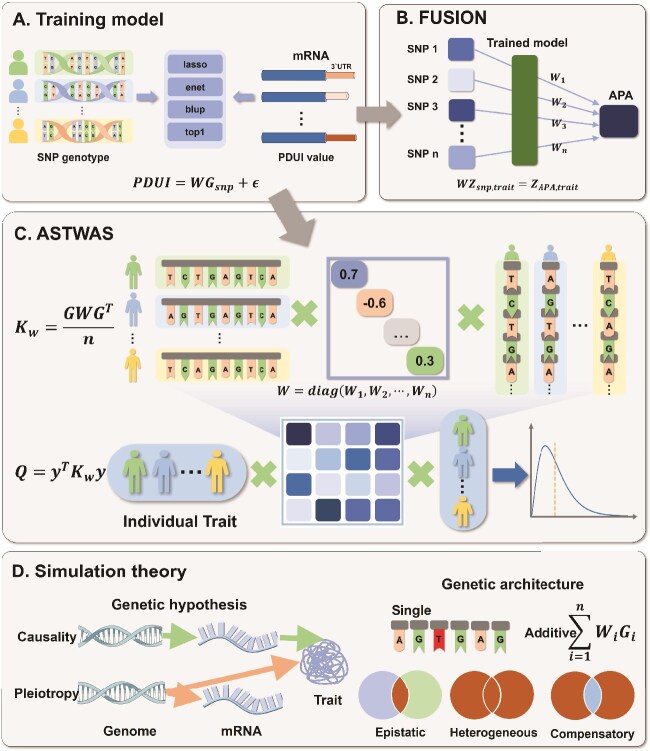 Figure 1
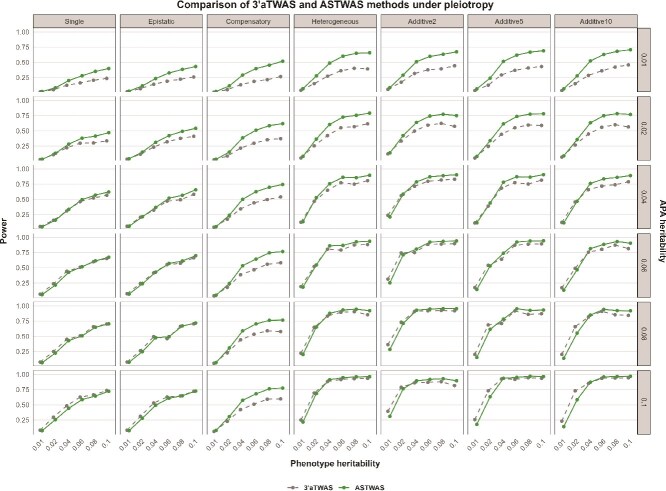 Figure 2
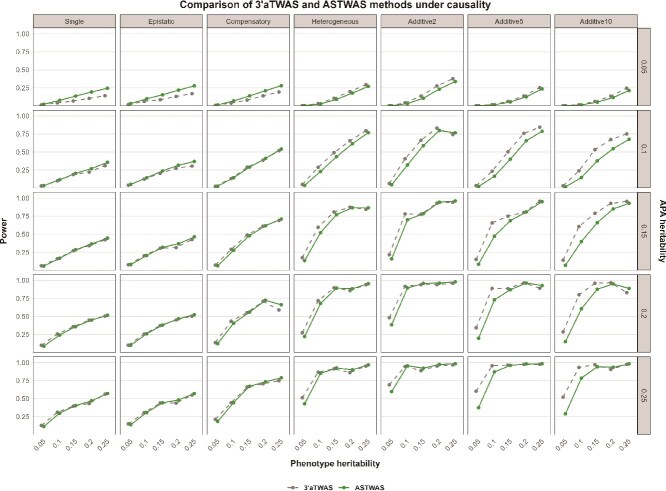 Figure 3
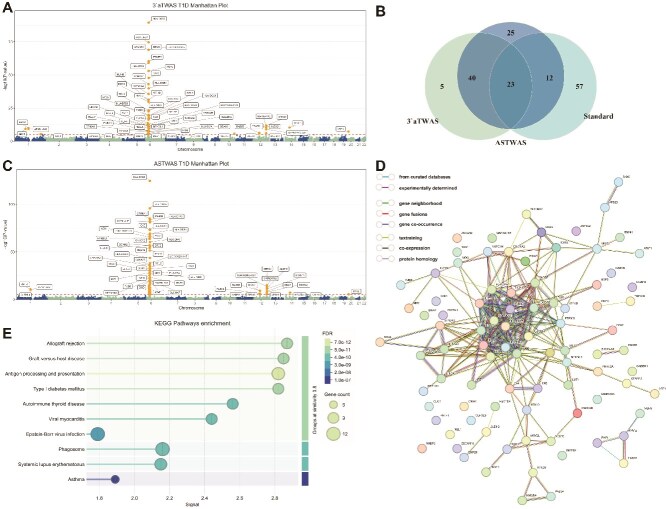 Figure 4
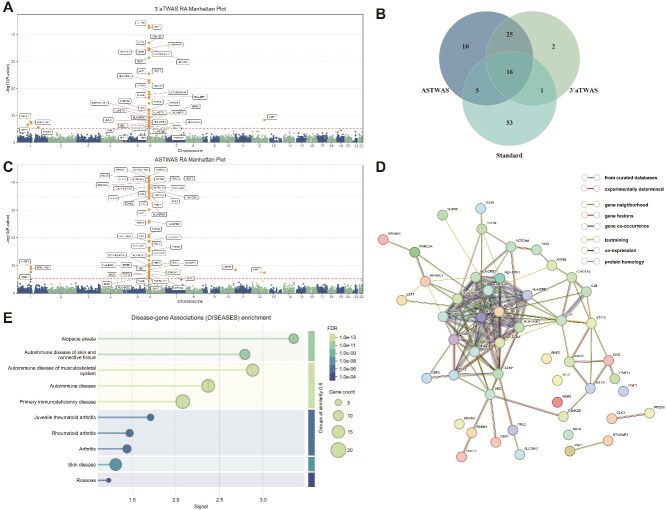 Figure 5
Peer Reviews
No public reviews on file for this paper yet. If you reviewed it on a platform where reviews are public (OpenReview, ICLR, NeurIPS, ICML), you can paste yours below so the community can read it here.
Videos
No videos yet. Explain this paper in a talk, walkthrough, or lecture? Add one.
Taxonomy
TopicsRNA Research and Splicing · Genetic Associations and Epidemiology · Genetic Neurodegenerative Diseases