Preventing Age-Related Nuclear Cataract Development – Is Cholesterol the Key?
Witold Karol Subczynski, Laxman Mainali, Ross Frederick Collery, Marta Pasenkiewicz-Gierula, Justyna Widomska

TL;DR
This paper explores how high cholesterol levels in eye lens cells may protect against age-related cataracts.
Contribution
The paper proposes cholesterol as a potential key factor in preventing cataract formation through multiple experimental observations.
Findings
High cholesterol in lens membranes preserves lipid bilayer properties during aging.
Cholesterol reduces cytoplasmic α-crystallin binding, minimizing light scattering.
Genetic cholesterol upregulation in zebrafish prevents cataracts, while statins induce them.
Abstract
The cholesterol content in the membranes of the fiber cells of the human eye lens is significantly higher than in any other cell of the body. This review examines the existing literature on the origin and function of this unique feature as one of multiple factors that may help protect against age-related cataract formation throughout a person's life. Three independent sets of experimental data are highly suggestive that high cholesterol content in the fiber cell membranes may protect against cataract formation during aging: (1) saturating cholesterol content preserves the physical properties of the lipid bilayer of the lens cell membranes when the lipid composition of the bilayer changes; (2) high cholesterol content hinders the binding of cytoplasmic α-crystallin to the lipid membrane, which reduces light scattering; and (3) genetic upregulation of cholesterol biogenesis in zebrafish…
Genes, proteins, chemicals, diseases, species, mutations and cell lines named across the full text — each resolved to its canonical identifier and authoritative record.
Click any figure to enlarge with its caption.
 Figure 1
 Figure 2
 Figure 3
 Figure 4
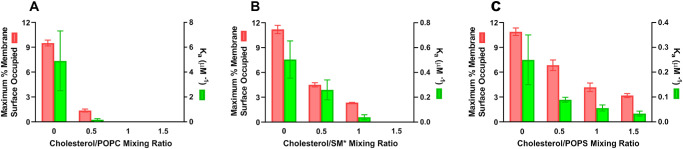 Figure 5
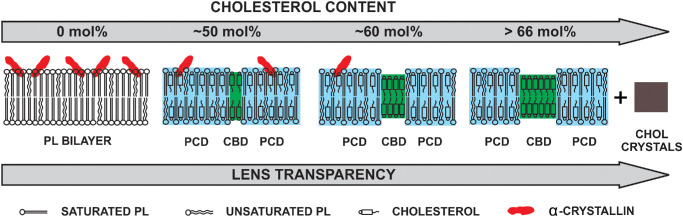 Figure 6
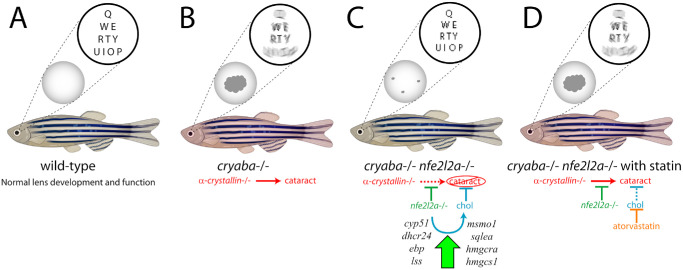 Figure 7
Peer Reviews
No public reviews on file for this paper yet. If you reviewed it on a platform where reviews are public (OpenReview, ICLR, NeurIPS, ICML), you can paste yours below so the community can read it here.
Videos
No videos yet. Explain this paper in a talk, walkthrough, or lecture? Add one.
Taxonomy
TopicsConnexins and lens biology · Intraocular Surgery and Lenses · Ophthalmology and Visual Impairment Studies