Turning heterogeneity of statistical epistasis networks to an advantage
Diane Duroux, Federico Melograna, Héctor Climente-González, Bowen Fan, Andrew Walakira, Edoardo Efrem Gervasoni, Zuqi Li, Damian Roqueiro, Fabio Stella, Kristel Van Steen

TL;DR
This paper introduces a workflow to manage inconsistencies in genetic interaction studies, turning diverse results into useful insights for biomedical research.
Contribution
A novel workflow is introduced to characterize and leverage heterogeneity in GWAIS results using Statistical Epistasis Networks.
Findings
Comparing SNP-pair rankings and SENs helps identify clusters of protocols with similar outcomes.
SENs enable visualization of epistasis detection variation and prioritize recurrent interactions.
Aggregating SENs can enhance the utility of GWAIS for understanding disease genetics.
Abstract
Epistasis detection is hindered by multiple challenges, including the proliferation of analytic tools and the diverse methodological choices made in Genome-Wide Association Interaction Studies (GWAIS). These factors often produce inconsistent and only partially overlapping results, with individual methods emphasizing distinct aspects of epistasis. Although comparative evaluations of GWAIS approaches exist, they generally do not identify the factors responsible for methodological discrepancies or assess their implications for biomedical research. Consequently, it remains unclear which features of GWAIS strategies contribute most to these differences and which methods are most appropriate for revealing specific genetic architectures. Here, we present a workflow designed to characterize heterogeneity in GWAIS results and derive practical recommendations systematically. First, we assess…
Genes, proteins, chemicals, diseases, species, mutations and cell lines named across the full text — each resolved to its canonical identifier and authoritative record.
Click any figure to enlarge with its caption.
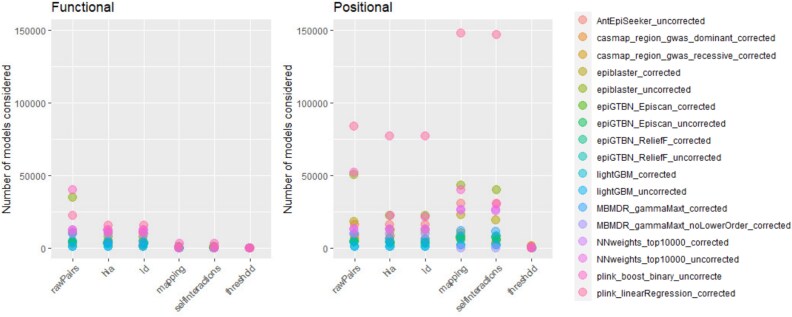 Figure 1
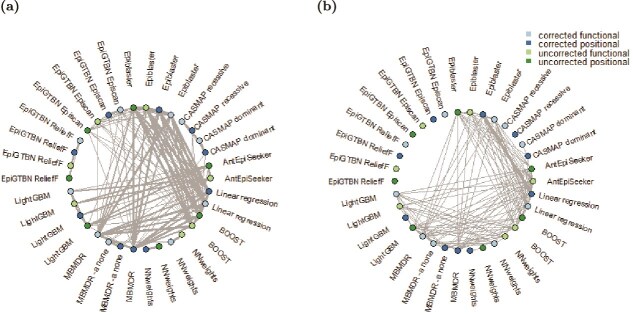 Figure 2
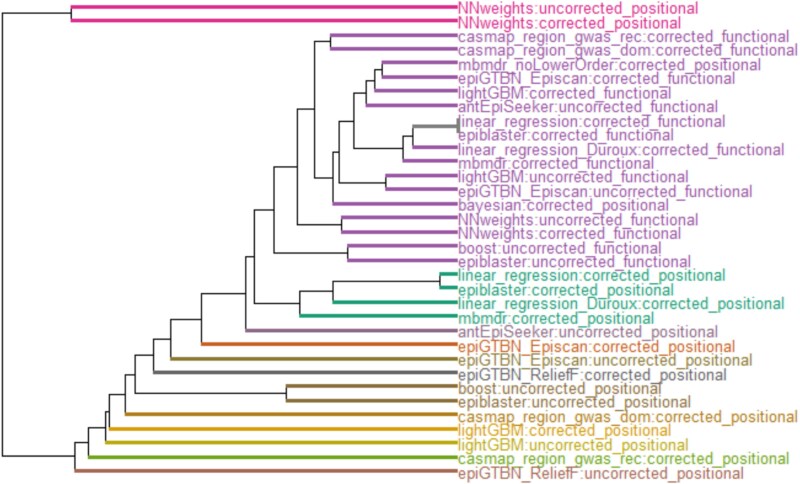 Figure 3
Peer Reviews
No public reviews on file for this paper yet. If you reviewed it on a platform where reviews are public (OpenReview, ICLR, NeurIPS, ICML), you can paste yours below so the community can read it here.
Videos
No videos yet. Explain this paper in a talk, walkthrough, or lecture? Add one.
Taxonomy
TopicsGenetic Associations and Epidemiology · Bioinformatics and Genomic Networks · Single-cell and spatial transcriptomics