Protein tyrosine phosphatase inactivation by electrophilic tyrosine modification
Madeleine L. Ware, David M. Leace, Zihan Qu, Quentin Schaefer, Sagar D. Vaidya, Mikayla L. Horvath, Zhihong Li, Yunpeng Bai, Zhong-Yin Zhang, Ku-Lung Hsu

TL;DR
This paper introduces a new covalent inhibitor that inactivates a specific protein tyrosine phosphatase by modifying a functional tyrosine, offering a novel approach for targeting these enzymes.
Contribution
The study presents a tyrosine-reactive covalent inhibitor with molecular glue activity through a ligand-induced protein tethering mechanism.
Findings
DML189 covalently modifies SHP2 at Y279, inducing reversible disulfide tethering and monomer loss.
Ligand-induced protein tethering (LIPT) was observed uniquely on SHP2, not on PTP1B, LYP, or SHP1.
Crosslinking mass spectrometry revealed regulatory cysteine tethering events after DML189 modification.
Abstract
Covalent protein tyrosine phosphatase (PTP) inhibitors principally target the catalytic cysteine, which is highly conserved and presents challenges for achieving selectivity across the PTP family. Here, we identified a tyrosine-reactive covalent inhibitor for SHP2 (DML189) with secondary molecular glue activity via a ligand induced protein tethering (LIPT) mechanism. We detected ligand binding at Y279, which is in proximity to the catalytic cysteine on SHP2 and has known functional and pathogenic properties. Covalent SHP2 modification by DML189 induced reversible disulfide tethering and monomer loss that was not observed to the same extent on PTP1B, LYP, or SHP1. Crosslinking mass spectrometry detected unique tethering events involving regulatory cysteines after DML189 modification on SHP2. Together, we discovered a tyrosine reactive inhibitor that targets functional sites on SHP2 and…
Genes, proteins, chemicals, diseases, species, mutations and cell lines named across the full text — each resolved to its canonical identifier and authoritative record.
Click any figure to enlarge with its caption.
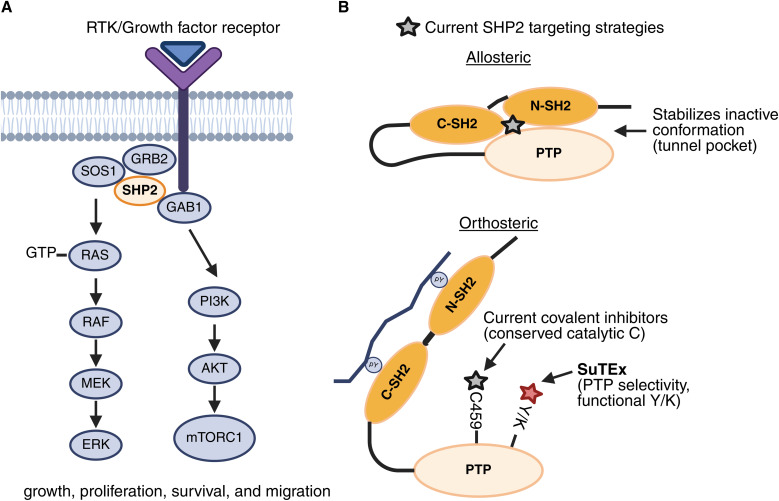 Figure 1
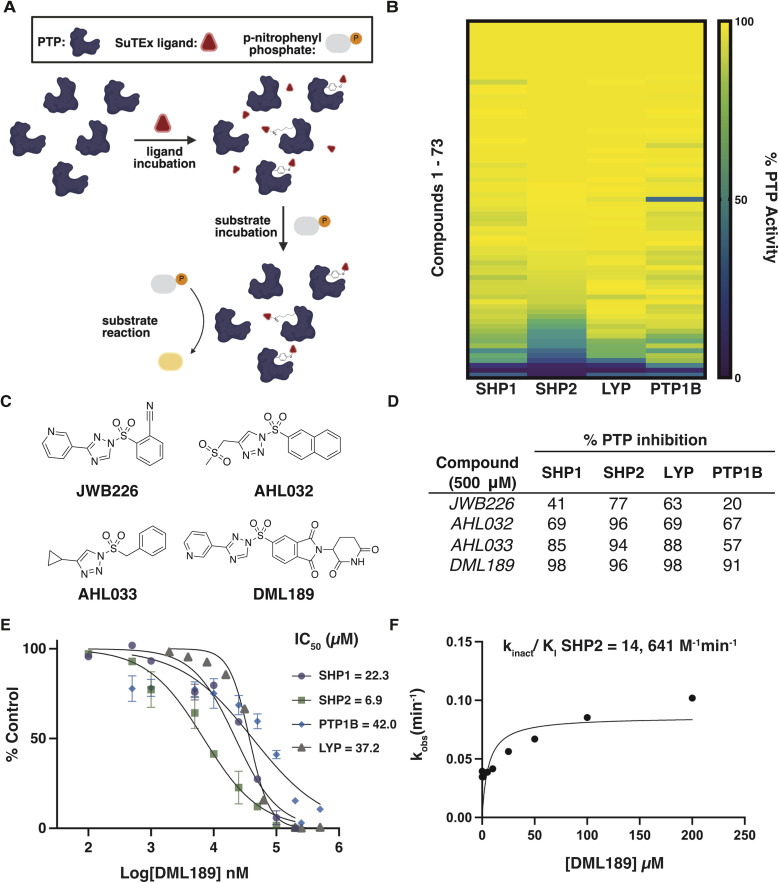 Figure 2
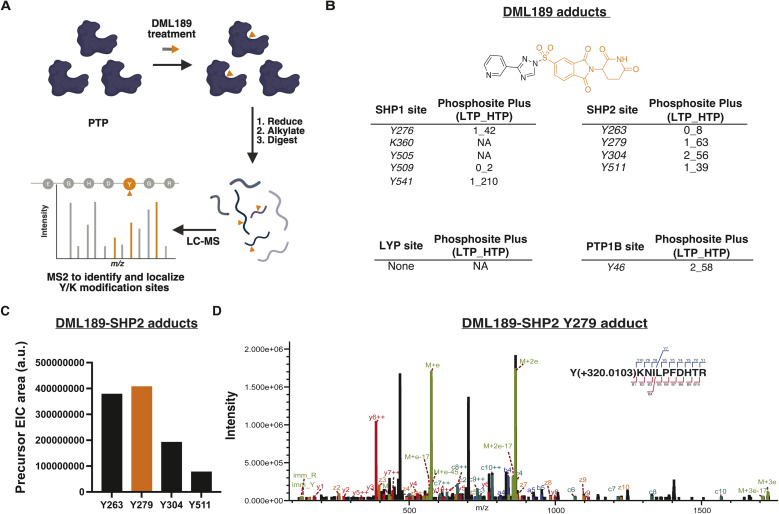 Figure 3
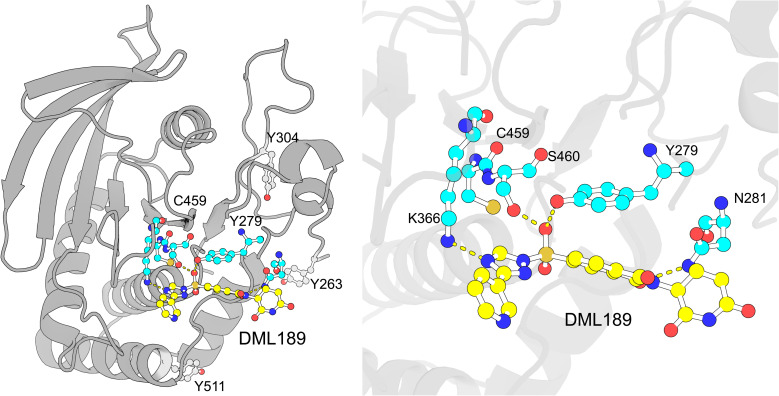 Figure 4
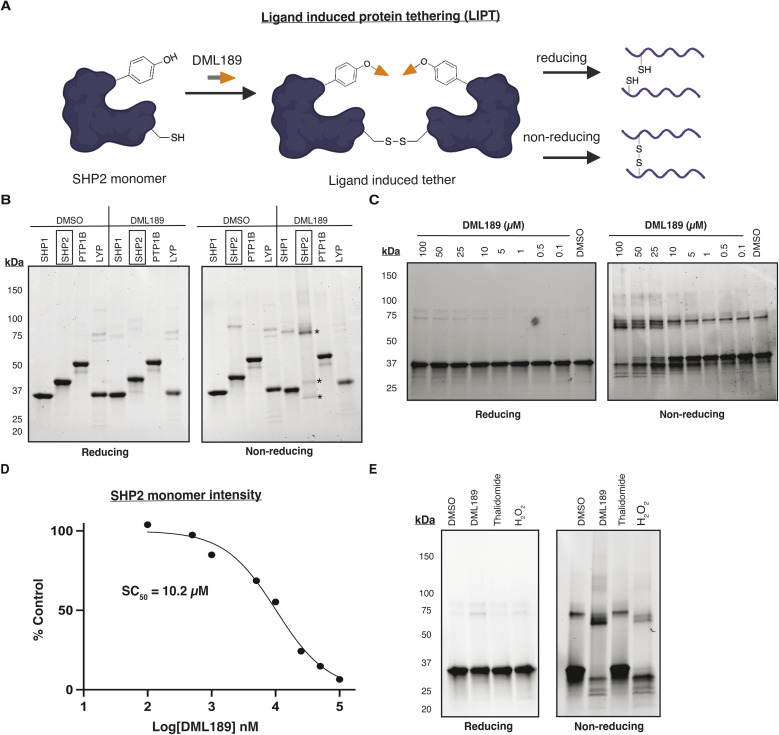 Figure 5
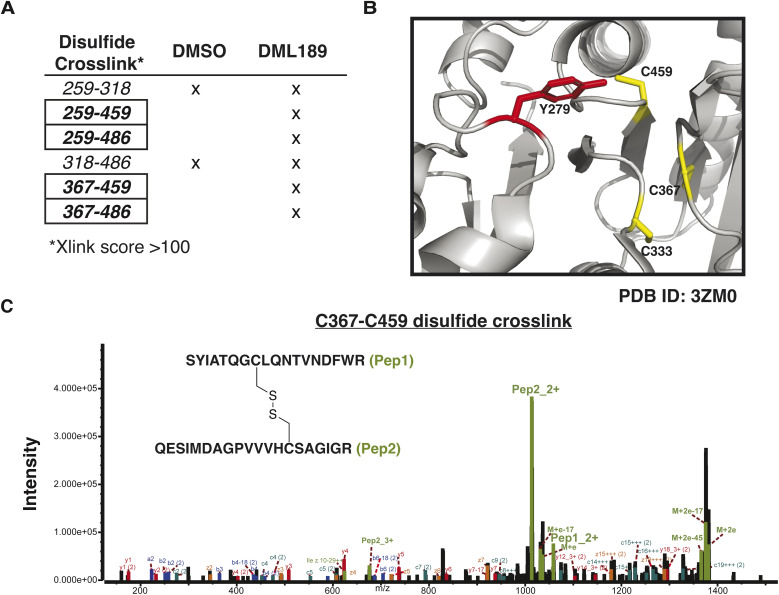 Figure 6
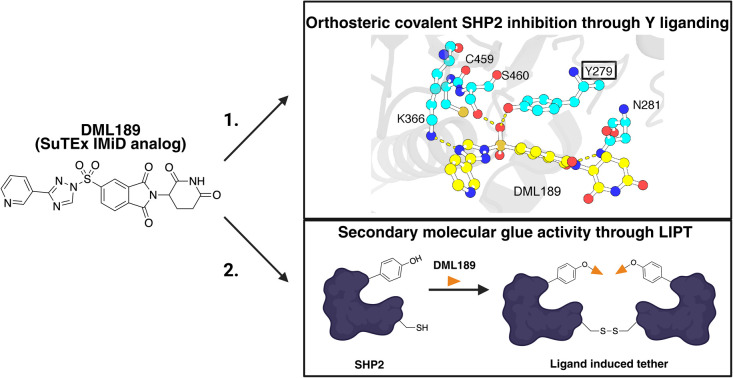 Figure 7
Peer Reviews
No public reviews on file for this paper yet. If you reviewed it on a platform where reviews are public (OpenReview, ICLR, NeurIPS, ICML), you can paste yours below so the community can read it here.
Videos
No videos yet. Explain this paper in a talk, walkthrough, or lecture? Add one.
Taxonomy
TopicsProtein Tyrosine Phosphatases · Diabetes and associated disorders · Microbial metabolism and enzyme function