Clinical Trial: Efficacy and Safety of Velusetrag in Chronic Intestinal Pseudo‐Obstruction: A Randomized, Phase 2, Placebo‐Controlled, Crossover, Multiple (n = 1), Proof‐of‐Concept Study
Carolina Malagelada, Roberto De Giorgio, Rosanna Francesca Cogliandro, Luis Alcalá‐González, Anna Costanzini, Valeria Scuderi, Sara Manzoni, Elena Pasquali, Jan Tack, Vincenzo Stanghellini

TL;DR
A small clinical trial tested velusetrag, a drug that may improve gut movement, in patients with a rare digestive disorder called chronic intestinal pseudo-obstruction.
Contribution
This is the first phase 2, placebo-controlled trial to evaluate the 5-HT4 receptor agonist velusetrag in patients with chronic intestinal pseudo-obstruction.
Findings
Velusetrag was associated with improved gastrointestinal symptoms compared to placebo, though not statistically significant.
The drug was generally well tolerated with no serious adverse events reported.
The study suggests potential therapeutic benefit of velusetrag in this rare condition.
Abstract
Chronic intestinal pseudo‐obstruction (CIPO) is a rare, severe disorder of gastrointestinal motility. Although 5‐hydroxytryptamine type 4 (5‐HT4) receptor agonists stimulate gastrointestinal motility, few trials have assessed their therapeutic effects in patients with CIPO. To assess the efficacy and safety of velusetrag, a highly selective 5‐HT4 receptor agonist, in patients with CIPO. This was a phase 2, placebo‐controlled, crossover, multiple (n = 1), multicenter, double‐blind, proof‐of‐concept trial. Eligible patients were aged 18–80 years, had CIPO (idiopathic or secondary to neurodegenerative disorders) and received ≥ 30% of their daily caloric intake orally. Over four periods, each of four weeks, patients were randomly assigned to once‐daily, oral velusetrag 15 mg (two periods) or placebo (two periods), with a 2‐week washout between each treatment period. The primary endpoint…
Genes, proteins, chemicals, diseases, species, mutations and cell lines named across the full text — each resolved to its canonical identifier and authoritative record.
Click any figure to enlarge with its caption.
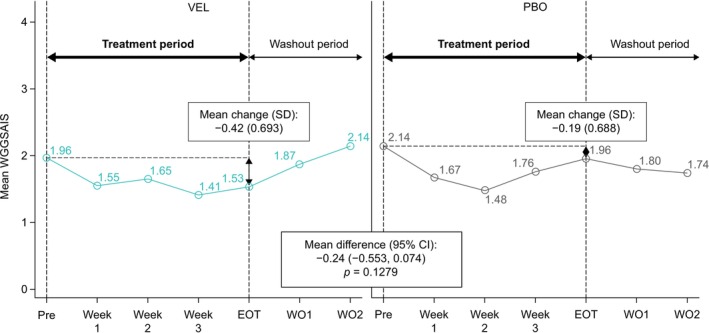 Figure 1
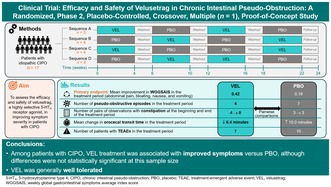 Figure 2
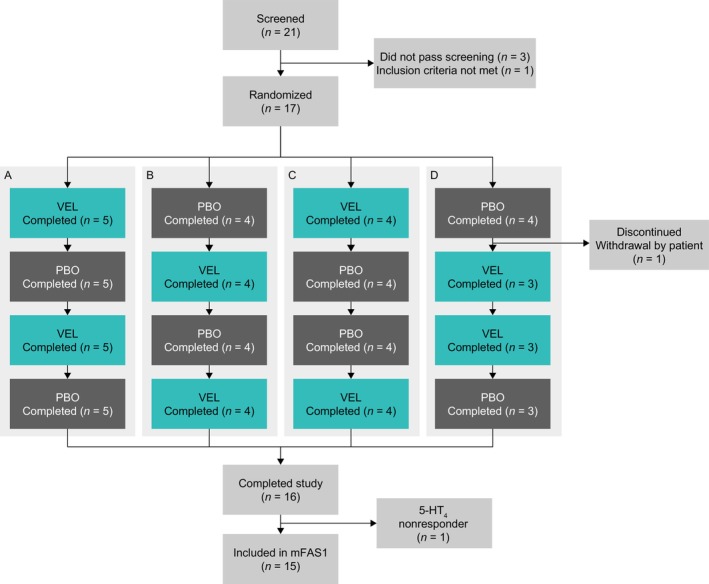 Figure 3
Peer Reviews
No public reviews on file for this paper yet. If you reviewed it on a platform where reviews are public (OpenReview, ICLR, NeurIPS, ICML), you can paste yours below so the community can read it here.
Videos
No videos yet. Explain this paper in a talk, walkthrough, or lecture? Add one.
Taxonomy
TopicsGastrointestinal motility and disorders · Gastroesophageal reflux and treatments · Intestinal and Peritoneal Adhesions