Preoperative Risk Stratification of Adnexal Masses Using the International Ovarian Tumor Analysis (IOTA) Simple Rules and Risk of Malignancy Index (RMI) 2: A Prospective Diagnostic Study From a Tertiary Centre in Southern India
Kaarthika T, Sasikala Kathiresan

TL;DR
This study compares two methods for predicting if ovarian masses are cancerous, finding that the IOTA Simple Rules perform better than RMI 2 in a South Indian hospital setting.
Contribution
The study evaluates IOTA Simple Rules and RMI 2 in a real-world clinical setting in Southern India, providing new evidence for their diagnostic performance.
Findings
IOTA Simple Rules had higher sensitivity (90.9%) and comparable specificity (95.1%) compared to RMI 2 (72.7% sensitivity, 97.8% specificity).
IOTA Simple Rules were conclusive in 92.9% of cases, with high accuracy (94.2%) and a strong AUC of 0.930.
Alternative coding of inconclusive IOTA results maintained robust negative predictive value and accuracy.
Abstract
Objective: The objective of this study was to compare the diagnostic accuracy of International Ovarian Tumor Analysis (IOTA) Simple Rules with Risk of Malignancy Index 2 (RMI 2) for preoperative stratification of adnexal masses, and to assess the performance of serum CA-125 and handling inconclusive IOTA results, using histopathology as the reference standard. Methods: A prospective diagnostic accuracy study was conducted at a tertiary care center in South India, enrolling 56 women aged ≥18 years with ultrasonographically detected adnexal masses scheduled for surgery. IOTA Simple Rules and RMI 2 scoring were applied preoperatively. All patients underwent surgical excision, and the final diagnosis was based on histopathology. Diagnostic metrics, including sensitivity, specificity, positive predictive value (PPV), negative predictive value (NPV), accuracy, and area under the ROC curve…
Genes, proteins, chemicals, diseases, species, mutations and cell lines named across the full text — each resolved to its canonical identifier and authoritative record.
Click any figure to enlarge with its caption.
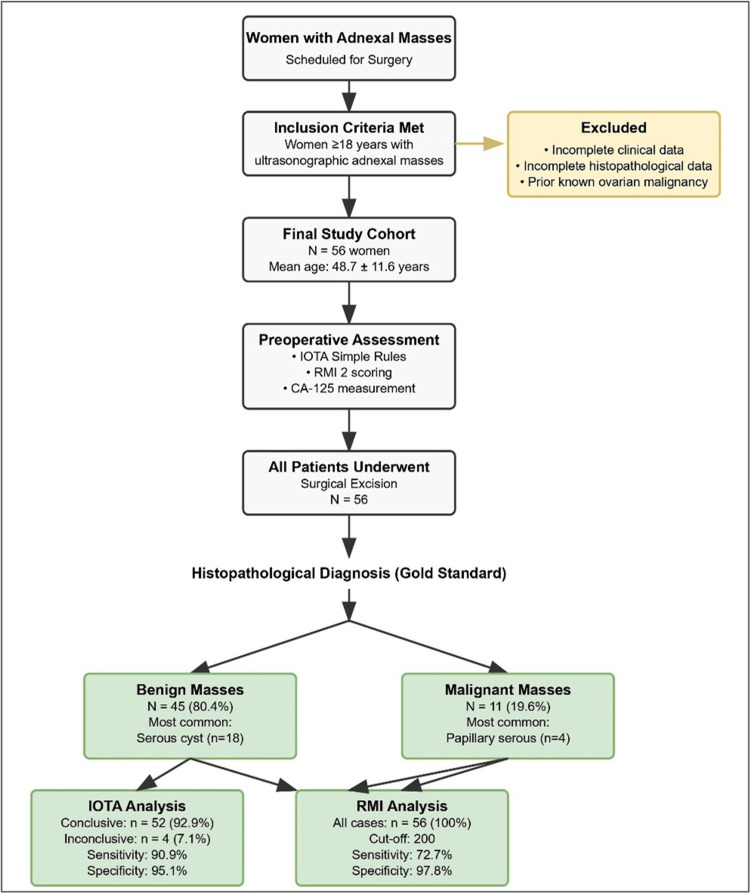 Figure 1
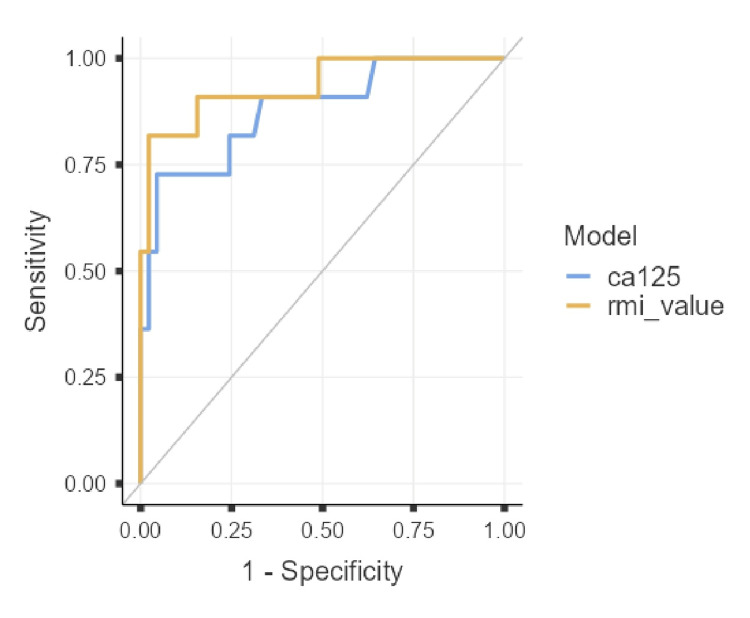 Figure 2
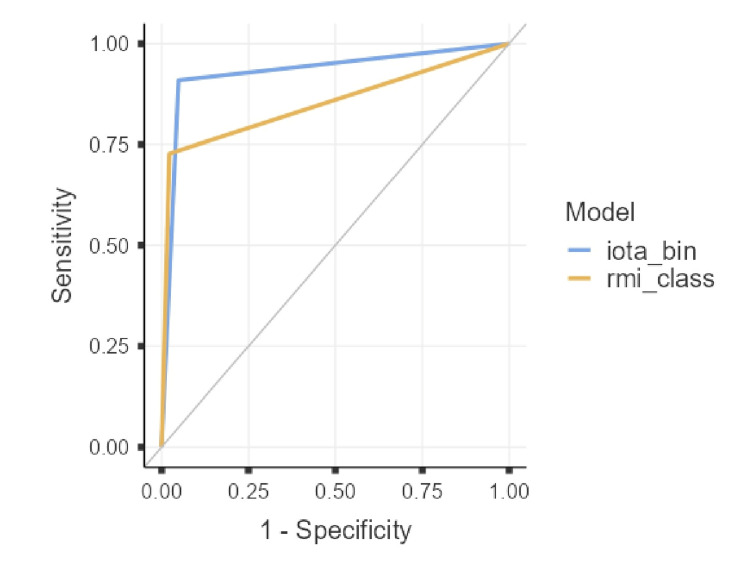 Figure 3
Peer Reviews
No public reviews on file for this paper yet. If you reviewed it on a platform where reviews are public (OpenReview, ICLR, NeurIPS, ICML), you can paste yours below so the community can read it here.
Videos
No videos yet. Explain this paper in a talk, walkthrough, or lecture? Add one.
Taxonomy
TopicsOvarian cancer diagnosis and treatment · Intraperitoneal and Appendiceal Malignancies · Endometrial and Cervical Cancer Treatments