The dual role of activating transcription factor 4: from cellular stress sentinel to cardiovascular disease intervention
Yaping Wang, Jie Yuan, Feifan Wang, Hong Ma

TL;DR
This paper reviews how ATF4, a key stress response protein, can both protect and harm the heart depending on the situation, offering new insights for treating cardiovascular diseases.
Contribution
The paper systematically decodes the dual and context-dependent roles of ATF4 in cardiovascular diseases and highlights potential therapeutic strategies.
Findings
ATF4 promotes cell survival under mild stress but induces cell death under severe stress.
Dysregulation of ATF4 is linked to various cardiovascular disorders, including heart failure and arrhythmia.
Context-specific targeting of ATF4 could lead to personalized therapies for cardiovascular diseases.
Abstract
As the master orchestrator of integrated stress response, activating transcription factor 4 (ATF4) operates as a central molecular switch that directs cellular fate toward survival or death by regulating genes associated with oxidative stress, endoplasmic reticulum stress, apoptosis, ferroptosis and metabolism. The functional outcome of ATF4 activation is critically dependent on the context: it usually contributes to cellular adaption and survival under mild or transient stress, yet triggers cell death when stress is severe or prolonged. Dysregulation of this dichotomous function has been implicated in a variety of diseases, such as cancer, neurodegenerative disease, metabolic disease, etc., highlighting ATF4 as a potential therapeutic target. Recently, growing evidence has further underscored the dual roles of ATF4 as the guardian or executioner in cardiovascular disorders, such as…
Genes, proteins, chemicals, diseases, species, mutations and cell lines named across the full text — each resolved to its canonical identifier and authoritative record.
Click any figure to enlarge with its caption.
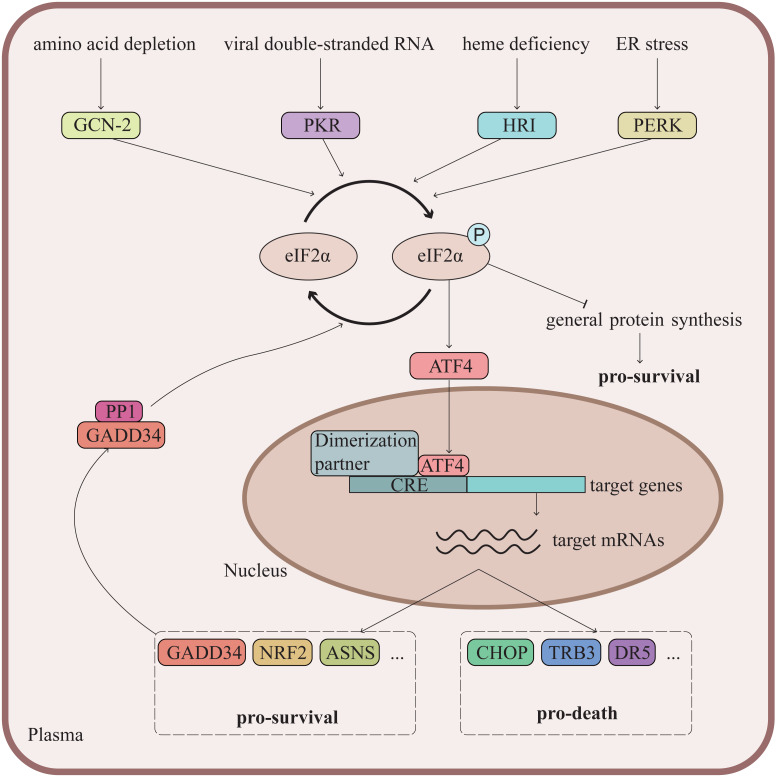 Figure 1
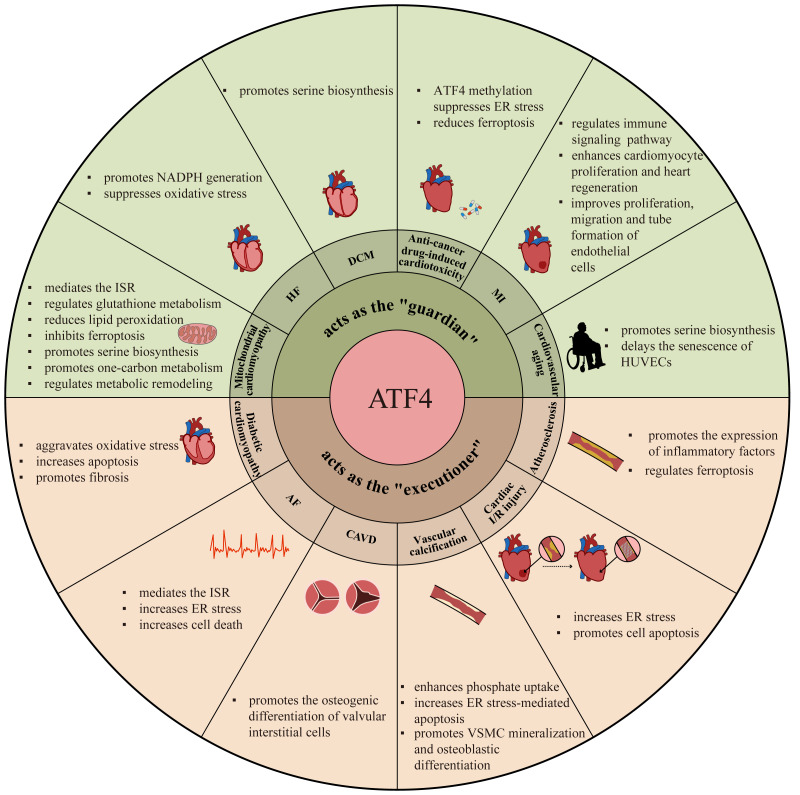 Figure 2
 Figure 3
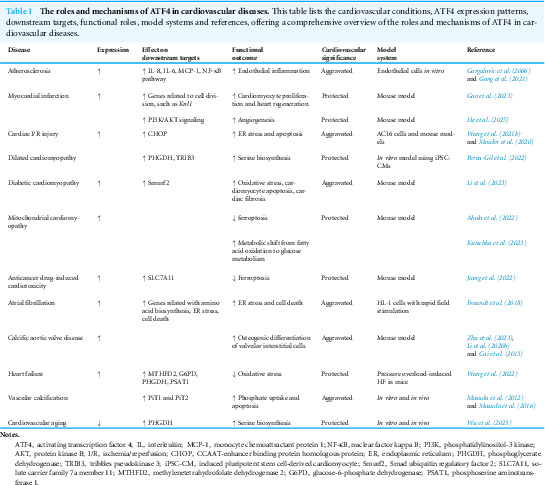 Figure 4
Peer Reviews
No public reviews on file for this paper yet. If you reviewed it on a platform where reviews are public (OpenReview, ICLR, NeurIPS, ICML), you can paste yours below so the community can read it here.
Videos
No videos yet. Explain this paper in a talk, walkthrough, or lecture? Add one.
Taxonomy
TopicsEndoplasmic Reticulum Stress and Disease · Protein Kinase Regulation and GTPase Signaling · Signaling Pathways in Disease