The opposite effects of stringent response on phage infection of Pseudomonas putida
Alicja Cecylia Lewańczyk, Mariliis Hinnu, Elise Mägi, Roger Rikberg, Age Brauer, Hedvig Tamman

TL;DR
This study shows that the stringent response in Pseudomonas putida has mixed effects on phage infections, sometimes helping and sometimes hindering them.
Contribution
The paper reveals the diverse and opposing effects of (p)ppGpp on phage infection in Pseudomonas putida.
Findings
P. putida cells lacking (p)ppGpp show impaired membrane integrity in stationary phase.
Approximately half of the tested phages infect (p)ppGpp0 cells more efficiently, while the other half show reduced infection.
Phage infection differences are due to downstream steps like latent period or unproductive infection, not adsorption rates.
Abstract
Guanosine tetra- and pentaphosphate ((p)ppGpp) are one of the key players in the stress response of bacteria. Accumulation of these alarmones activates the stringent response, usually triggered by different nutritional stresses. For Pseudomonas putida, there is only limited data available on the importance of the stringent response in stress situations. Also, in recent years, different specific phage defence systems have received much attention, but little is known about the involvement of stringent response in phage infection. Here, we show that P. putida PaW85 (p)ppGpp0 is prototrophic and tolerates chemical stress well. However, in the stationary phase P. putida cells deprived of (p)ppGpp have impaired membrane integrity. In addition, we conducted a large-scale screening of stringent response effects on phage infections using the CEPEST phage collection. We tested 67 phages of 22…
Genes, proteins, chemicals, diseases, species, mutations and cell lines named across the full text — each resolved to its canonical identifier and authoritative record.
Click any figure to enlarge with its caption.
 Figure 1
 Figure 2
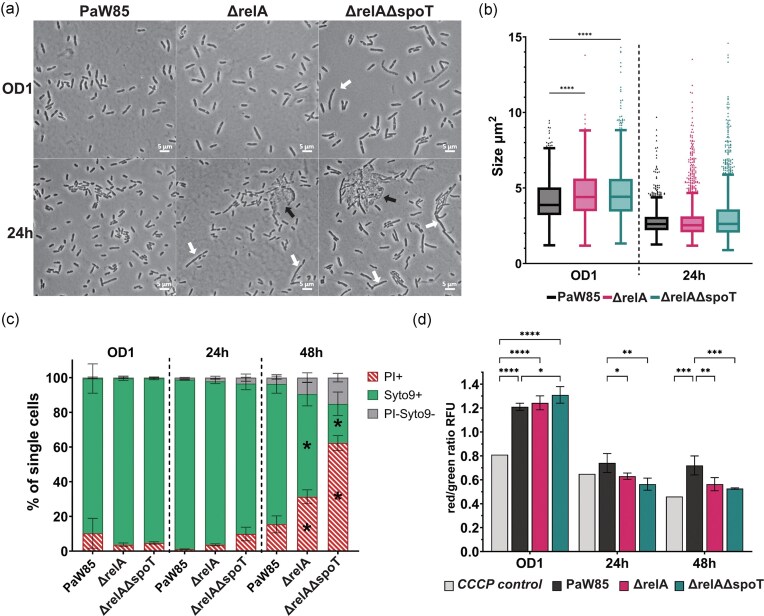 Figure 3
 Figure 4
 Figure 5
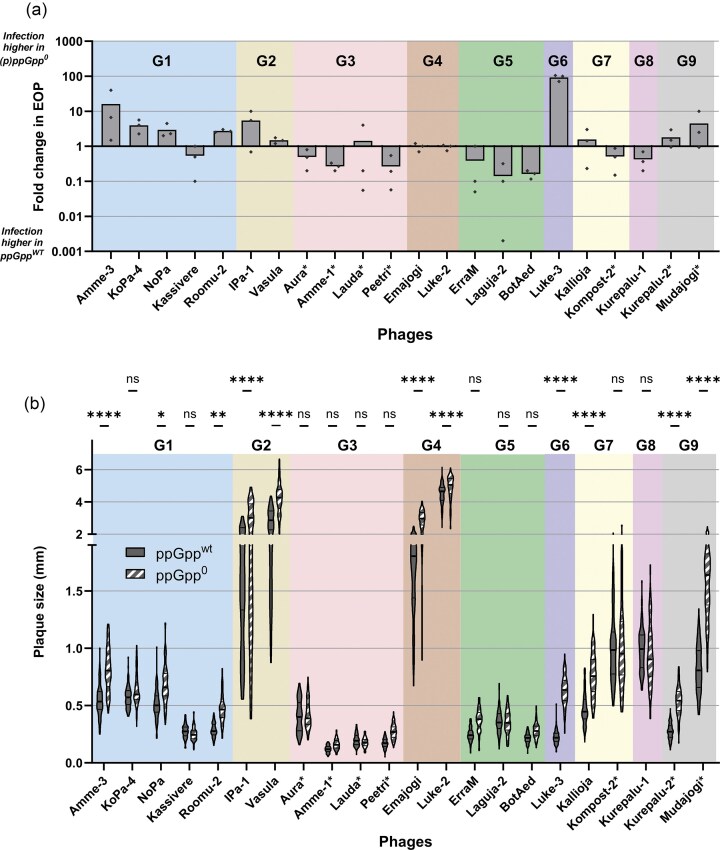 Figure 6
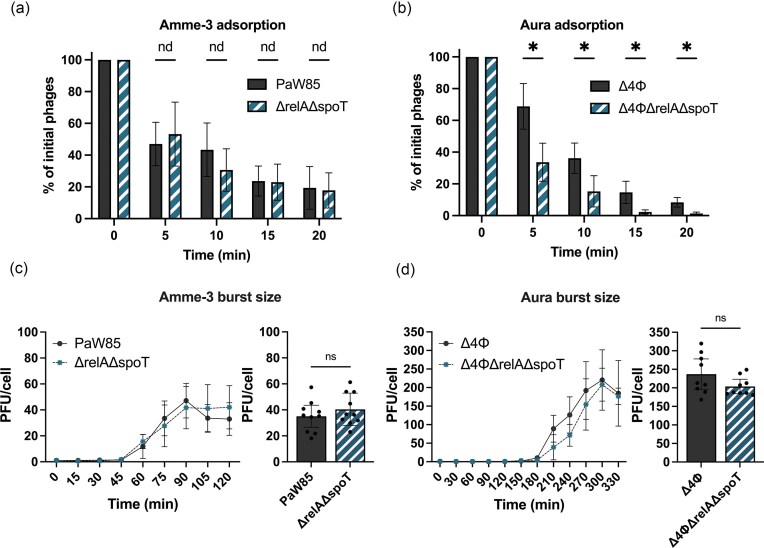 Figure 7
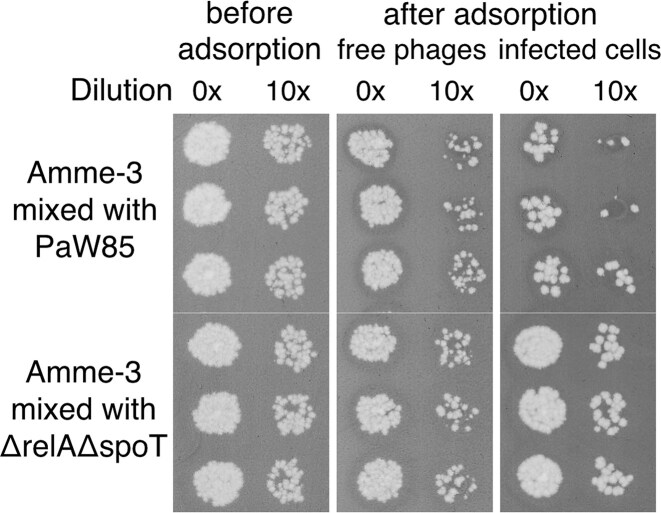 Figure 8
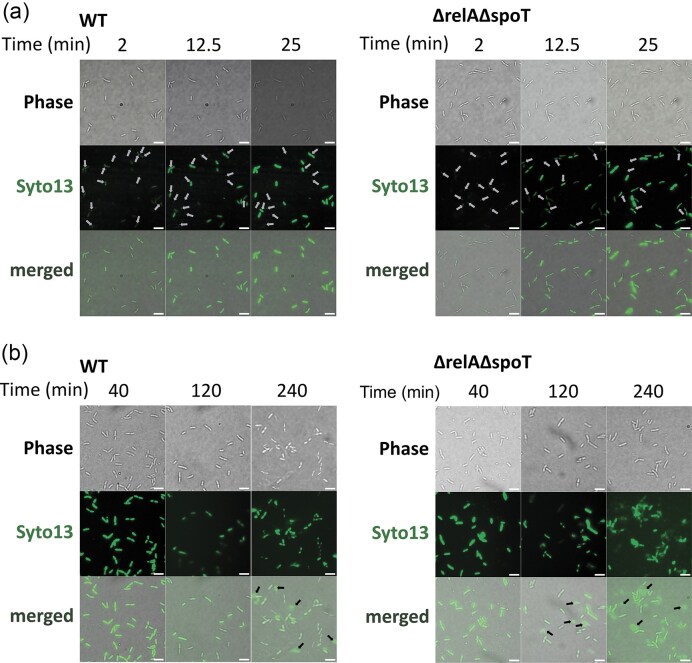 Figure 9
Peer Reviews
No public reviews on file for this paper yet. If you reviewed it on a platform where reviews are public (OpenReview, ICLR, NeurIPS, ICML), you can paste yours below so the community can read it here.
Videos
No videos yet. Explain this paper in a talk, walkthrough, or lecture? Add one.
Taxonomy
TopicsBacteriophages and microbial interactions · Bacterial Genetics and Biotechnology · Vibrio bacteria research studies