Development and implementation of measurement-based care for children and youth with complex mental and neurodevelopmental needs: early experiences from Ontario’s Extensive Needs Service
Victoria Rombos, Zainab O. Salami, Genevieve Ferguson, Renee Baysarowich, Kathryn Decker, Nicholas Denomey, Irene Drmic, Jordan Edwards, Lamia Hayawi, Thiyaana Jeyabalan, Taylor Johansen, Toni Lui, Karen Margallo, Tamara Milicevic, Nicholas Mitsakakis, Stephanie Sutherland

TL;DR
This paper describes the early implementation of measurement-based care for children with complex mental and neurodevelopmental needs in Ontario, highlighting challenges and insights for future use.
Contribution
The paper presents a novel application of measurement-based care in a pediatric population with high complexity and co-occurring conditions.
Findings
MBC was implemented across three Ontario hospital sites with 381 participants entering the program.
Completion rates for PROMs were higher at baseline and declined over time, with shorter measures showing better completion.
Engagement of clinicians and families was crucial for MBC success and integration into care processes.
Abstract
Measurement-based care (MBC) is a structured approach to collecting patient-reported outcome measures (PROMs) to inform clinical care. While MBC is routinely used in mental health settings, its application in neurodevelopmental populations—particularly those with co-occurring physical and mental health conditions—remains limited. MBC was implemented across three Ontario hospital Extensive Needs Service (ENS) sites in Toronto, Hamilton, and Ottawa. Selection of PROMs was informed by a focused literature review and consultation with clinicians, researchers, and family advisors. A logic model was developed to guide evaluation and link measures to anticipated outcomes. Clinicians received training and support to integrate PROMs into clinical workflows. Data were collected at baseline and at regular intervals. Between April 2023 and April 2025, 381 participants entered the ENS program, and…
Genes, proteins, chemicals, diseases, species, mutations and cell lines named across the full text — each resolved to its canonical identifier and authoritative record.
Click any figure to enlarge with its caption.
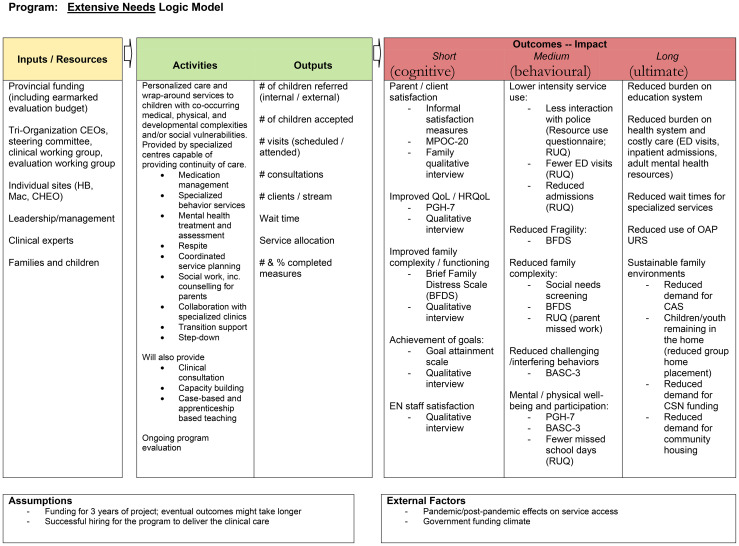 Figure 1
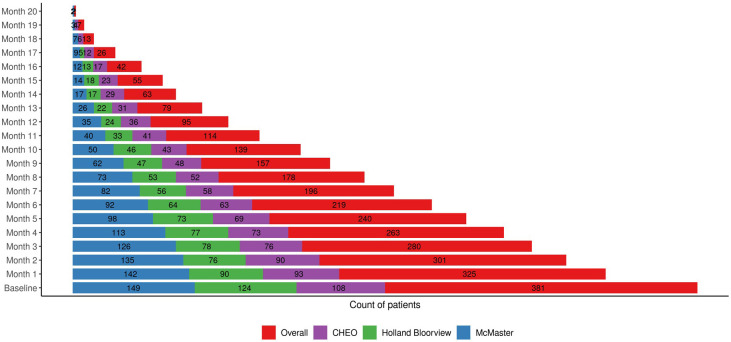 Figure 2
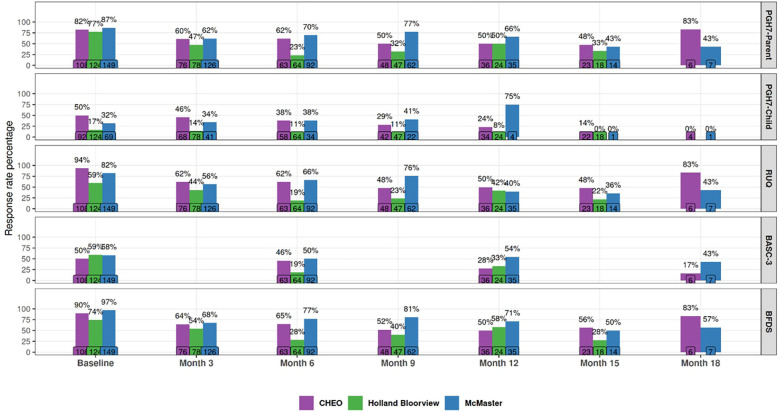 Figure 3
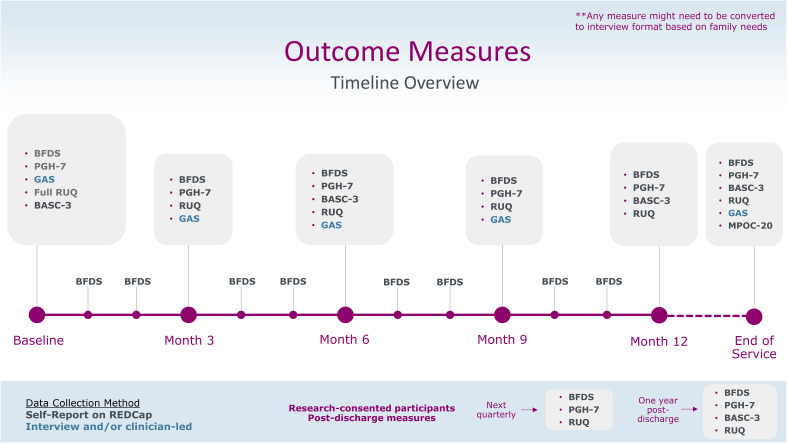 Figure 4
Peer Reviews
No public reviews on file for this paper yet. If you reviewed it on a platform where reviews are public (OpenReview, ICLR, NeurIPS, ICML), you can paste yours below so the community can read it here.
Videos
No videos yet. Explain this paper in a talk, walkthrough, or lecture? Add one.
Taxonomy
TopicsCerebral Palsy and Movement Disorders · Infant Development and Preterm Care · Childhood Cancer Survivors' Quality of Life