Psychometric Properties of the Mandarin Version of the Quality Improvement Self‐Efficacy Inventory Among the Nurses: A Methodological Study
Nuoyan Zhang, Xiaoxiao Zhang, Zhaonan Wang, Yuting Feng, Hangjie Lian, Haoquan Han, Xinyu Bai, Yaqi Huang, Yulu Wang, Yue Zhao, Qi Lu

TL;DR
This study translated and validated a Mandarin version of a nurse self-efficacy inventory for quality improvement, finding it reliable and useful for assessing nursing skills.
Contribution
The study provides a validated Mandarin version of the Quality Improvement Self-Efficacy Inventory with two new factor structures for practical and cross-cultural use.
Findings
The Mandarin-QISEI has 10 items with good discrimination and reliability (Cronbach’s alpha = 0.947).
A new two-factor structure explained 74% of total variation and showed good model fit.
Both two-factor and original four-factor versions are valid for measuring nurses’ quality improvement self-efficacy.
Abstract
Quality improvement is crucial for improving healthcare systems and providing high‐quality, safe care for patients. Accurate assessment of nurses’ quality improvement knowledge and skills is necessary to integrate quality improvement into nursing practice. The Quality Improvement Self‐Efficacy Inventory measures nurses’ knowledge and skills in quality improvement. To translate the Quality Improvement Self‐Efficacy Inventory into Mandarin and evaluate its psychometric properties among nurses. A Methodological Study. At a tertiary hospital in Tianjin, China, between January and April 2023. A total of 436 nurses participated in the psychometric evaluation, and 9 nurses participated in the cognitive interviews. The Quality Improvement Self‐Efficacy Inventory was translated into Mandarin using Brislin’s translation model. Item analysis was conducted using extreme group, correlation…
Genes, proteins, chemicals, diseases, species, mutations and cell lines named across the full text — each resolved to its canonical identifier and authoritative record.
Click any figure to enlarge with its caption.
 Figure 1
 Figure 2
 Figure 3
 Figure 4
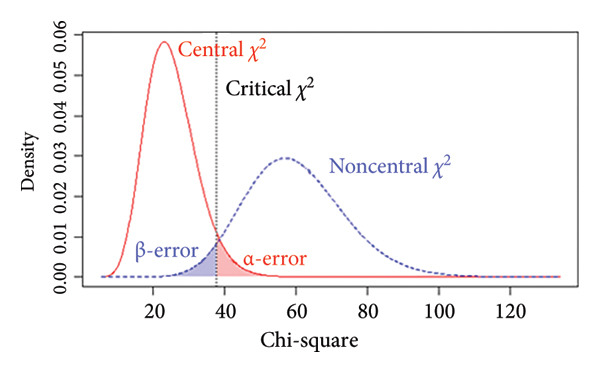 Figure 5
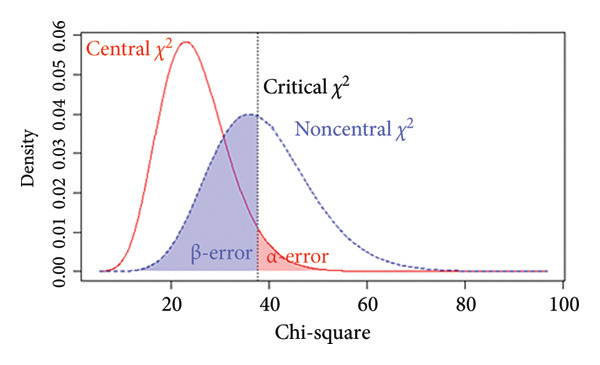 Figure 6
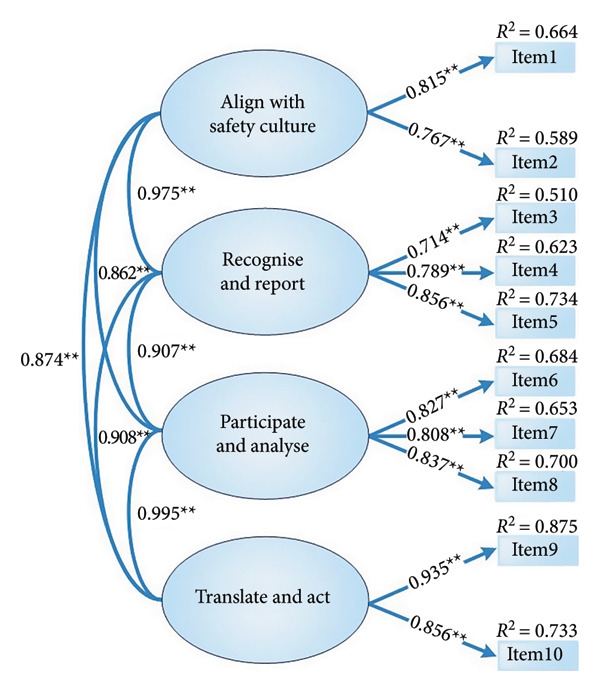 Figure 7
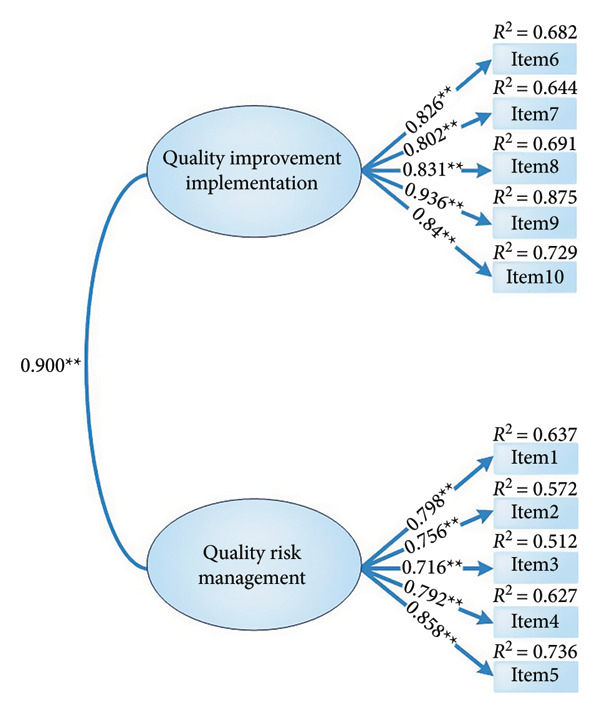 Figure 8
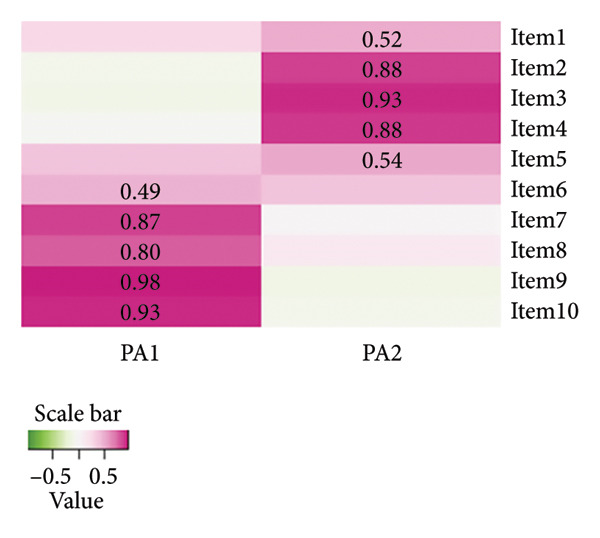 Figure 9
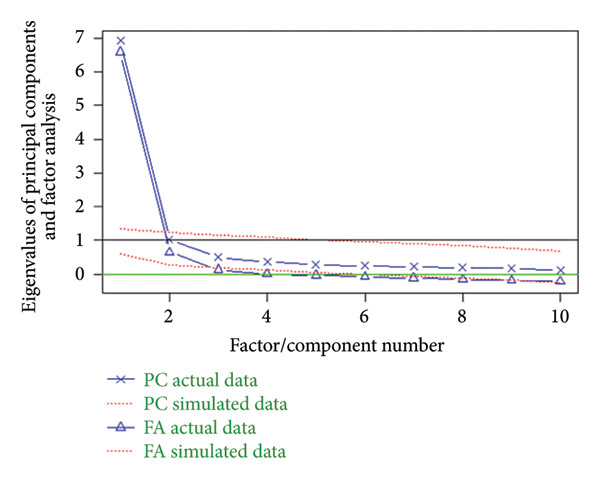 Figure 10
Peer Reviews
No public reviews on file for this paper yet. If you reviewed it on a platform where reviews are public (OpenReview, ICLR, NeurIPS, ICML), you can paste yours below so the community can read it here.
Videos
No videos yet. Explain this paper in a talk, walkthrough, or lecture? Add one.
Taxonomy
TopicsNursing education and management · Patient Satisfaction in Healthcare · Healthcare Education and Workforce Issues