Automatic respiratory and bulk patient motion corrected (ACROBATIC) free-running whole-heart five-dimensional magnetic resonance imaging
Robin Ferincz, Milan Prša, Estelle Tenisch, Jérôme Yerly, Christopher W. Roy

TL;DR
This paper introduces ACROBATIC, a new method to correct motion in pediatric heart MRI scans, improving image quality without requiring sedation.
Contribution
ACROBATIC is a novel framework for automatic motion correction in pediatric cardiac MRI using free-running 5D imaging.
Findings
ACROBATIC achieved high accuracy in detecting motion compared to manual evaluation (Dice = 0.96).
Motion correction significantly improved image sharpness at key anatomical interfaces.
Expert reviewers confirmed improved image quality after applying ACROBATIC.
Abstract
Free-running five-dimensional (5D) whole-heart magnetic resonance imaging (MRI) simplifies image acquisition by eliminating the need for external gating, breath-holding, and prospective scan planning. However, it remains vulnerable to patient movement in pediatric populations, which may require sedation or general anesthesia. We present a retrospective motion correction approach using the automatic respiratory and bulk patient motion correction (ACROBATIC) framework to detect, estimate, and correct for bulk motion, thereby improving image quality in pediatric cardiac MRI. Free-running Ferumoxytol-enhanced three-dimensional (3D) radial gradient-echo (GRE) data from 210 pediatric patients were manually categorized by the amount of bulk motion within each acquisition, based on retrospective reconstructions. From this cohort, 25 cases with the highest and 25 with the lowest detected bulk…
Genes, proteins, chemicals, diseases, species, mutations and cell lines named across the full text — each resolved to its canonical identifier and authoritative record.
Click any figure to enlarge with its caption.
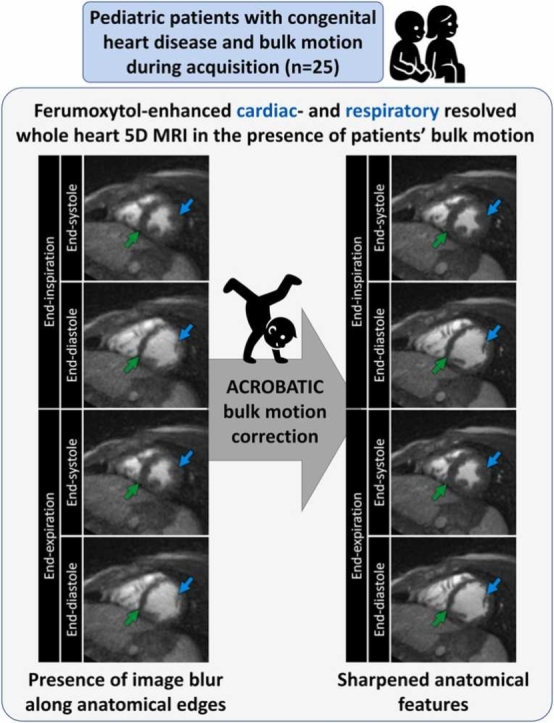 Figure 1
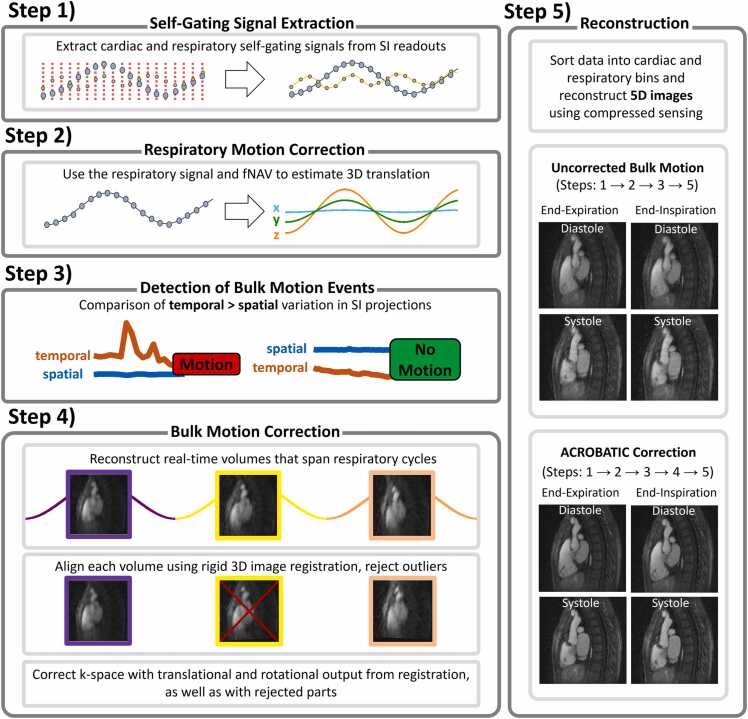 Figure 2
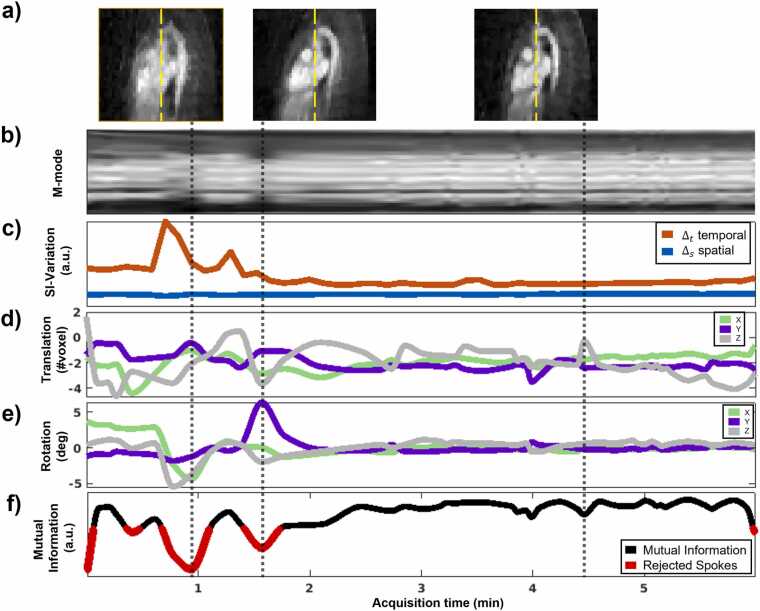 Figure 3
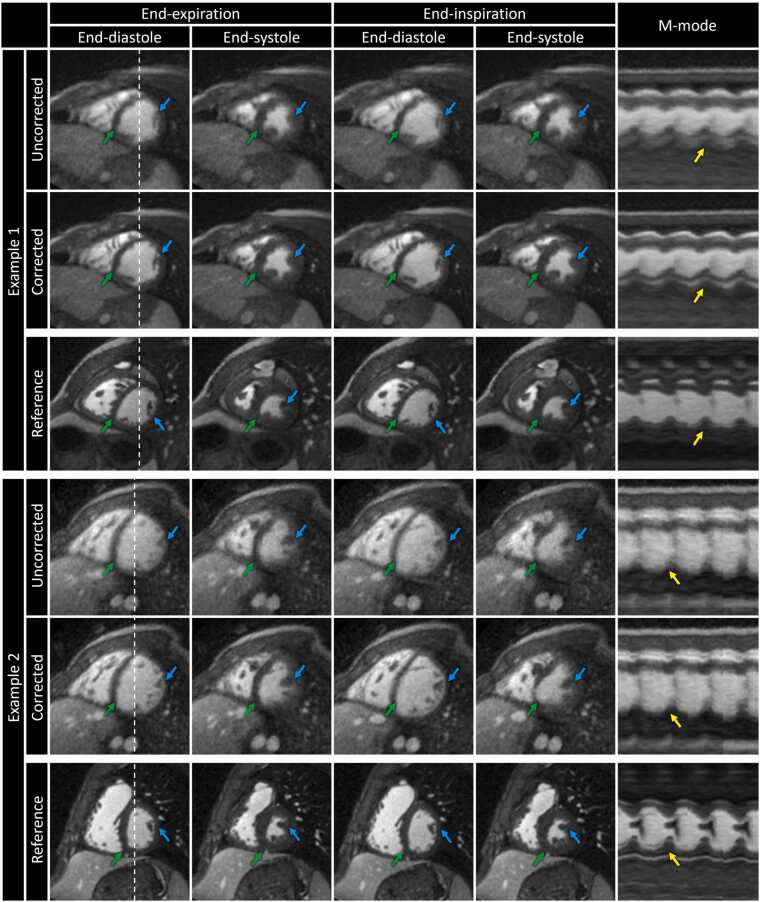 Figure 4
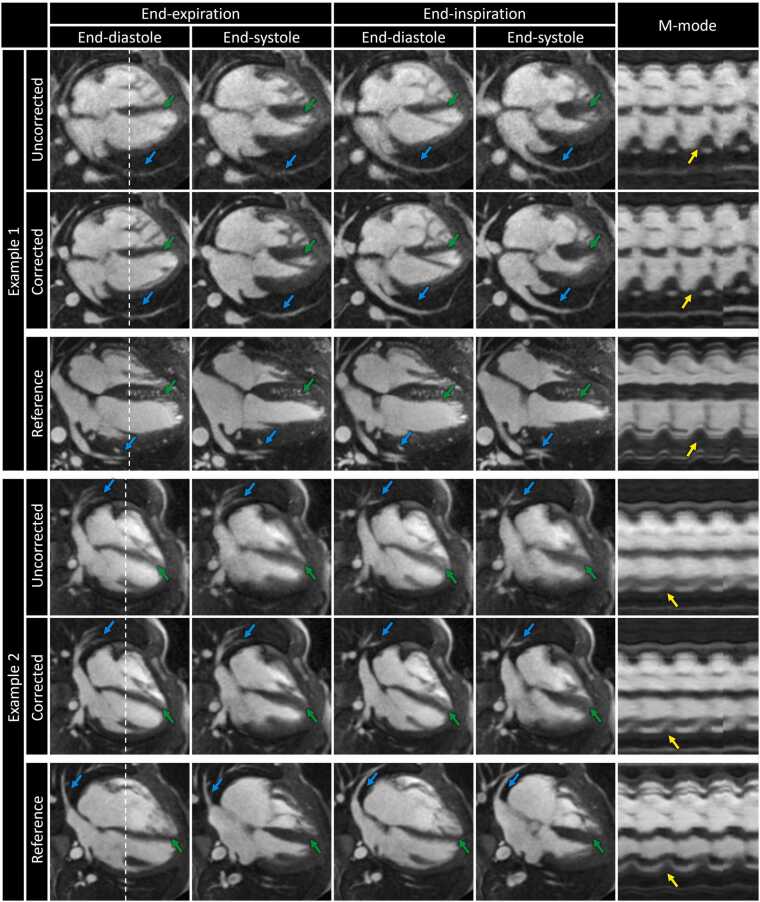 Figure 5
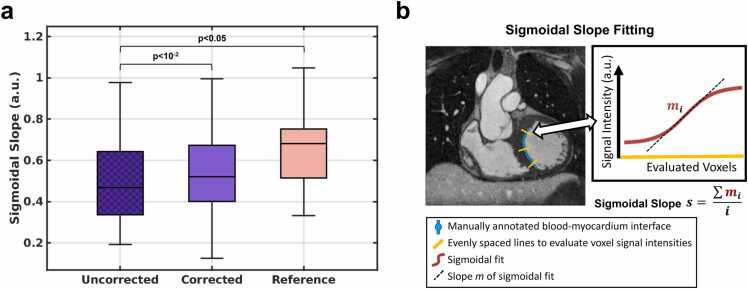 Figure 6
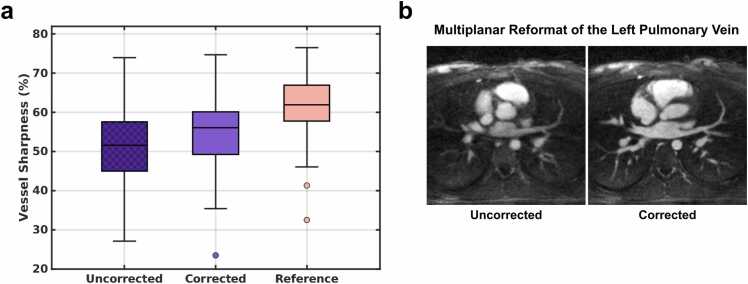 Figure 7
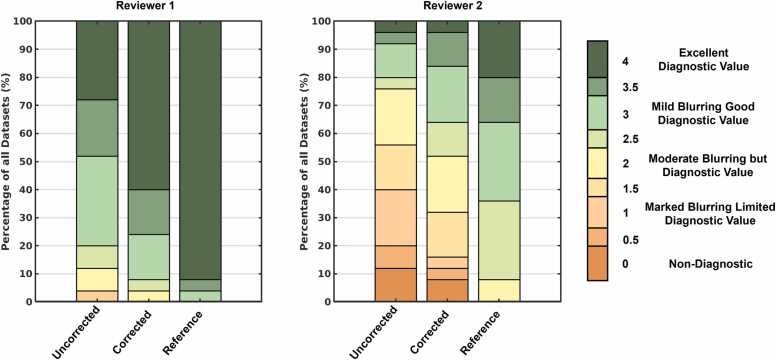 Figure 8
Peer Reviews
No public reviews on file for this paper yet. If you reviewed it on a platform where reviews are public (OpenReview, ICLR, NeurIPS, ICML), you can paste yours below so the community can read it here.
Videos
No videos yet. Explain this paper in a talk, walkthrough, or lecture? Add one.
Taxonomy
TopicsAdvanced MRI Techniques and Applications · Congenital Heart Disease Studies · Atomic and Subatomic Physics Research