Tuning the Response of GPCR-Based Yeast Sensors Using Fluorescent Reporters
Ryan Langevin, McKenna Martin-Downey, Amisha Patel, Haden Archer, Sara J. Davila Severiano, Pamela Peralta-Yahya

TL;DR
This paper shows how using a specific fluorescent protein improves yeast-based sensors for studying human GPCRs, making them more effective and faster for drug discovery.
Contribution
The study identifies YPet as the optimal fluorescent reporter for enhancing the performance of GPCR-based yeast sensors.
Findings
YPet increases the dynamic range and signal strength of multiple hGPCR-based sensors.
YPet enables the construction of a functional HTR1D-based sensor previously difficult to develop.
The use of YPet reduces the time to readout from 4 hours to 30 minutes.
Abstract
G protein-coupled receptors (GPCRs) recognize ligands on the cell surface, initiating intracellular signaling pathways that control a variety of biological processes, from neurotransmission and hormone regulation to light detection and smell. As entryways into these pathways, GPCRs are key pharmacological targets, with 30% of FDA-approved drugs targeting them. High-throughput GPCR-based sensors in yeast are proven platforms for the identification of novel GPCR ligands. Most human GPCRs (hGPCRs), however, led to small increases in the signal after activation, hindering the development of high-throughput (HT) assays. To streamline the generation of HT assays for biomedically important hGPCRs, here we analyze five fluorescent reporters in the context of hGPCR-based sensors. Using the serotonin receptor 4 (HTR4)-based sensor as a testbed, we identify YPet, a yellow fluorescent protein…
Genes, proteins, chemicals, diseases, species, mutations and cell lines named across the full text — each resolved to its canonical identifier and authoritative record.
Click any figure to enlarge with its caption.
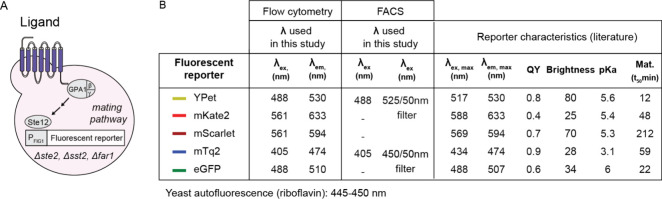 Figure 1
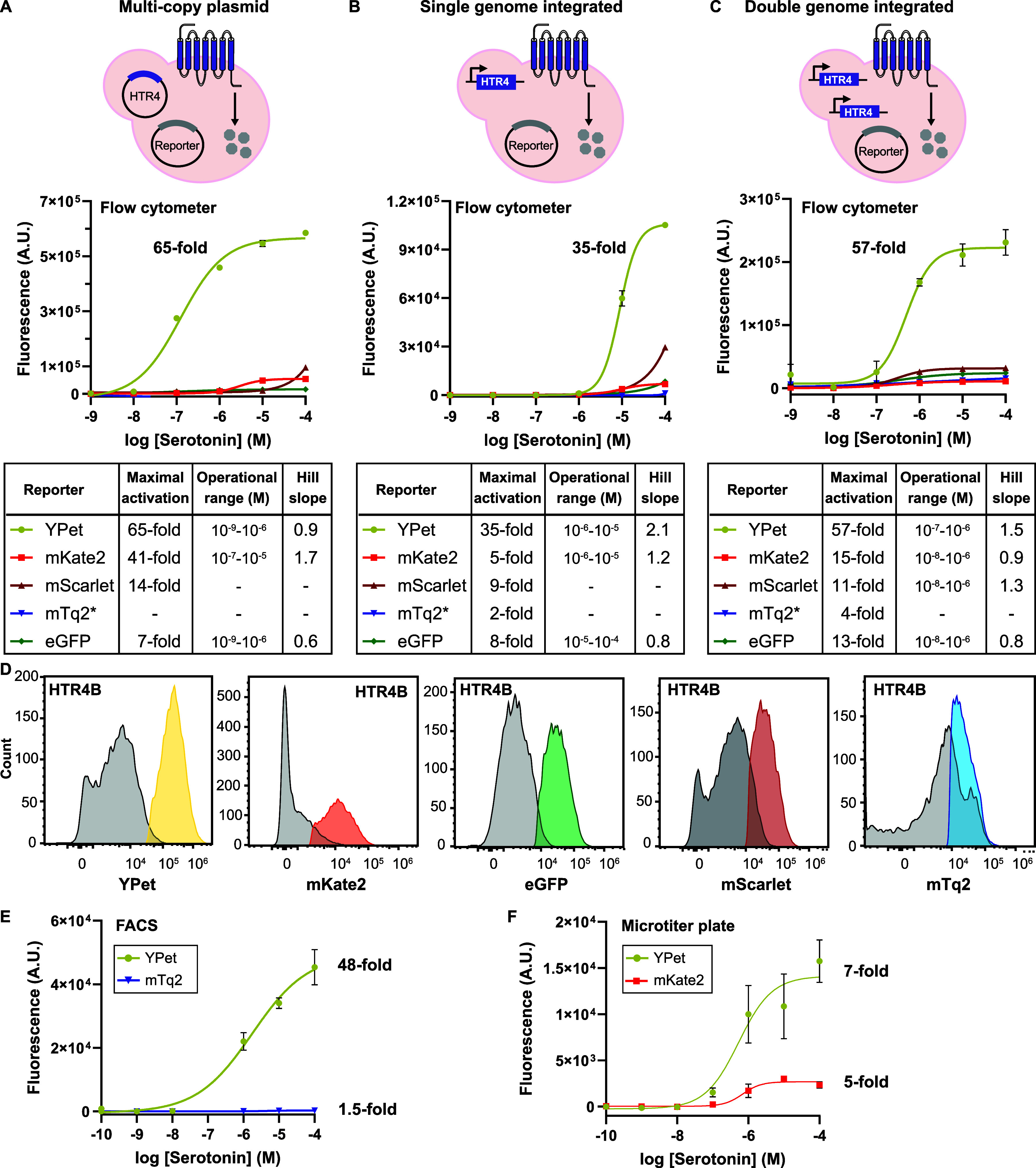 Figure 2
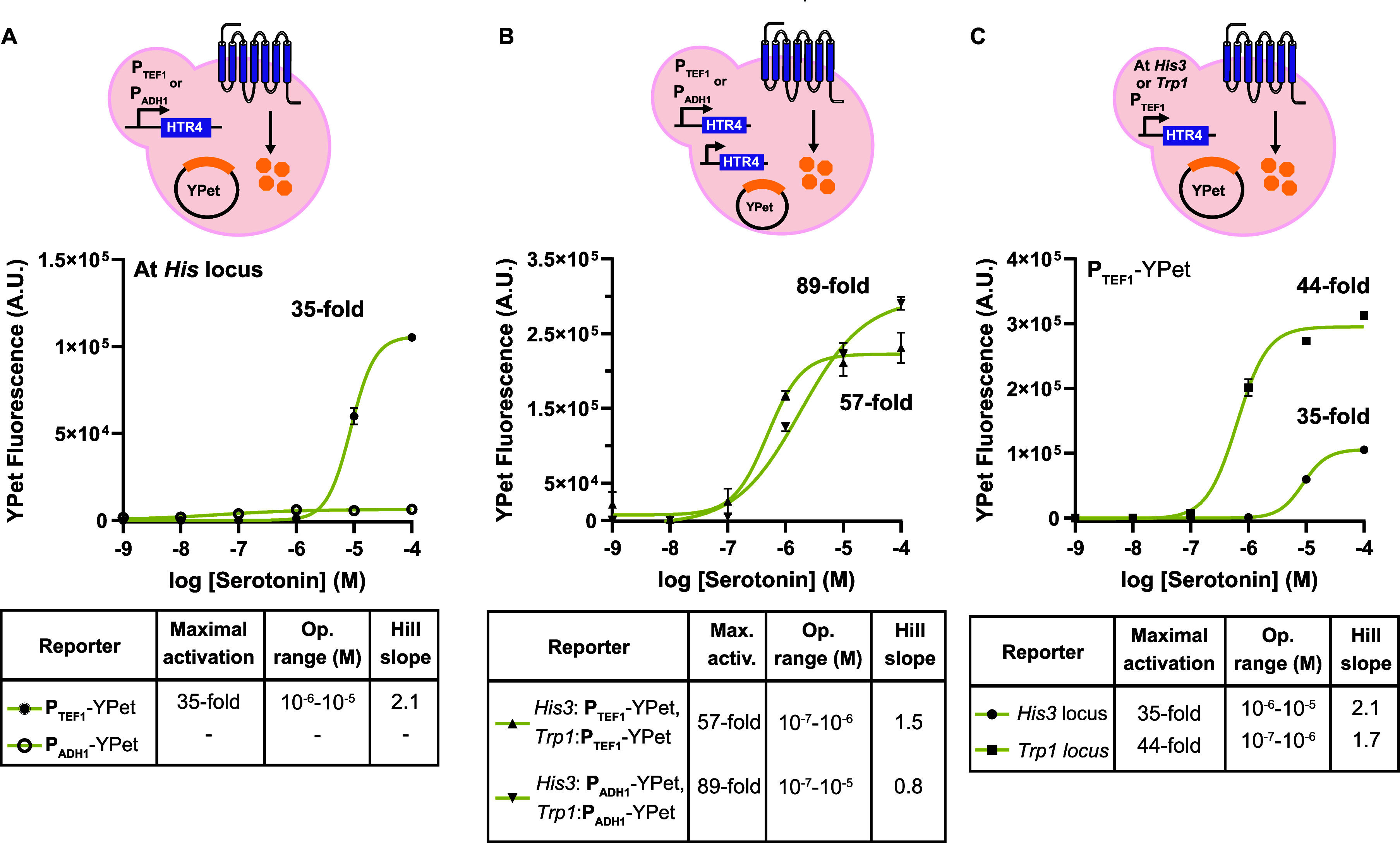 Figure 3
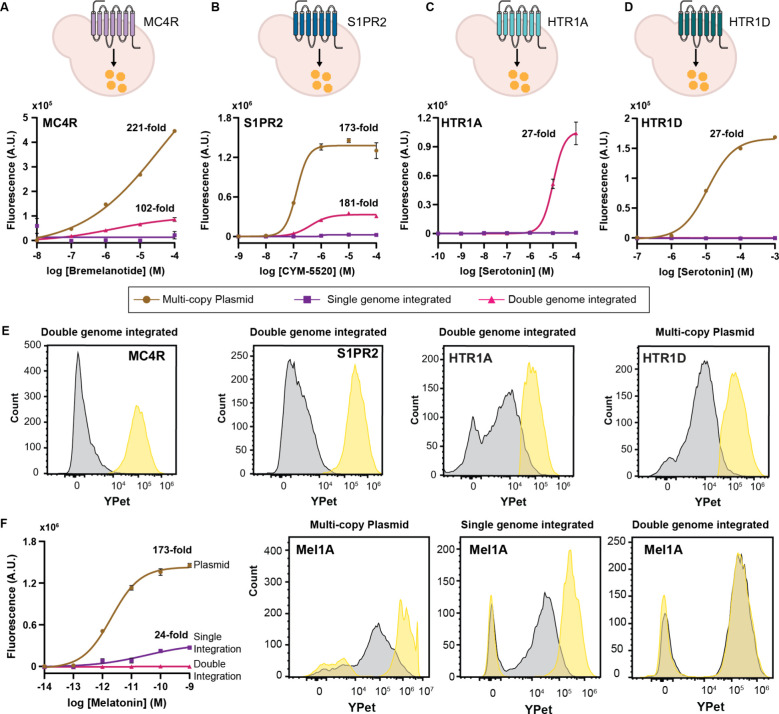 Figure 4
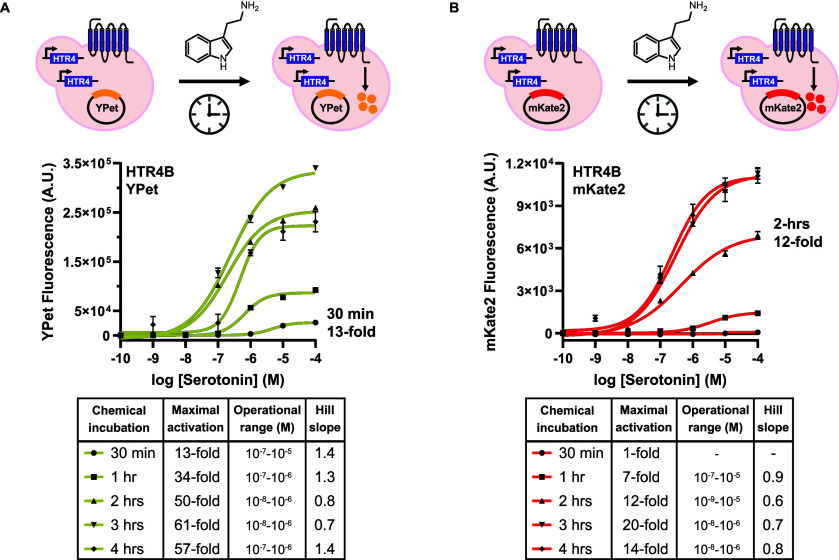 Figure 5
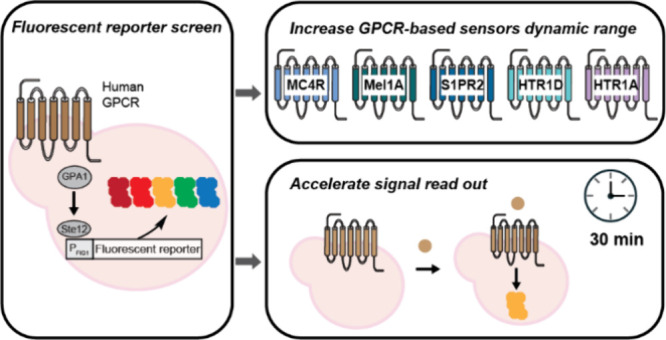 Figure 6
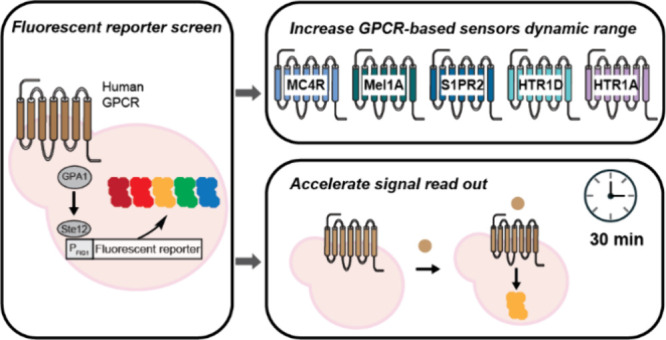 Figure 7
Peer Reviews
No public reviews on file for this paper yet. If you reviewed it on a platform where reviews are public (OpenReview, ICLR, NeurIPS, ICML), you can paste yours below so the community can read it here.
Videos
No videos yet. Explain this paper in a talk, walkthrough, or lecture? Add one.
Taxonomy
TopicsReceptor Mechanisms and Signaling · Neurobiology and Insect Physiology Research · Advanced Fluorescence Microscopy Techniques