Deep generative modeling captures maturation-dependent pairing patterns in human antibodies
Lea Brönnimann, Thomas Lemmin, Chiara Rodella

TL;DR
A deep learning model generates antibody light chains from heavy chains, capturing maturation-dependent pairing patterns and improving antibody design.
Contribution
A two-stage deep learning framework generates plausible antibody pairs from unpaired data, revealing inter-chain dependencies.
Findings
Generated light chains show improved structural quality and germline identity.
Memory B cell-derived heavy chains produce light chains with restricted V-gene usage.
Trimodal similarity in generated κ light chains suggests distinct pairing modes.
Abstract
Understanding antibody heavy-light chain pairing is critical for decoding immune repertoire architecture and designing therapeutic antibodies, yet most sequence databases lack paired chain information. To address this gap, we developed a two-stage deep learning framework. Transformer-based language models were first pre-trained on large corpora of unpaired heavy- and light-chain sequences, then integrated into a sequence-to-sequence model to generate light chains from heavy chain input. Although native light chain recovery was moderate, generated sequences exhibited high germline identity, improved structural quality, and broader framework and complementarity-determining region coverage. Heavy chains from memory B cells generated light chains with more restricted V gene usage, reflecting maturation-dependent selection. Generated κ light chains exhibited a trimodal similarity…
Genes, proteins, chemicals, diseases, species, mutations and cell lines named across the full text — each resolved to its canonical identifier and authoritative record.
Click any figure to enlarge with its caption.
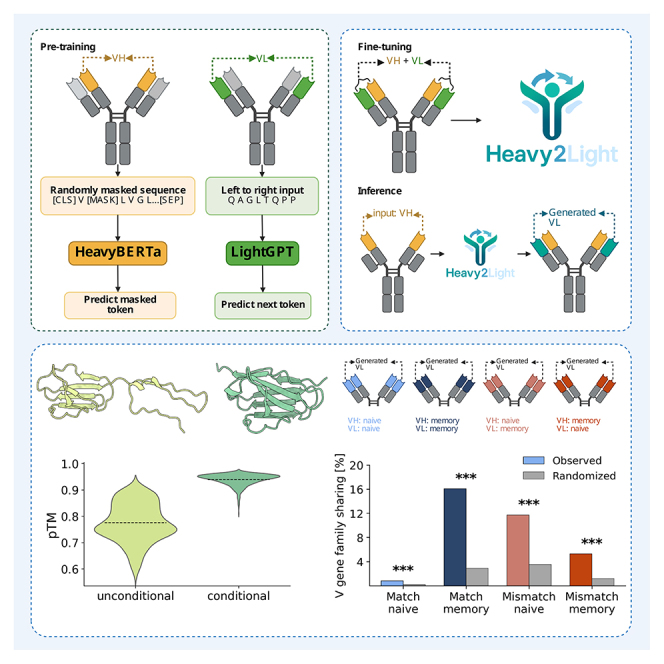 Figure 1
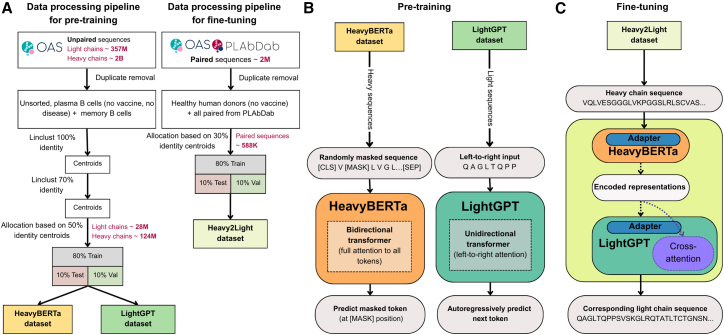 Figure 2
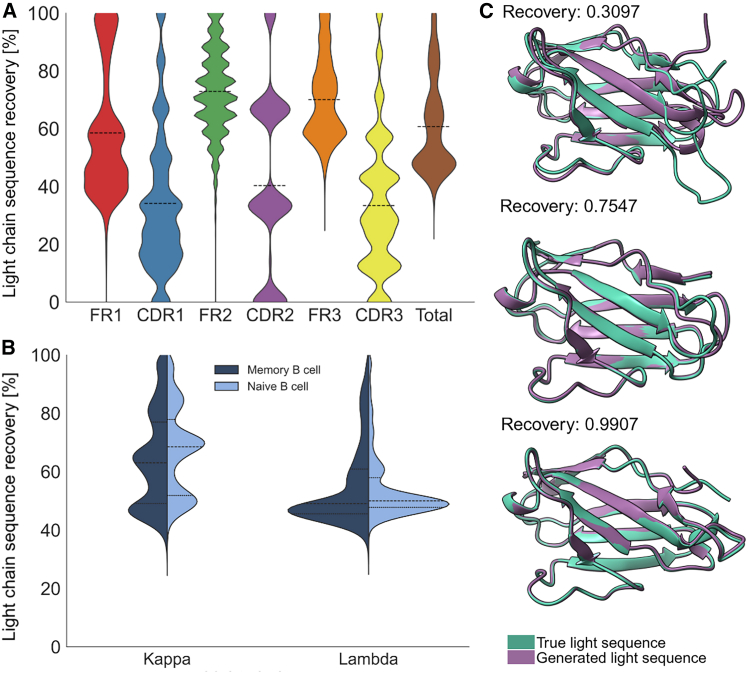 Figure 3
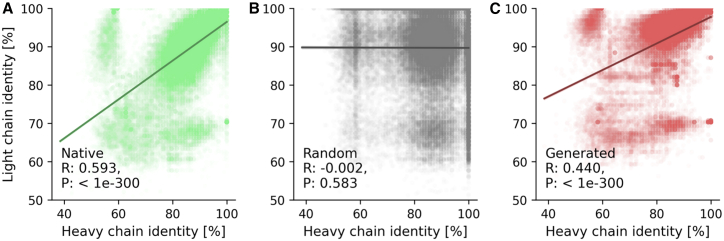 Figure 4
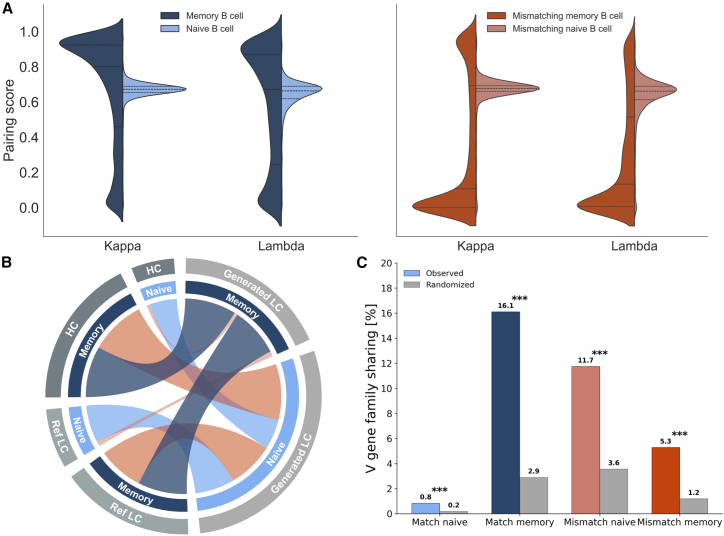 Figure 5
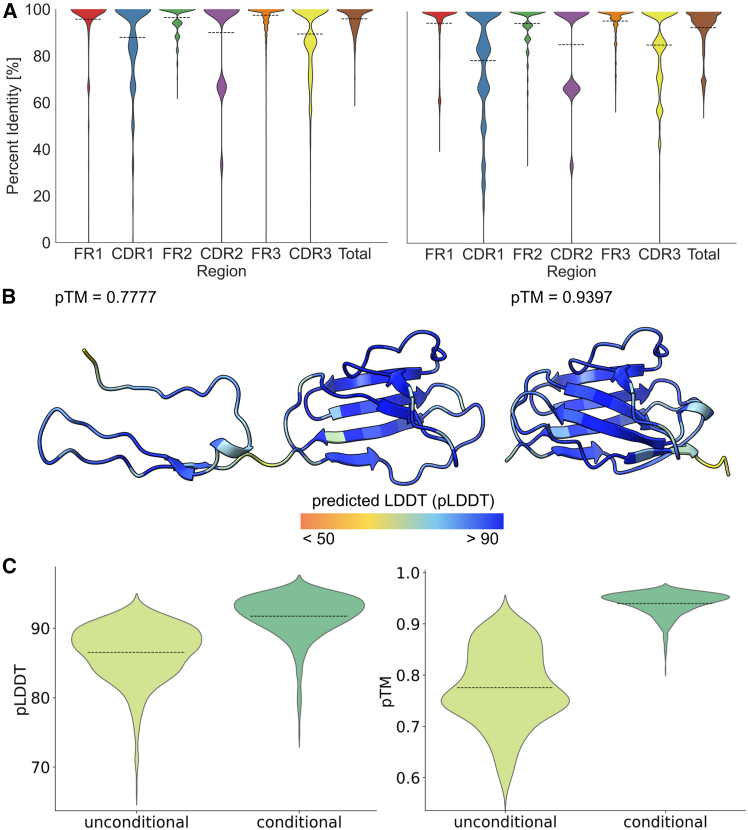 Figure 6
Peer Reviews
No public reviews on file for this paper yet. If you reviewed it on a platform where reviews are public (OpenReview, ICLR, NeurIPS, ICML), you can paste yours below so the community can read it here.
Videos
No videos yet. Explain this paper in a talk, walkthrough, or lecture? Add one.
Taxonomy
TopicsMonoclonal and Polyclonal Antibodies Research · vaccines and immunoinformatics approaches · T-cell and B-cell Immunology