Genetically Encoded SpyTag Enables Modular AAV Retargeting via SpyCatcher-Fused Ligands for Targeted Gene Delivery
Anja Armbruster, Maximilian Hörner, Hanna J. Wagner, Claudia Fink-Straube, Wilfried Weber

TL;DR
This paper introduces a new method for retargeting AAV gene therapy vectors using a modular SpyTag/SpyCatcher system, enabling precise and flexible delivery to specific cell types.
Contribution
The first genetically encoded SpyTag system for modular AAV retargeting without altering the vector genome or production process.
Findings
SpyTag insertion into AAV2 capsid enabled post-assembly coupling with SpyCatcher-fused ligands for targeted transduction.
DARPin-based targeting achieved high specificity for cancer cell lines with minimal off-target effects.
The platform supports large or complex ligands and enables high-throughput preclinical evaluation.
Abstract
Recombinant adeno-associated viral (rAAV) vectors are a leading platform for in vivo gene therapy, valued for their excellent safety, broad serotype diversity, and scalable production. Targeted delivery through capsid display of ligands holds great promise, yet current retargeting strategies often rely on extensive capsid re-engineering and restrict the use of ligands incompatible with intracellular expression systems. Here, we present a modular AAV retargeting platform that, for the first time, employs the SpyTag/SpyCatcher system via genetic integration into the AAV2 capsid. SpyTag is a small peptide that forms a covalent, irreversible bond with its protein partner, SpyCatcher, allowing site-specific ligand coupling under physiological conditions. Inserting SpyTag into surface-exposed capsid sites enabled postassembly functionalization of AAVs with SpyCatcher-fused targeting proteins.…
Genes, proteins, chemicals, diseases, species, mutations and cell lines named across the full text — each resolved to its canonical identifier and authoritative record.
Click any figure to enlarge with its caption.
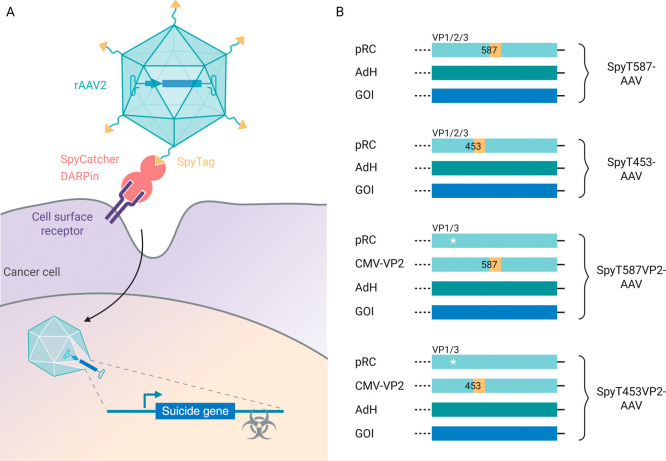 Figure 1
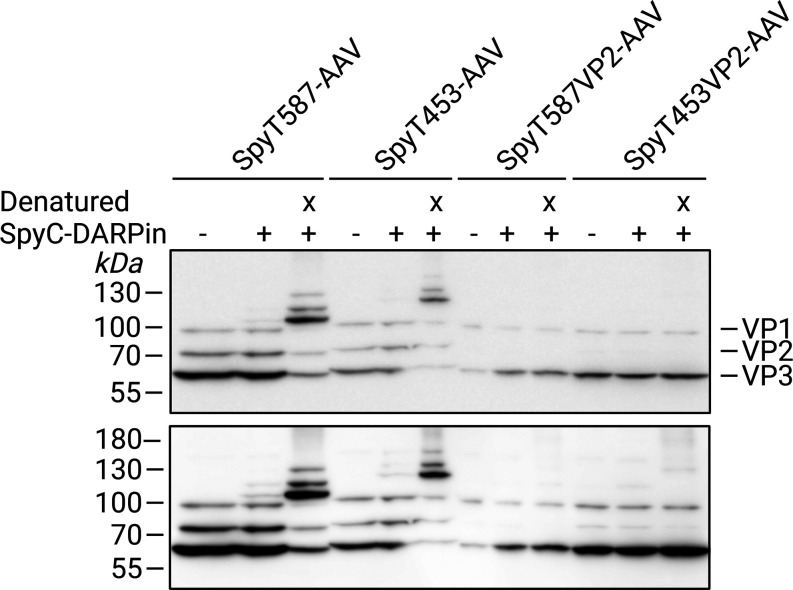 Figure 2
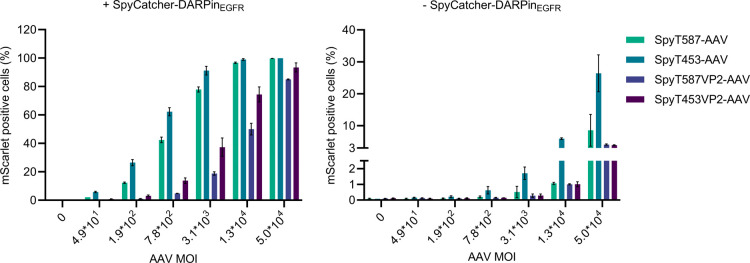 Figure 3
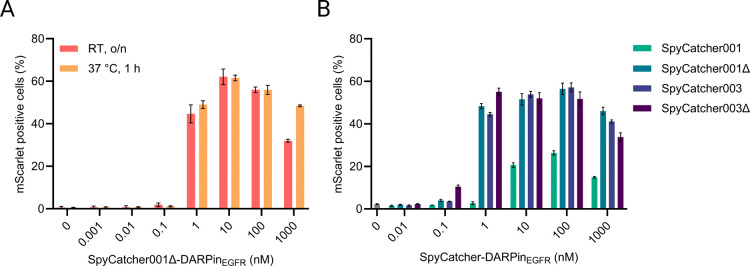 Figure 4
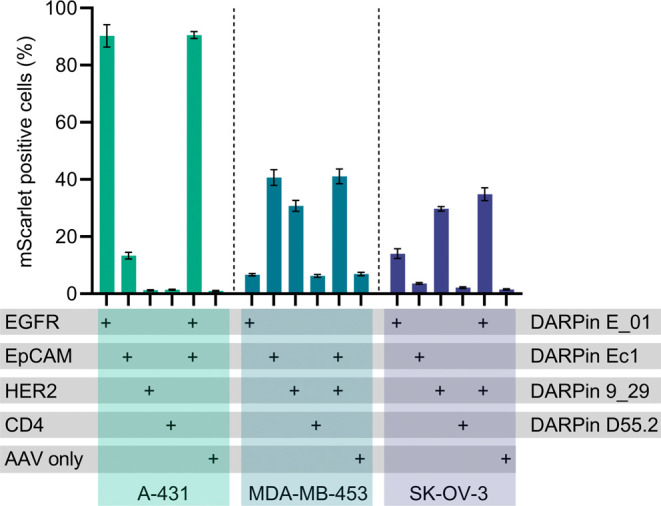 Figure 5
 Figure 6
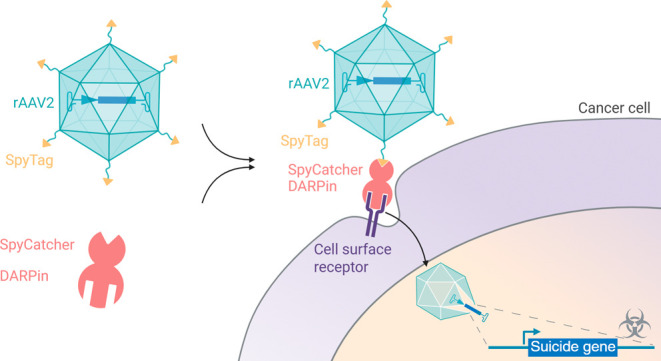 Figure 7
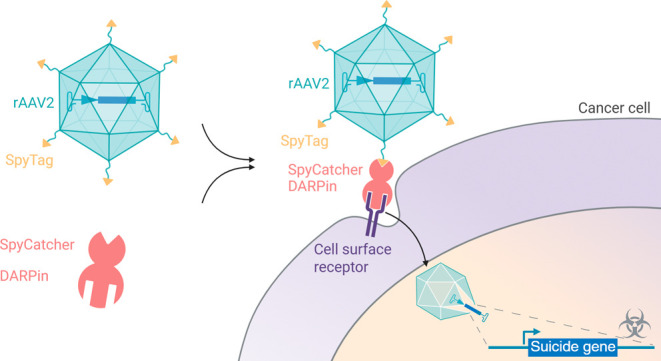 Figure 8
Peer Reviews
No public reviews on file for this paper yet. If you reviewed it on a platform where reviews are public (OpenReview, ICLR, NeurIPS, ICML), you can paste yours below so the community can read it here.
Videos
No videos yet. Explain this paper in a talk, walkthrough, or lecture? Add one.
Taxonomy
TopicsBiochemical and Structural Characterization · Virus-based gene therapy research · Transgenic Plants and Applications