Cationic Cascade Strategy for the Synthesis of Dihydrobenzofuran and Isochromane Scaffolds
Patrycia K. Zybura, Kyla J. Grant, Alison J. Frontier

TL;DR
A new chemical method creates complex oxygen-containing ring structures important for drug development.
Contribution
A stereospecific cascade reaction for synthesizing dihydrobenzofuran and isochromane scaffolds using enyne and carbonyl precursors.
Findings
A Brønsted-acid-promoted cascade reaction enables the synthesis of oxygen heterocycles.
The method allows de novo construction of dihydrobenzofuran and isochromane scaffolds.
Late-stage functionalization is achieved alongside heterocycle formation.
Abstract
Oxygen heterocycles are valued for their prevalence in bioactive molecules and their metabolic stability. We report a Brønsted-acid-promoted, oxygen-interrupted halo-Prins/halo-Nazarov cascade that enables the stereospecific construction of dihydrobenzofuran and isochromane scaffolds from simple enyne and carbonyl precursors. This approach unites de novo heterocycle construction with late-stage functionalization, providing access to complex oxygen heterocycles of relevance to medicinal chemistry.
Genes, proteins, chemicals, diseases, species, mutations and cell lines named across the full text — each resolved to its canonical identifier and authoritative record.
Click any figure to enlarge with its caption.
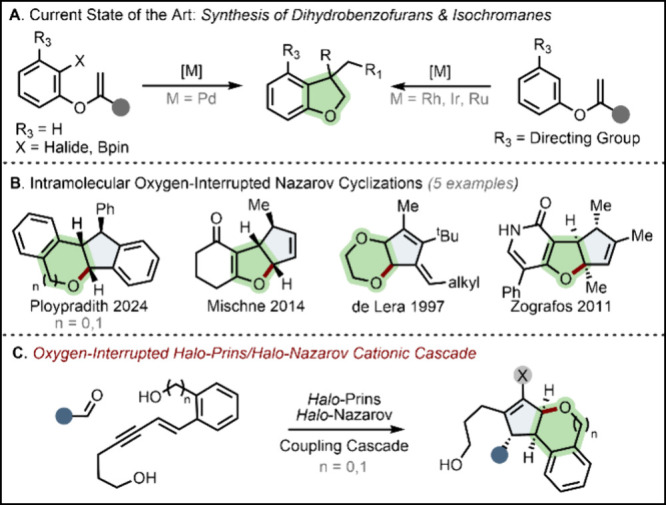 Figure 1
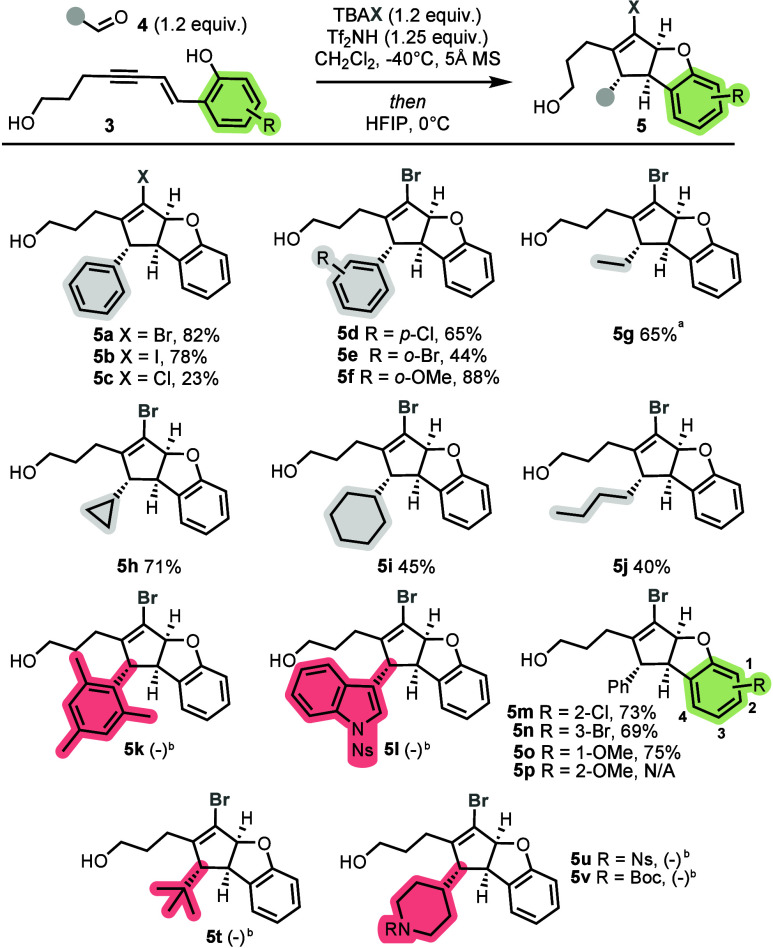 Figure 2
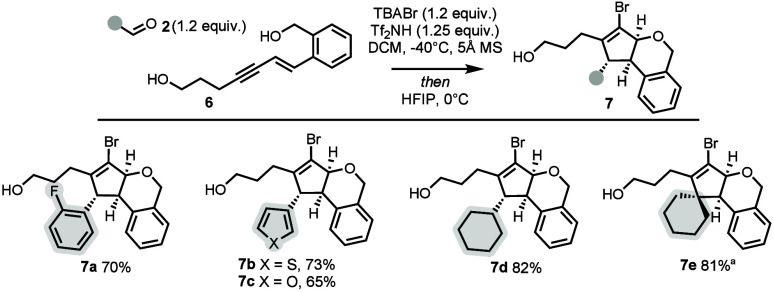 Figure 3
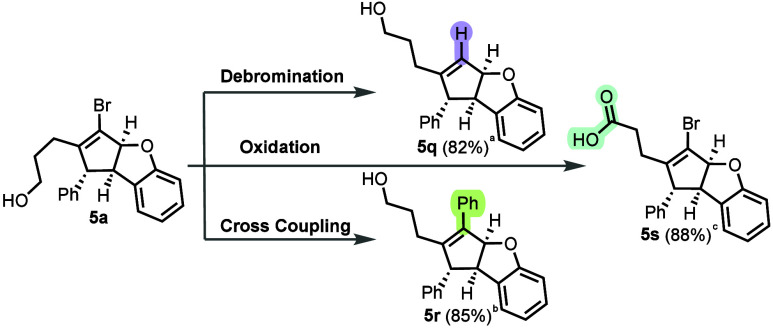 Figure 4
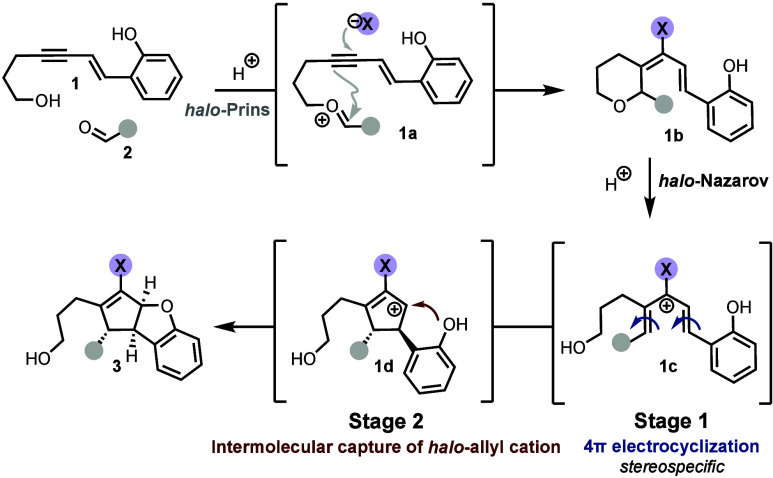 Figure 5
 Figure 6
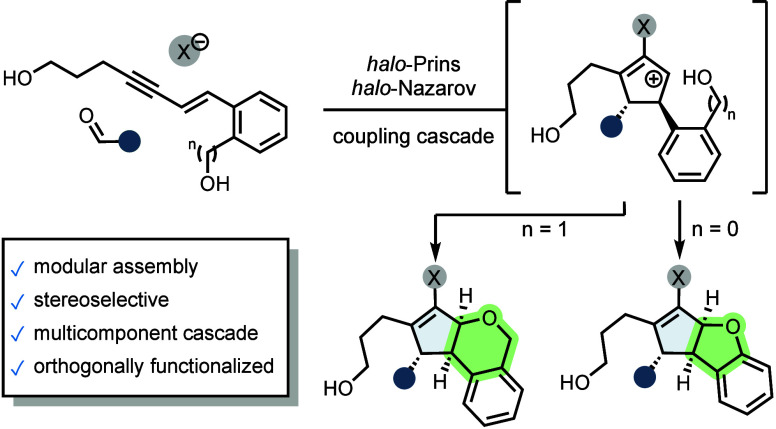 Figure 7
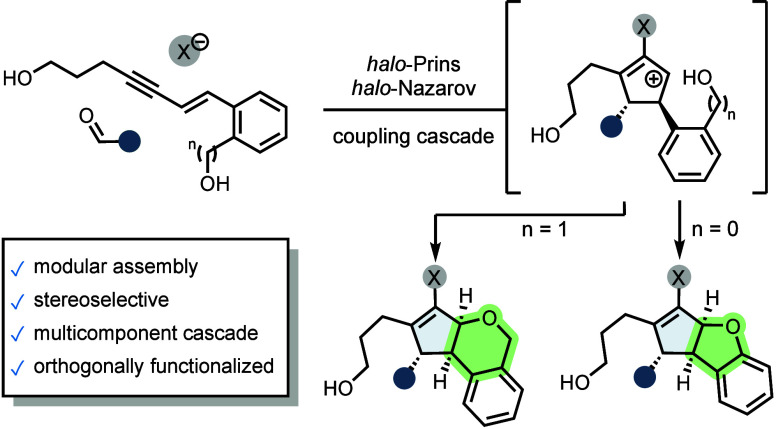 Figure 8
Peer Reviews
No public reviews on file for this paper yet. If you reviewed it on a platform where reviews are public (OpenReview, ICLR, NeurIPS, ICML), you can paste yours below so the community can read it here.
Videos
No videos yet. Explain this paper in a talk, walkthrough, or lecture? Add one.
Taxonomy
TopicsSynthetic Organic Chemistry Methods · Catalytic Alkyne Reactions · Catalytic C–H Functionalization Methods