A Simple and Versatile Cell-Free Expression Method for Producing Secondary Metabolites
Jaime Lorenzo N. Dinglasan, Namil Lee, Nam Ngoc Pham, Meghana Faltane, Marie Lynde, Katherine B. Louie, Sangeeta Nath, Jay D. Keasling, Hiroshi Otani, Nigel J. Mouncey

TL;DR
This paper introduces a new cell-free method using Streptomyces extracts to efficiently produce secondary metabolites, which are important for industrial and medical applications.
Contribution
The study presents a generalizable and scalable Streptomyces-based cell-free system for high-yield protein expression and biosynthesis of natural products.
Findings
The method achieves high protein yields (180–230 μg/mL) in Streptomyces lysates.
The system successfully produces polyketides and cyclic dipeptides without additional supplements.
It is the first to demonstrate expression and catalysis of a T1PKS in a Streptomyces-based system.
Abstract
Secondary metabolites are a major source of natural products with industrially relevant bioactivities. Lysate-based cell-free expression (CFE) is an emerging platform for accelerating the discovery and engineering of these natural products. While Escherichia coli cell extracts are widely used for CFE, Streptomyces extracts are likely to offer a more biochemically compatible environment for their expression. However, current Streptomyces-based CFE systems remain underdeveloped, with protocols that are either strain-specific or not readily scalable. To address these limitations and enable broader access to cell-free natural product biosynthesis, we present a generalizable and simple set of reaction conditions that support high-yield protein expression (180–230 μg/mL) in lysates derived from Streptomyces venezuelae NRRL B-65422 and Streptomyces lividans TK24. Like E. coli-based systems,…
Genes, proteins, chemicals, diseases, species, mutations and cell lines named across the full text — each resolved to its canonical identifier and authoritative record.
Click any figure to enlarge with its caption.
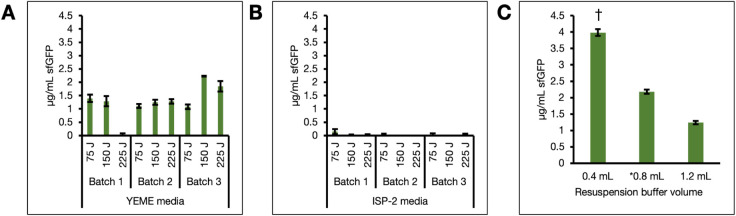 Figure 1
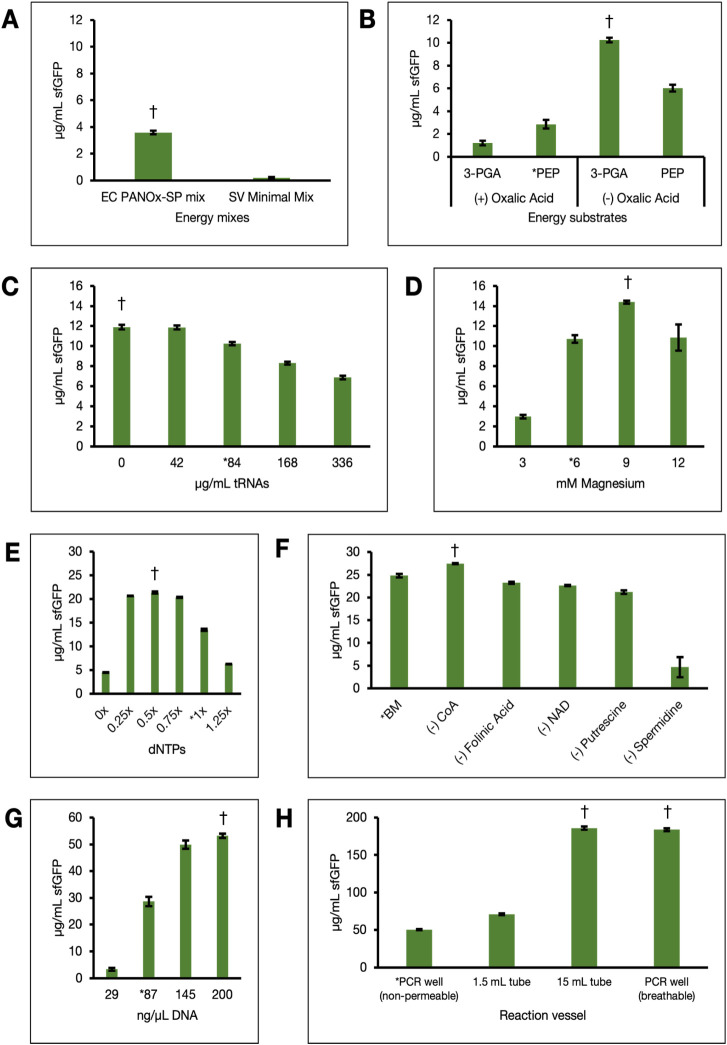 Figure 2
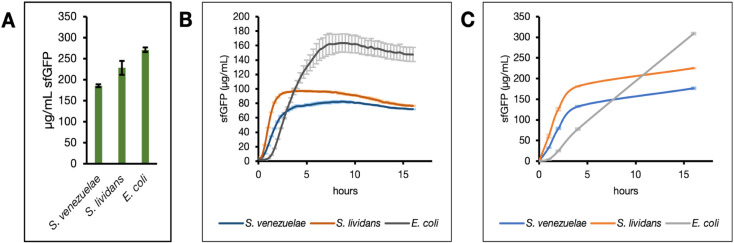 Figure 3
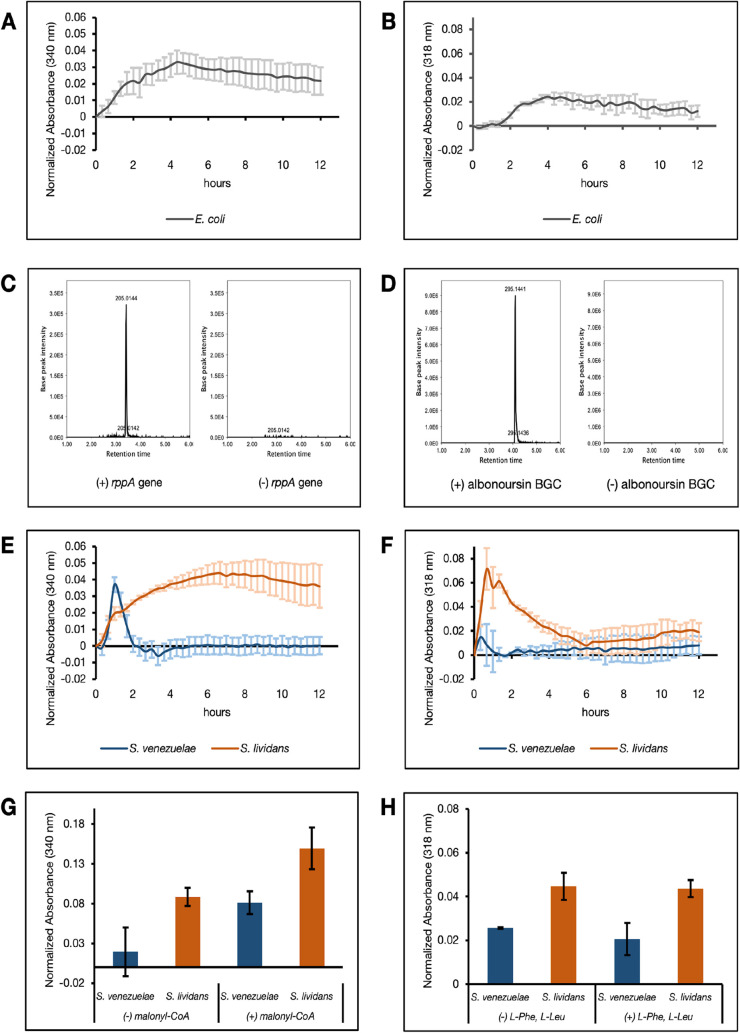 Figure 4
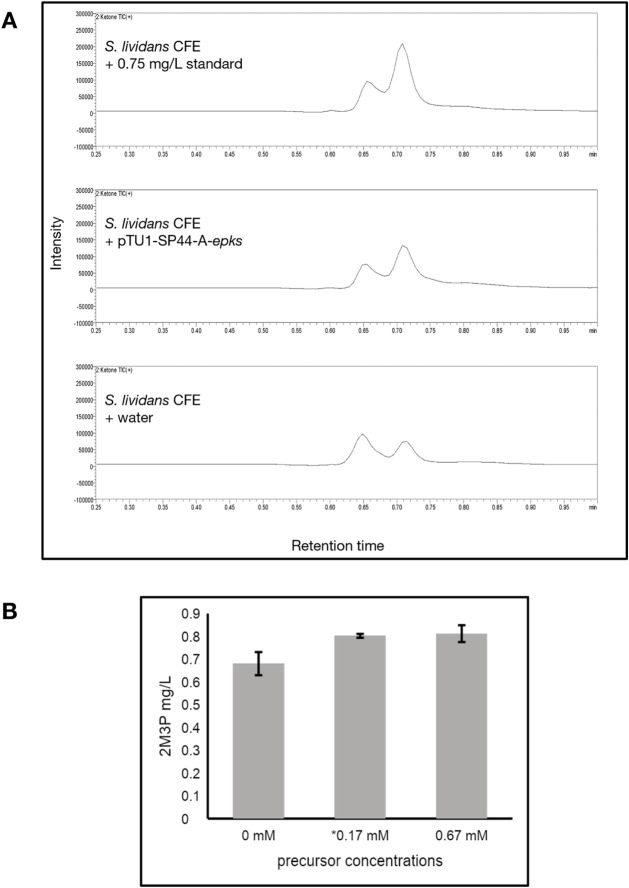 Figure 5
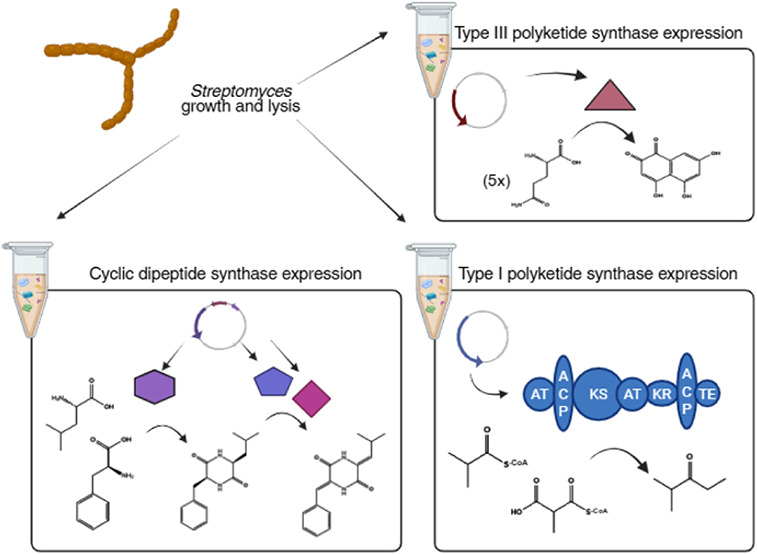 Figure 6
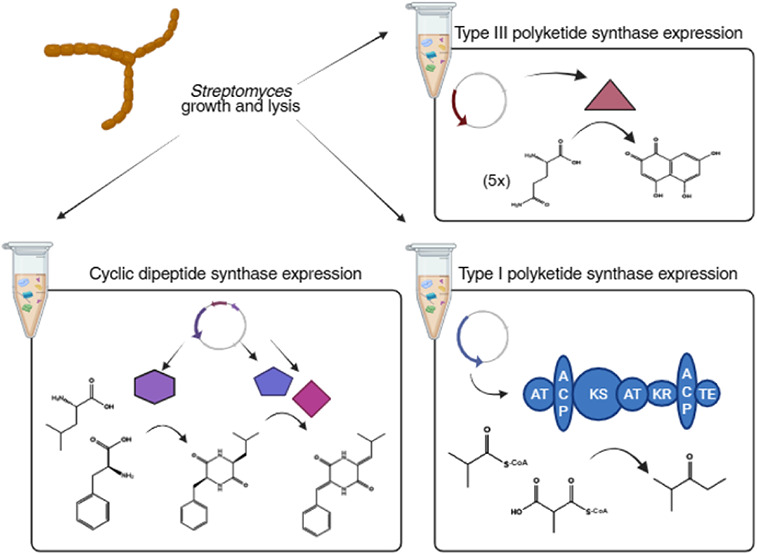 Figure 7
Peer Reviews
No public reviews on file for this paper yet. If you reviewed it on a platform where reviews are public (OpenReview, ICLR, NeurIPS, ICML), you can paste yours below so the community can read it here.
Videos
No videos yet. Explain this paper in a talk, walkthrough, or lecture? Add one.
Taxonomy
TopicsMicrobial Natural Products and Biosynthesis · Plant biochemistry and biosynthesis · Synthetic Organic Chemistry Methods