Heterologous Expression and CRISPR/Cas9-Assisted Manipulation of the Hybrid Gene Cluster Specifying the Biosynthesis of Meroterpenoids and Phenazines
Olha Schneider, Martin Zehl, Margherita Miele, Vittorio Pace, Corinna Brungs, Jan-Fang Cheng, Scarlet Hummelbrunner, Verena M. Dirsch, Sergey B. Zotchev

TL;DR
Scientists cloned a gene cluster from a soil bacterium and used CRISPR to study how it makes antibiotic compounds, revealing new insights into their biosynthesis.
Contribution
The study demonstrates CRISPR/Cas9-assisted manipulation of a hybrid gene cluster to activate and dissect meroterpenoid biosynthesis and partial phenazine production.
Findings
Overexpression of MfqF activated biosynthesis of marfuraquinocins C, D, and a new antibacterial compound, marfuraquinocin E.
CRISPR/Cas9 confirmed MfqW's role as a prenyltransferase in the meroterpenoid pathway.
Heterologous expression of a PhzF homologue restored partial phenazine biosynthesis.
Abstract
A hybrid gene cluster, mfq, predicted to govern the biosynthesis of both meroterpenoids and phenaziterpenes, was cloned from the genome of Streptomyces sp. S4.7 and introduced into the heterologous host Streptomyces coelicolor M1154. The biosynthesis of the meroterpenoids marfuraquinocins C and D, previously isolated from Streptomyces niveus SCSIO 3406, as well as a new congener, marfuraquinocin E, which exhibited antibacterial activity, was activated upon overexpression of the regulatory protein MfqF. However, production of neither phenaziterpenes nor phenazines was detected. The structure of marfuraquinocin E was elucidated, revealing the attachment of a terpene moiety at C-2, in contrast to C-6 as seen in the known congeners A–D. Using the CRISPR/Cas9 system, several genes in the mfq cluster were inactivated, confirming the role of MfqW as a prenyltransferase specific to the…
Genes, proteins, chemicals, diseases, species, mutations and cell lines named across the full text — each resolved to its canonical identifier and authoritative record.
Click any figure to enlarge with its caption.
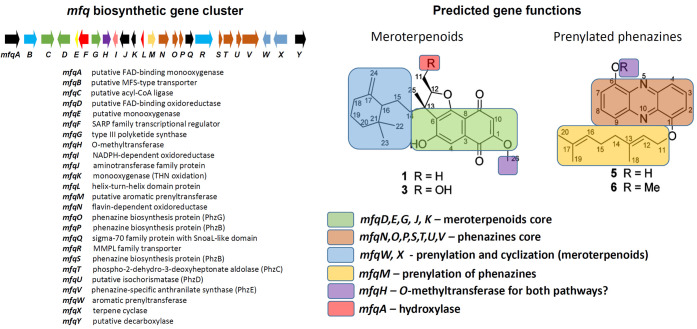 Figure 1
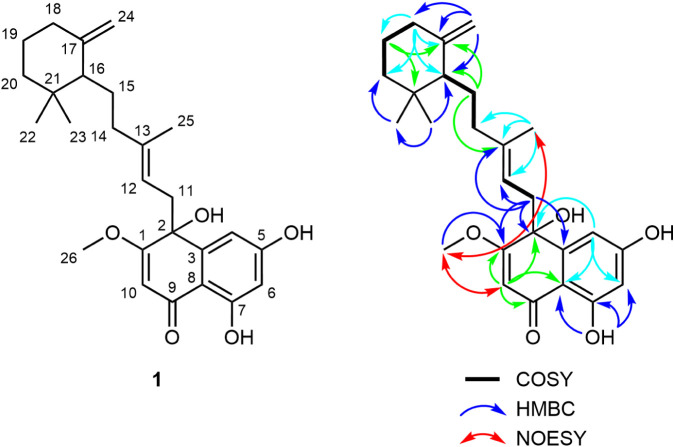 Figure 2
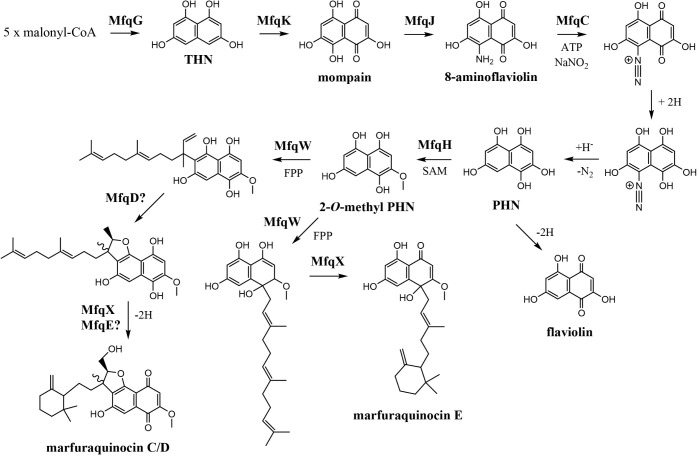 Figure 3
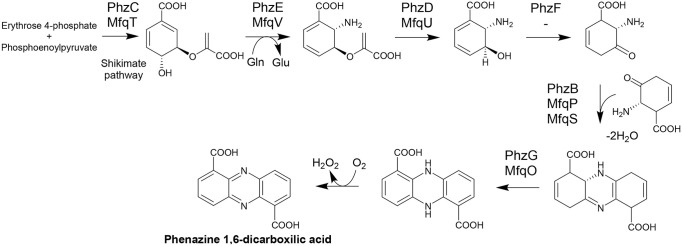 Figure 4
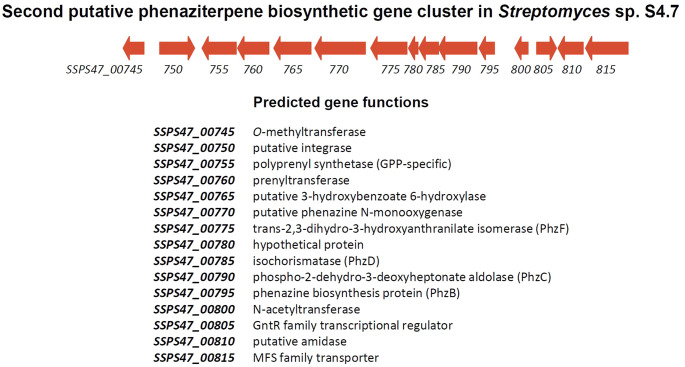 Figure 5
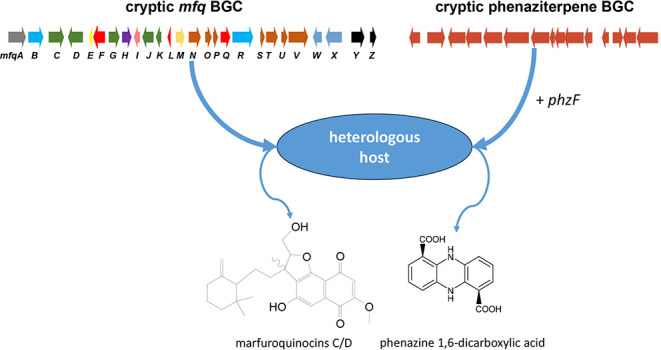 Figure 6
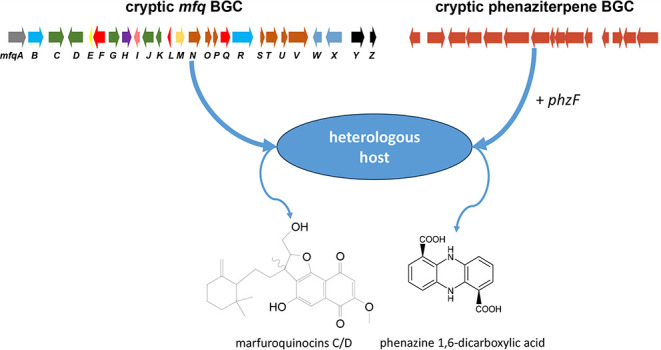 Figure 7
Peer Reviews
No public reviews on file for this paper yet. If you reviewed it on a platform where reviews are public (OpenReview, ICLR, NeurIPS, ICML), you can paste yours below so the community can read it here.
Videos
No videos yet. Explain this paper in a talk, walkthrough, or lecture? Add one.
Taxonomy
TopicsPlant biochemistry and biosynthesis · Microbial Natural Products and Biosynthesis · Biological Activity of Diterpenoids and Biflavonoids