Nickel-Induced Lattice Defects Limit Proton Uptake in Barium Zirconate Electrolytes
Yabing Wen, Andreas Rosnes, Bo Jiang, Øystein Prytz, Truls Norby, Reidar Haugsrud, Jonathan M. Polfus

TL;DR
Nickel in a type of ceramic material reduces its ability to conduct protons by creating defects that trap oxygen and hinder hydration.
Contribution
The study identifies two novel mechanisms by which nickel impairs proton conductivity in barium zirconate electrolytes.
Findings
Nickel forms defect clusters with Yb acceptors, trapping oxygen vacancies and reducing hydration.
Excess B-site cations from NiO addition create antiphase boundaries that deplete bulk acceptors.
These mechanisms are quantitatively linked to reduced hydration as measured by thermogravimetric analysis.
Abstract
Nickel provides essential catalytic properties for hydrogen electrodes in proton-conducting ceramic electrochemical cells. However, Ni diminishes the hydration capability and proton conductivity when incorporated into electrolyte materials including BaZr0.8Yb0.2O3−δ studied here. Through semiquantitative atomic-resolution scanning transmission electron microscopy, density functional theory simulations, X-ray total scattering, and absorption spectroscopy, we reveal that Ni forms point defect clusters with the Yb acceptors wherein oxygen vacancies are trapped and resist hydration. The resulting effective acceptor concentration is described by point defect reactions in quantitative agreement with thermogravimetric measurements of hydration for samples substituted with 2–5 mol % Ni by BaNiO2 addition. Moreover, excess B-site cations due to NiO addition induce the formation of antiphase…
Genes, proteins, chemicals, diseases, species, mutations and cell lines named across the full text — each resolved to its canonical identifier and authoritative record.
Click any figure to enlarge with its caption.
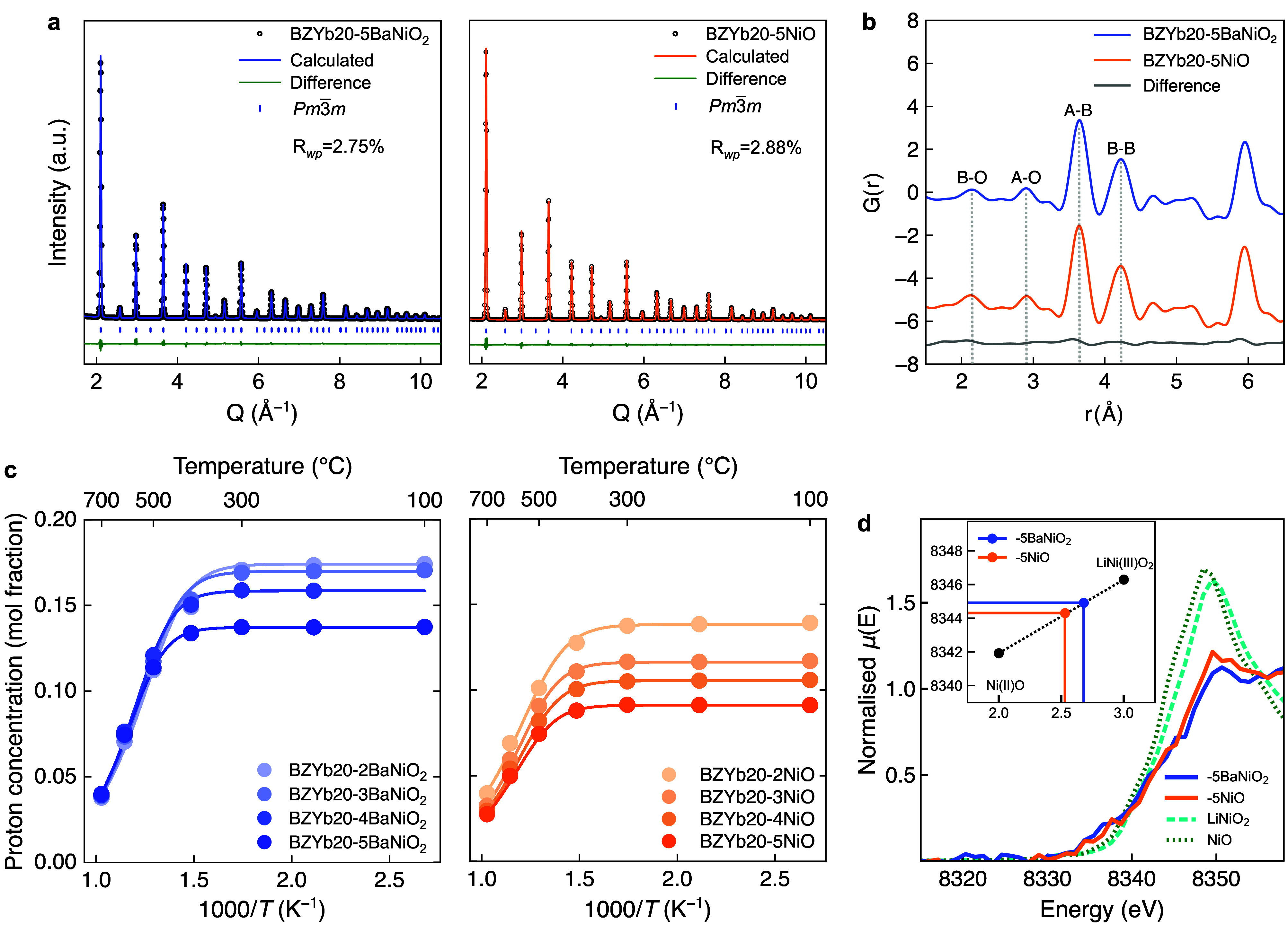 Figure 1
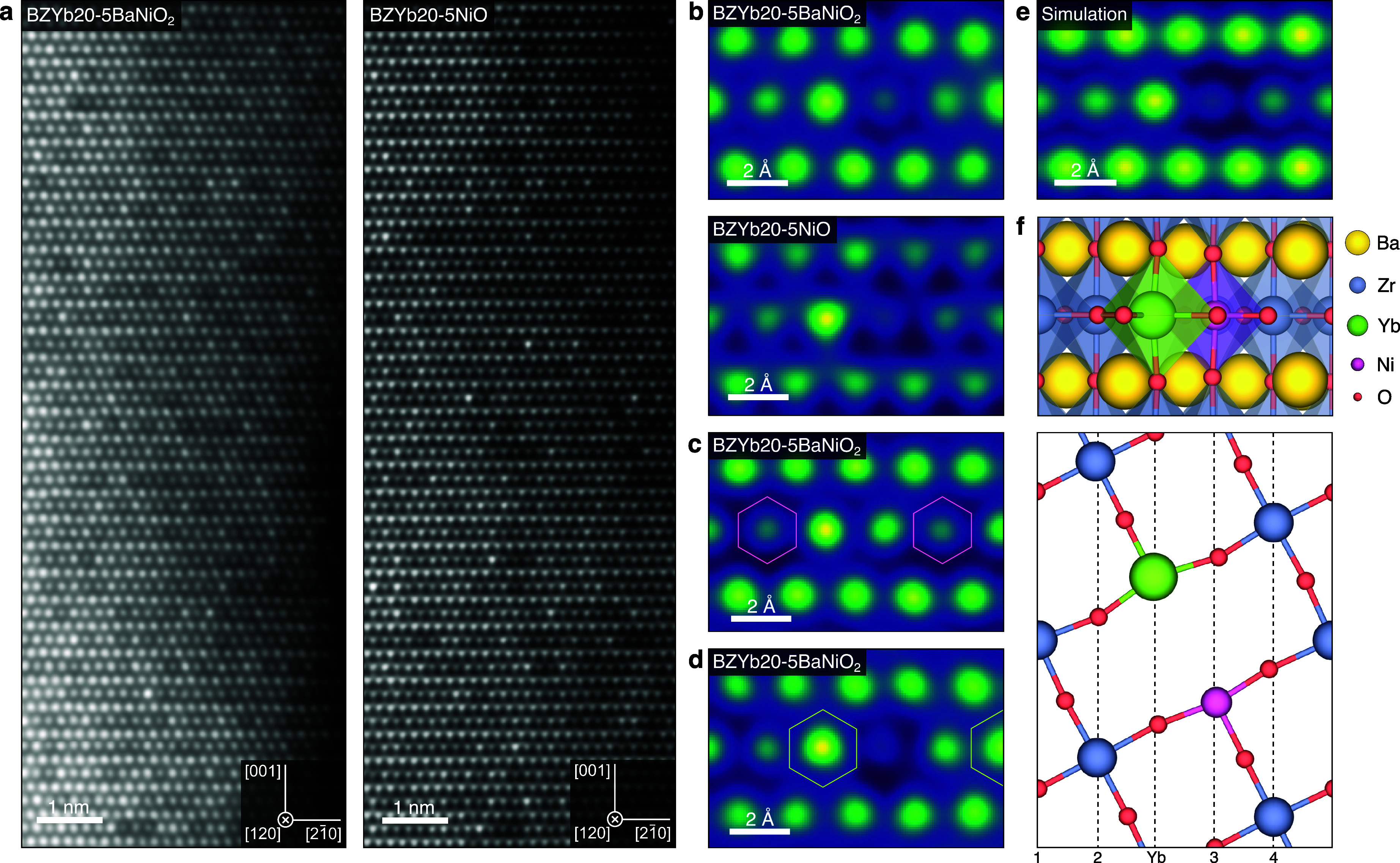 Figure 2
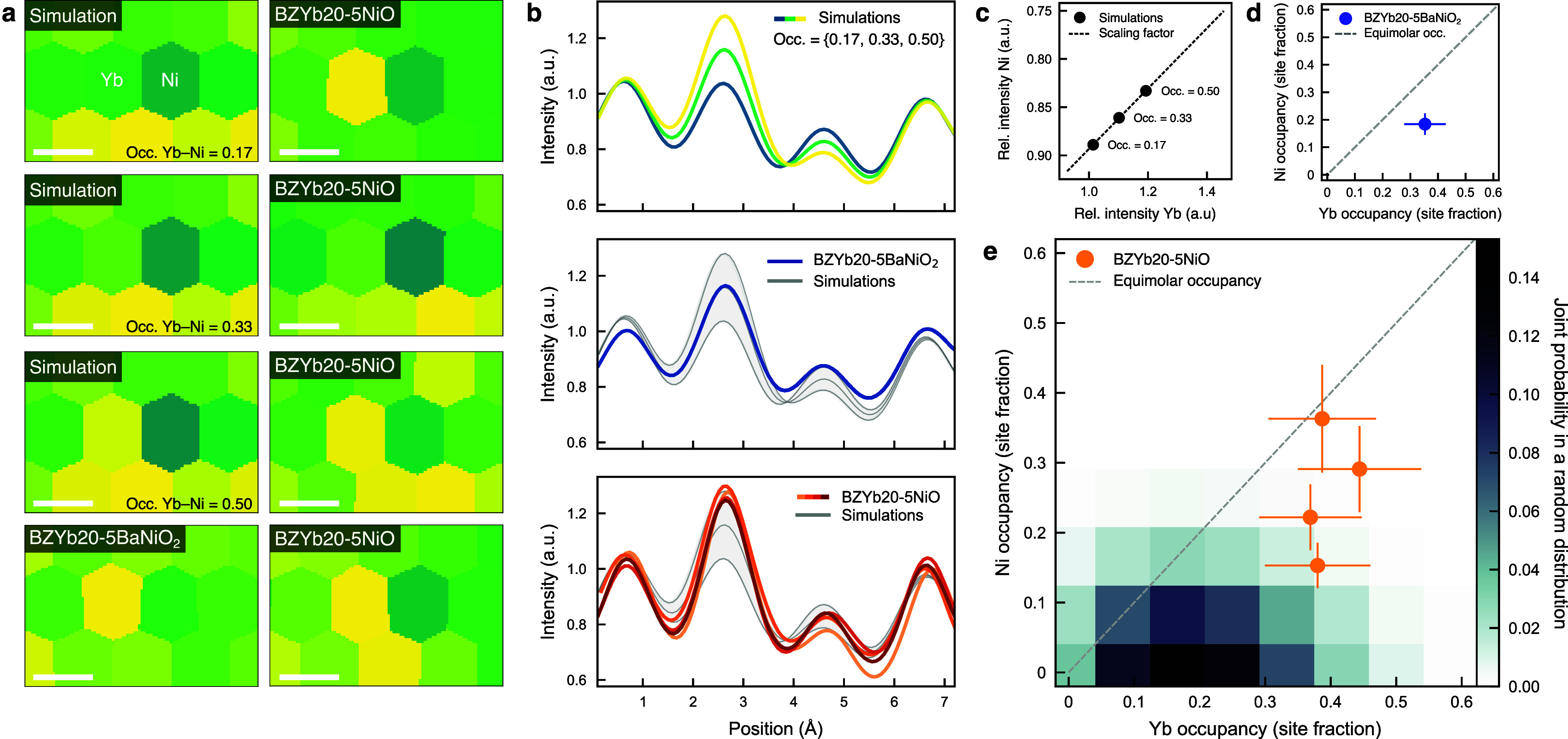 Figure 3
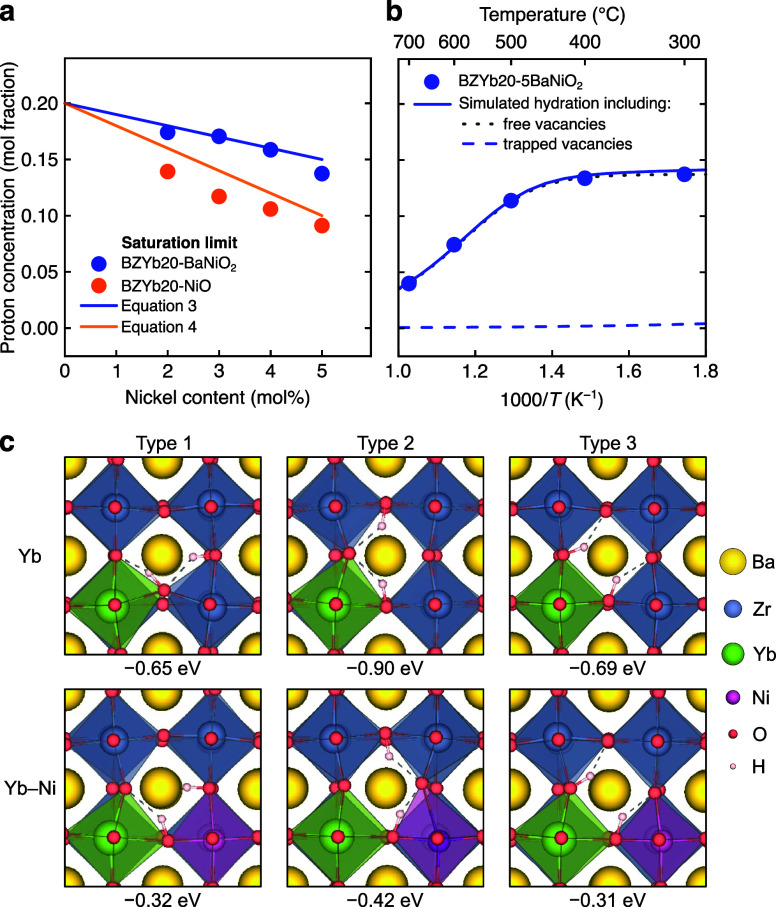 Figure 4
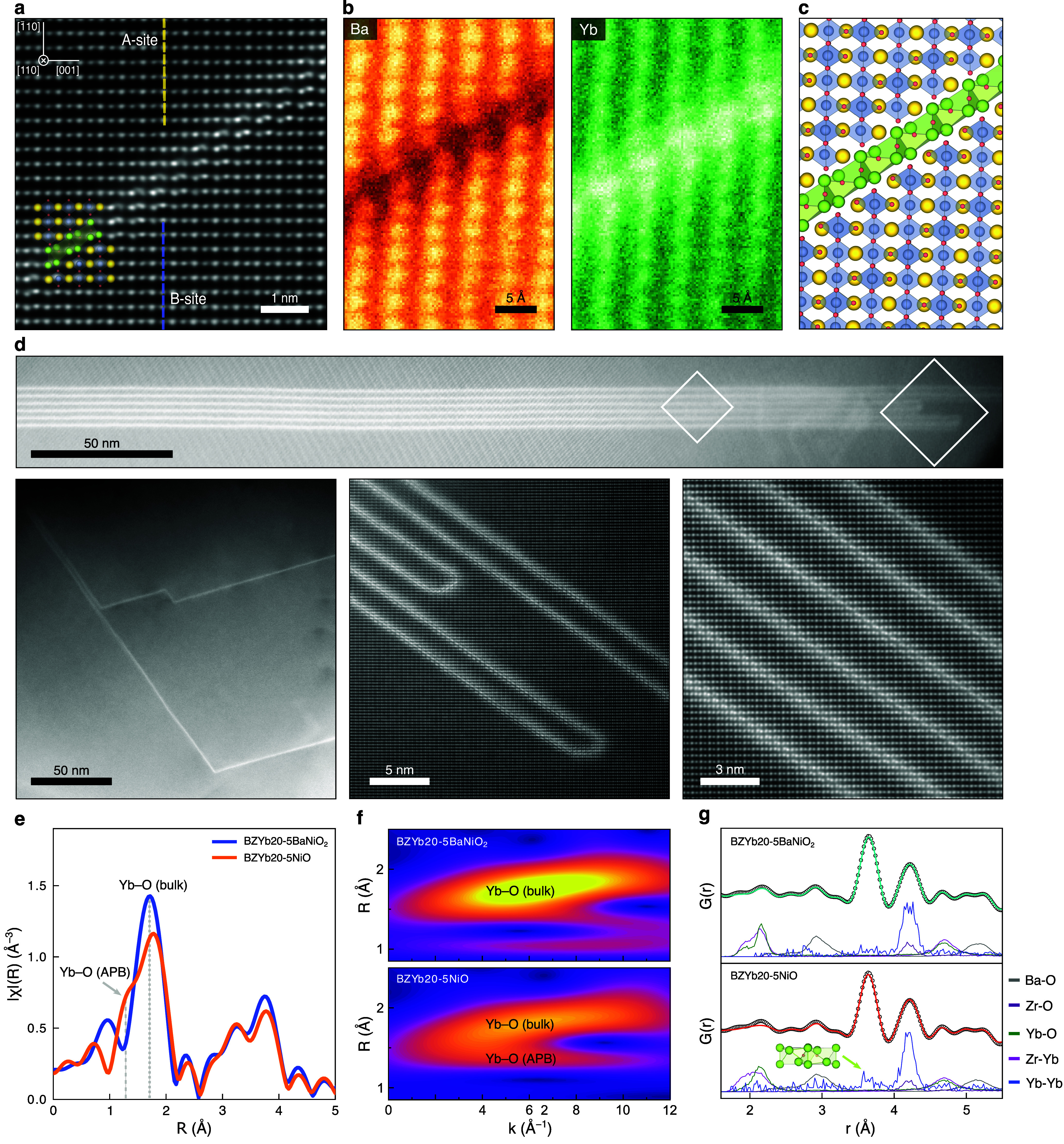 Figure 5
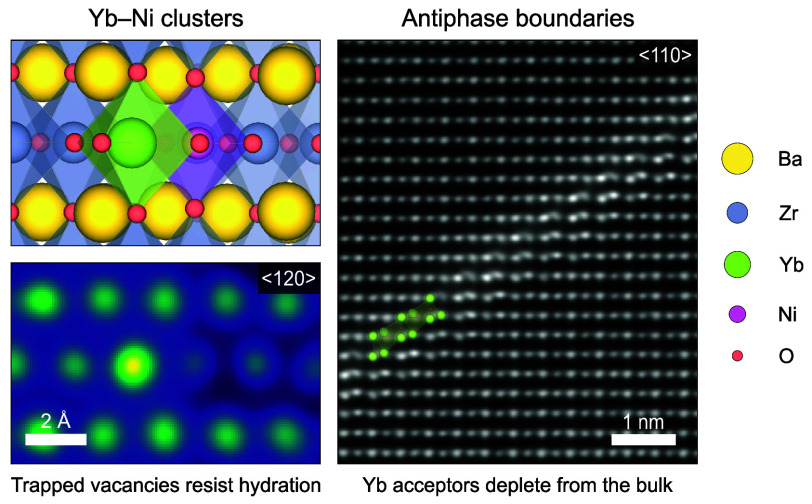 Figure 6
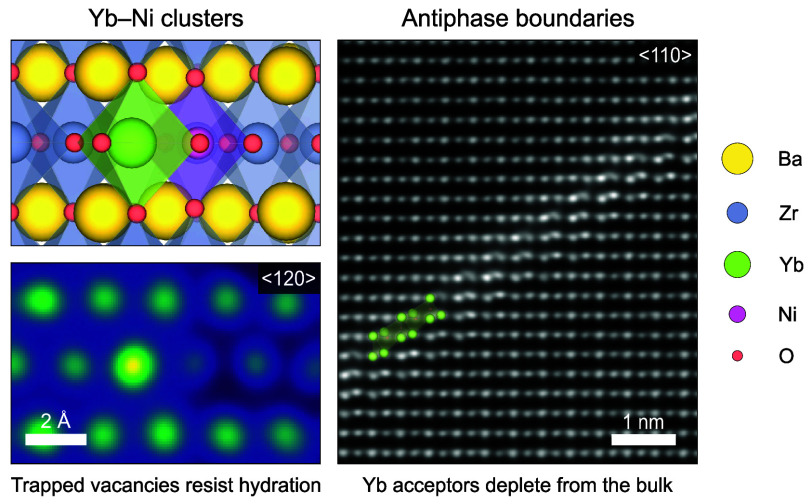 Figure 7
 Figure 8
 Figure 9
 Figure 10
 Figure 11
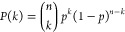 Figure 12
 Figure 13
Peer Reviews
No public reviews on file for this paper yet. If you reviewed it on a platform where reviews are public (OpenReview, ICLR, NeurIPS, ICML), you can paste yours below so the community can read it here.
Videos
No videos yet. Explain this paper in a talk, walkthrough, or lecture? Add one.
Taxonomy
TopicsAdvancements in Solid Oxide Fuel Cells · Fuel Cells and Related Materials · Electrocatalysts for Energy Conversion