Enantioselective Intramolecular C–H Alkylation Catalyzed by a Nonsymmetric Chiral Cobalt Porphyrin
Christoph Buchelt, Stefan Breitenlechner, Julian Zuber, Stefan M. Huber, Thorsten Bach

TL;DR
A chiral cobalt porphyrin catalyst enables efficient and selective C–H alkylation to form rings in quinazolinones.
Contribution
A nonsymmetric chiral cobalt porphyrin enables enantioselective intramolecular C–H alkylation with high yields and enantiomeric excess.
Findings
Formation of five-, six-, and seven-membered rings was achieved with 72–99% yield and 47–99% ee.
The catalyst uses two-point hydrogen bonding to recruit substrates and forms a cobalt-entangled carbon-centered radical.
A sequence of hydrogen abstraction and homolytic substitution is orchestrated by the chiral confinement of the catalyst.
Abstract
Upon catalysis (1 mol %) by a chiral cobalt porphyrin, quinazolinones with a tethered diazo alkane precursor underwent an enantioselective C–H alkylation at carbon atom C4. Formation of five-, six-, and seven-membered rings was successfully accomplished (27 examples, 72–99% yield, 47–99% ee). Experimental and computational studies suggest that the catalyst recruits the substrates by two-point hydrogen bonding. After formation of a cobalt-entangled carbon-centered radical, a sequence of hydrogen abstraction and homolytic substitution is precisely orchestrated by the chiral confinement of the cobalt porphyrin.
Genes, proteins, chemicals, diseases, species, mutations and cell lines named across the full text — each resolved to its canonical identifier and authoritative record.
Click any figure to enlarge with its caption.
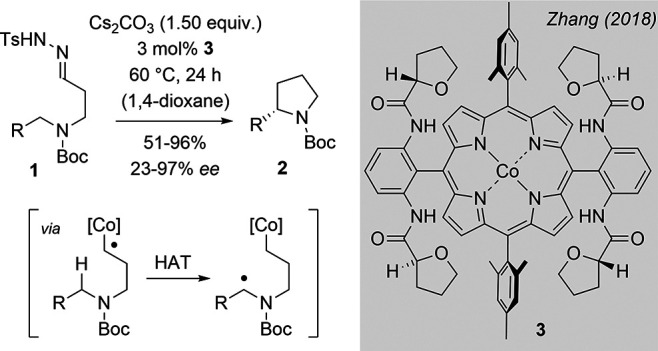 Figure 1
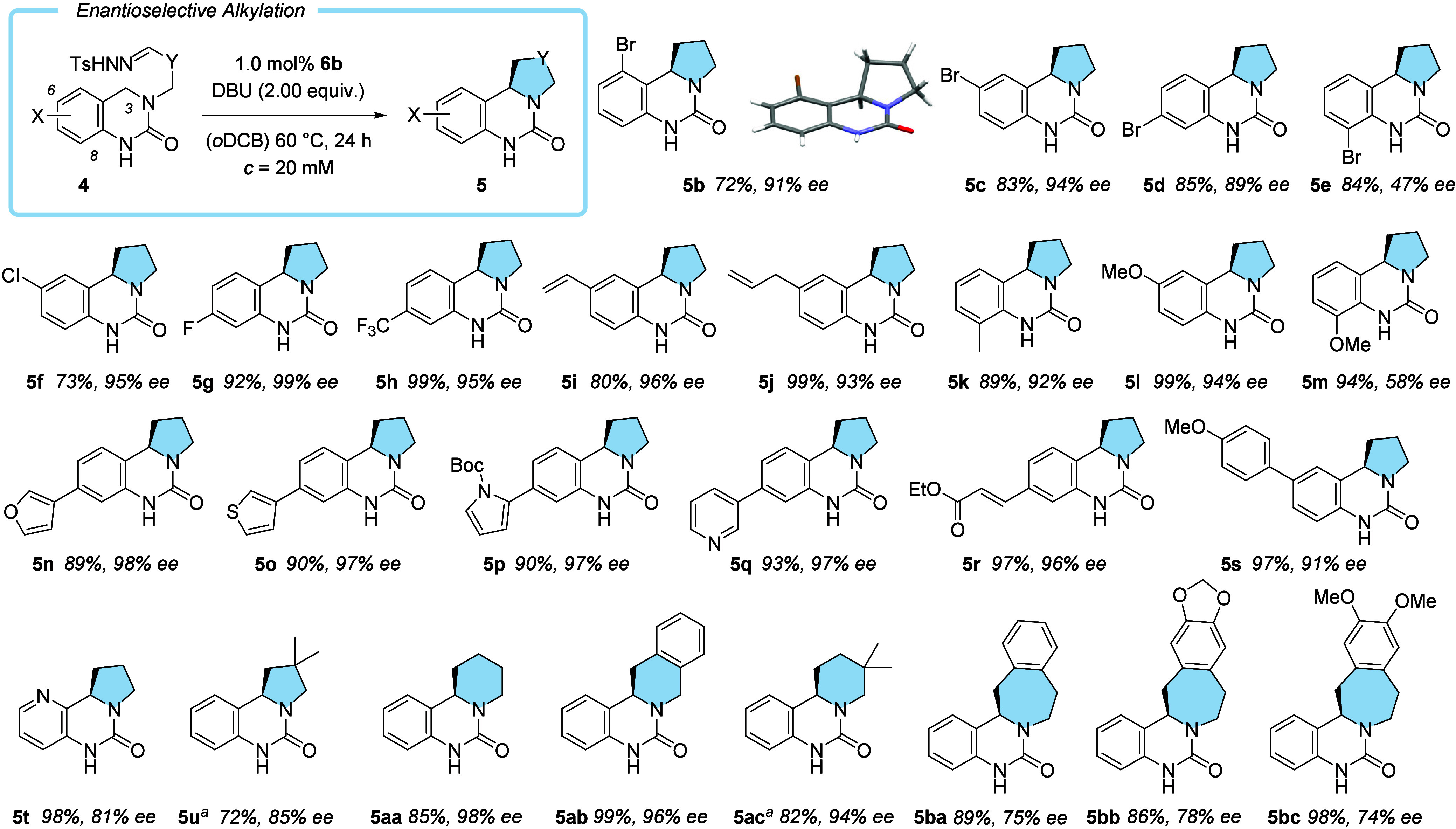 Figure 2
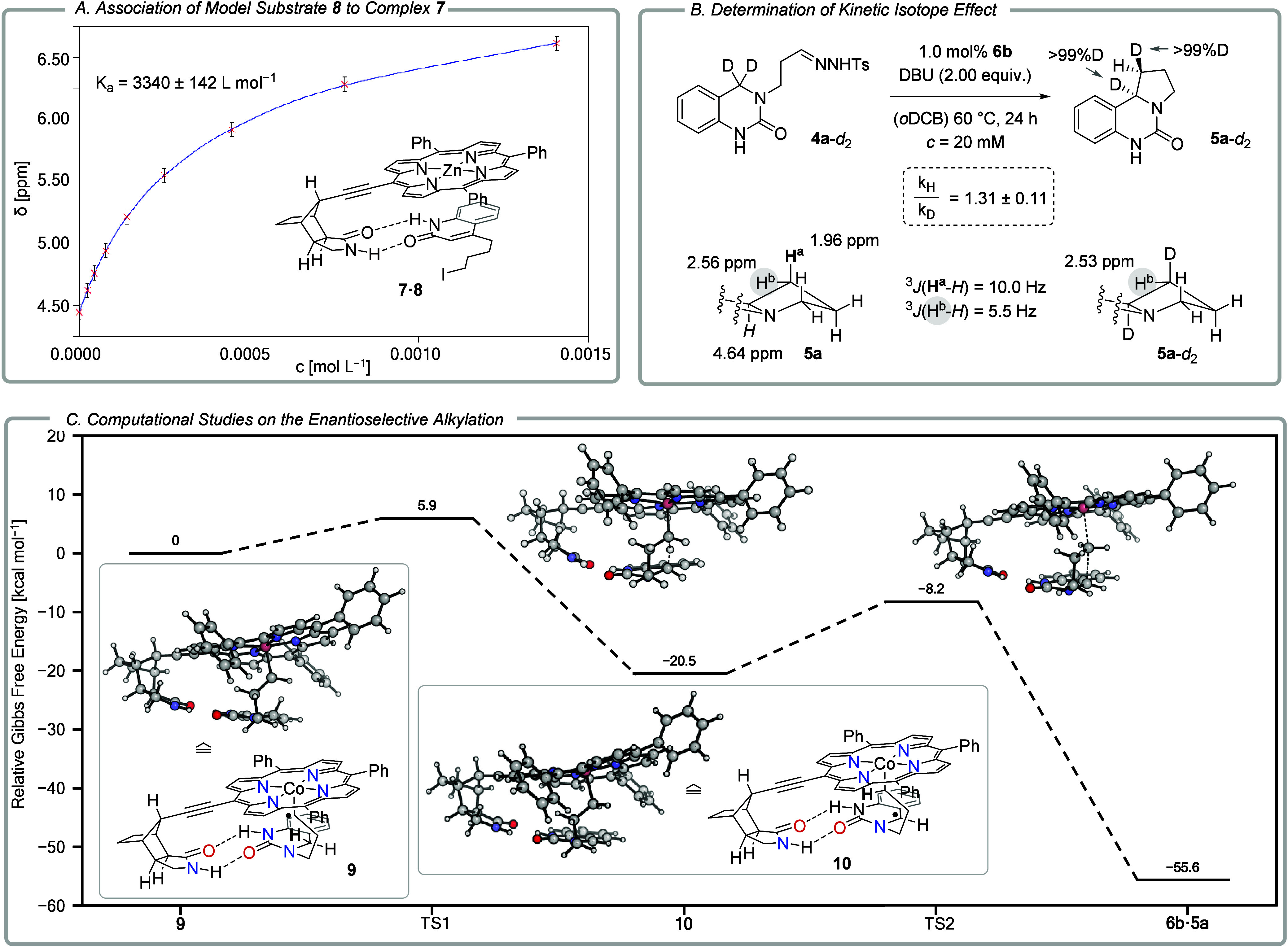 Figure 3
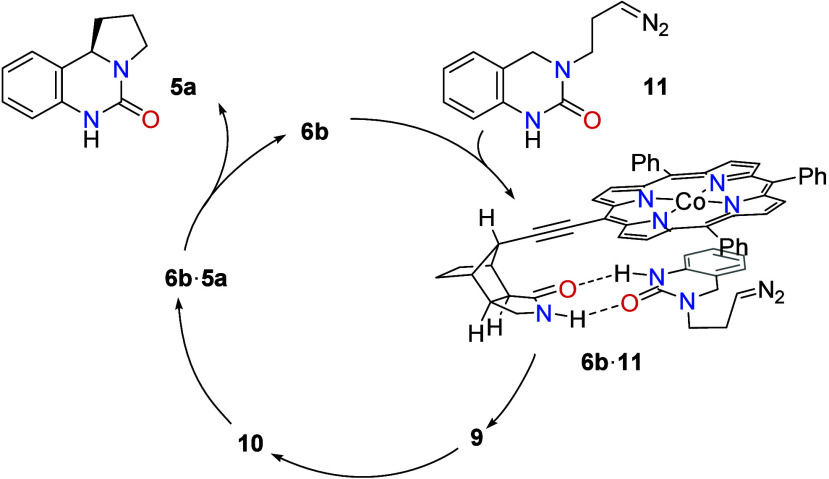 Figure 4
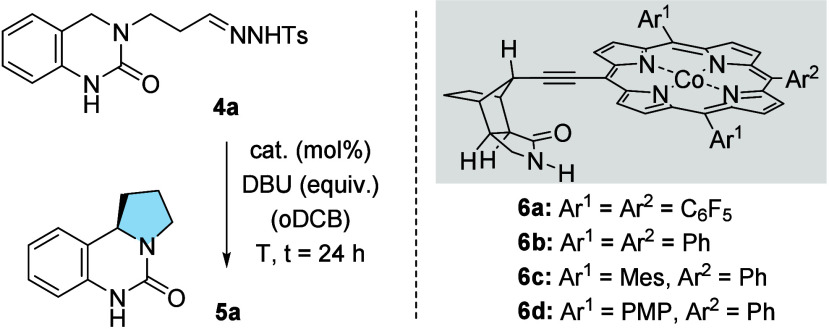 Figure 5
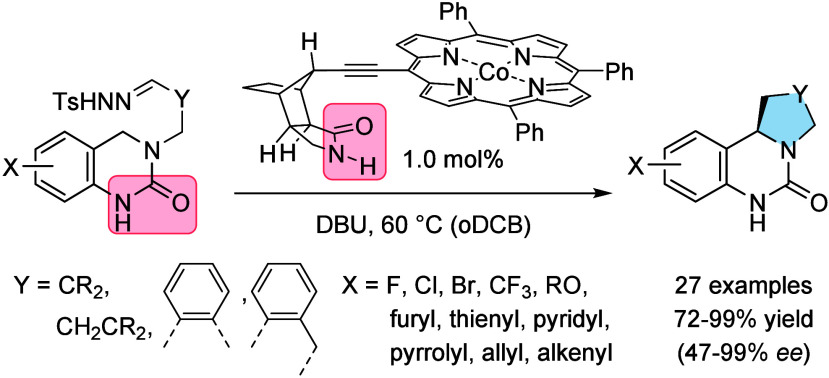 Figure 6
Peer Reviews
No public reviews on file for this paper yet. If you reviewed it on a platform where reviews are public (OpenReview, ICLR, NeurIPS, ICML), you can paste yours below so the community can read it here.
Videos
No videos yet. Explain this paper in a talk, walkthrough, or lecture? Add one.
Taxonomy
TopicsCatalytic C–H Functionalization Methods · Cyclopropane Reaction Mechanisms · Asymmetric Hydrogenation and Catalysis