The Power of Catalytic Centers and Ascorbate in Boosting the Photocatalytic Hydrogen Evolution Performance of TpDTz 2D-COF
David Reyes-Mesa, Pau Sarró, Muriel F. Gusta, Alberto Jiménez-Solano, Saunak Das, Bishnu P. Biswal, Hugo A. Vignolo-González, Laura Velasco-Garcia, Antoni Llobet, Neus G. Bastús, Víctor Puntes, Adelina Vallribera, Roser Pleixats, Albert Granados, Bettina V. Lotsch

TL;DR
This paper shows how adding catalytic centers and ascorbate improves the efficiency of a 2D material for producing hydrogen through photocatalysis.
Contribution
The study introduces a noble metal-free cobalt catalyst as a viable alternative to platinum for photocatalytic hydrogen evolution.
Findings
PtNPs achieve high hydrogen evolution rates of 106,000 μmol H2 g–1 h–1 with 5% Pt.
Ascorbic acid enhances TpDTz photoluminescence and charge extraction efficiency.
A cobalt-based catalyst achieves 10,400 μmol H2 g–1 h–1, three times slower than the Pt system but without noble metals.
Abstract
The photocatalytic hydrogen evolution activity of a model 2D covalent organic framework (TpDTz) containing a thiazolo[5,4-d]thiazole (DTz) electron acceptor and triformylphloroglucinol (Tp) electron donor groups is enhanced by combining it with well-defined catalytic centers and suitable sacrificial electron donors. Platinum nanoparticles (PtNPs) with an average diameter of 2.7 ± 0.4 nm achieve rates up to 106 000 μmol H2 g–1 h–1 (5% Pt w/w). The best system requires the use of ascorbic acid/ascorbate buffer, which has been demonstrated to enhance the photoluminescence of TpDTz by forming aggregates while efficiently extracting charges from the excited TpDTz (TpDTz*). The productive charge extraction by the PtNPs from TpDTz* is also supported by steady state and time-resolved photoluminescence studies. All these factors combined with the high catalytic activity of PtNPs catalytic…
Genes, proteins, chemicals, diseases, species, mutations and cell lines named across the full text — each resolved to its canonical identifier and authoritative record.
Click any figure to enlarge with its caption.
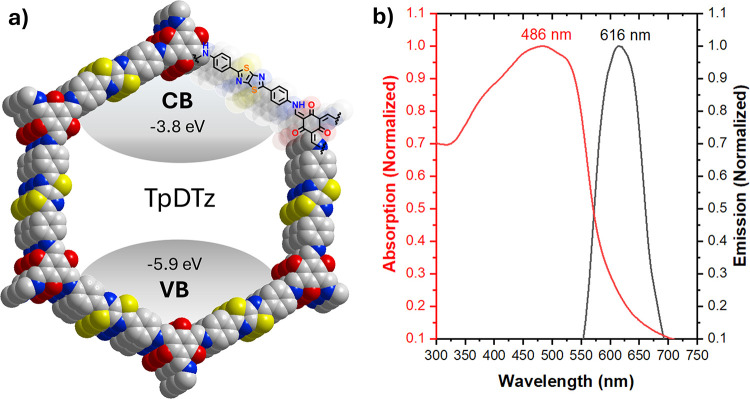 Figure 1
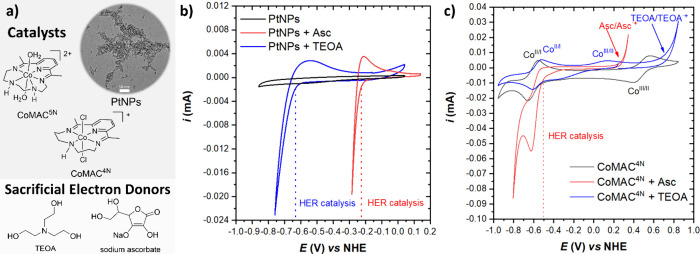 Figure 2
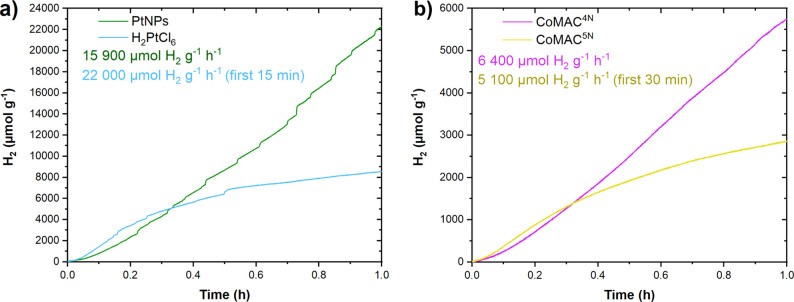 Figure 3
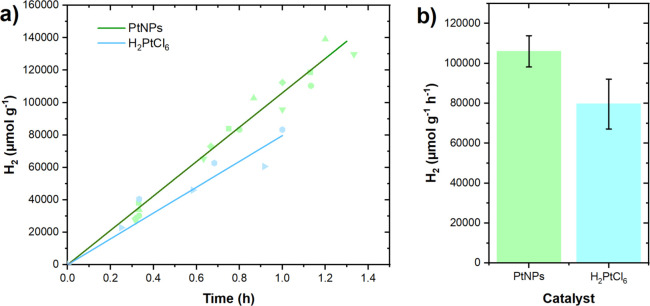 Figure 4
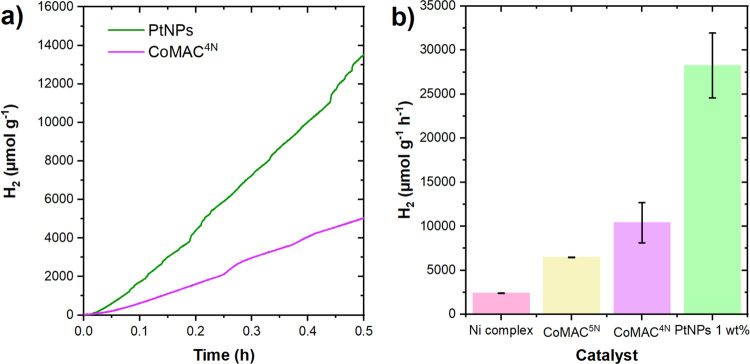 Figure 5
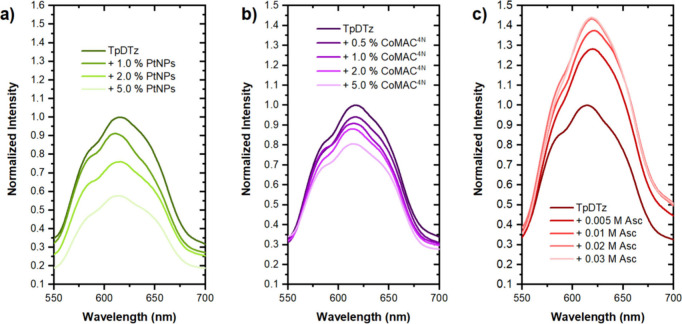 Figure 6
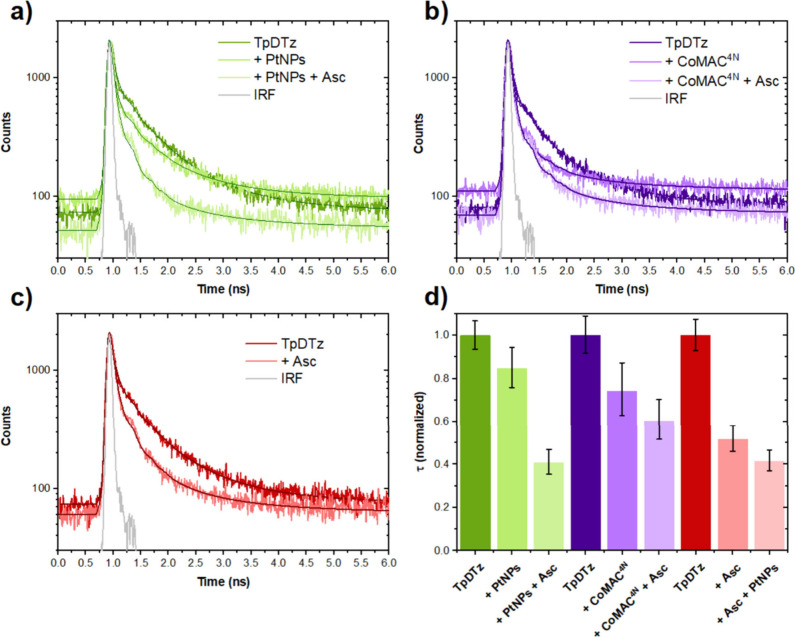 Figure 7
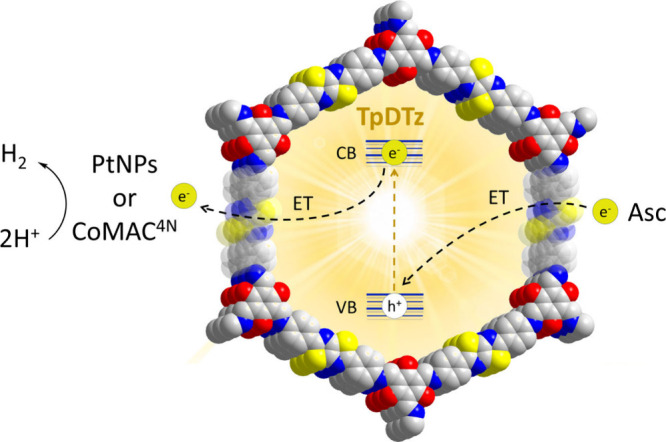 Figure 8
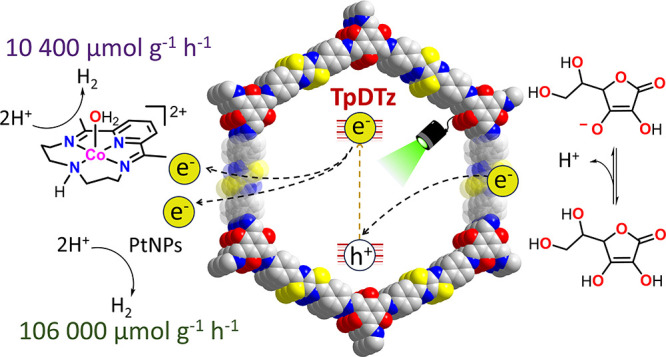 Figure 9
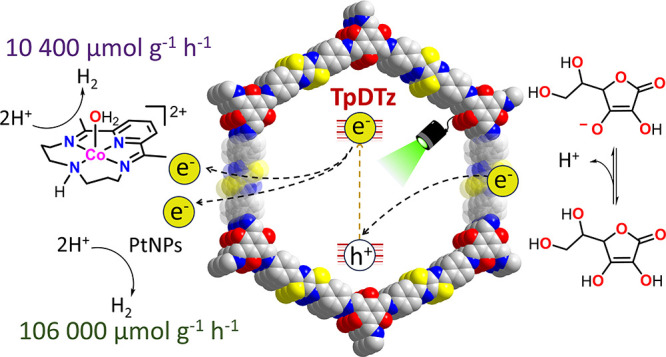 Figure 10
Peer Reviews
No public reviews on file for this paper yet. If you reviewed it on a platform where reviews are public (OpenReview, ICLR, NeurIPS, ICML), you can paste yours below so the community can read it here.
Videos
No videos yet. Explain this paper in a talk, walkthrough, or lecture? Add one.
Taxonomy
TopicsCovalent Organic Framework Applications · Advanced Photocatalysis Techniques · Nanoplatforms for cancer theranostics