Determination of Magnetic Anisotropy Tensors in Actinide Complexes Using Torque Magnetometry: A U(IV) Case Study
Leonardo Tacconi, Victor Adebayo, Laura Chelazzi, Claude Berthon, Hélène Bolvin, Mauro Perfetti

TL;DR
This study uses torque magnetometry to determine the magnetic properties of a uranium complex, offering insights into actinide magnetism.
Contribution
First application of cantilever torque magnetometry to an actinide-based molecular system.
Findings
Magnetic anisotropy axes of U(DOTA)(H2O) align with those of Pr3+ and Dy3+ analogues.
Cantilever torque magnetometry combined with calculations describes the non-Kramers ground state of U(DOTA)(H2O).
Results validate computational approaches for 5f-element magnetism.
Abstract
In this study, we employed cantilever torque magnetometry to probe the magnetic anisotropy of a single crystal of U(DOTA)(H2O) (DOTA = 1,4,7,10-tetraazacyclododecane-1,4,7,10-tetraacetic acid), representing, to the best of our knowledge, the first application of this technique to an actinide-based molecular system. Combining cantilever torque magnetometry data with ab initio calculations allowed us to determine the magnetic anisotropy tensor of the uranium center. The resulting parameters enabled direct comparison with the isoelectronic lanthanide complex previously reported in the literature as well as with ab initio predictions for the theoretical Es4+ isostructural analogue. We find that the magnetic anisotropy axes of U(DOTA)(H2O) (5f 2) closely align with those of the Pr3+ (4f 2) and Dy3+ (4f 9) analogues and with those predicted for Es(DOTA)(H2O) (5f 9). The combination of…
Genes, proteins, chemicals, diseases, species, mutations and cell lines named across the full text — each resolved to its canonical identifier and authoritative record.
Click any figure to enlarge with its caption.
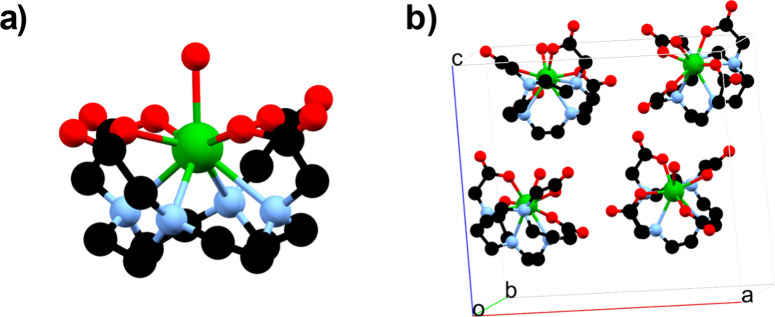 Figure 1
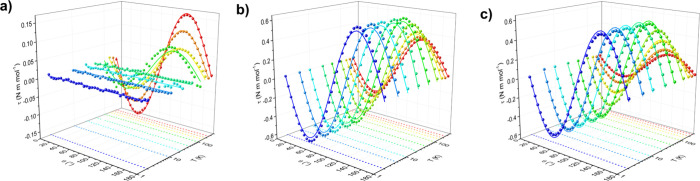 Figure 2
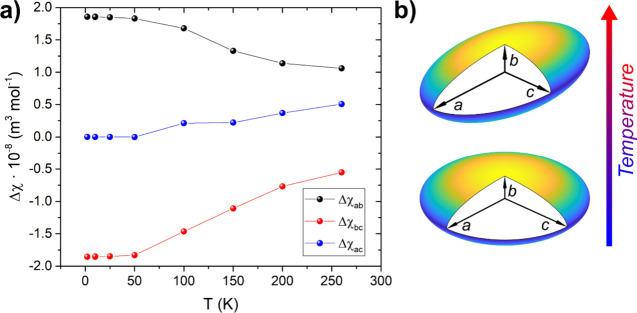 Figure 3
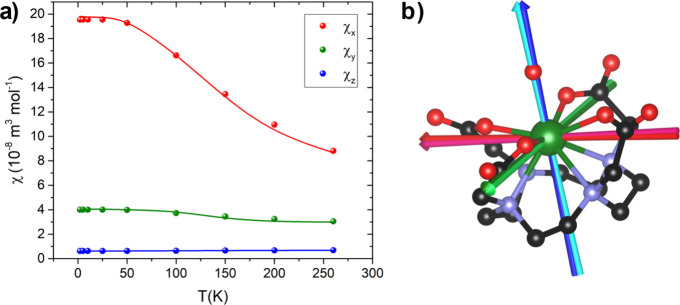 Figure 4
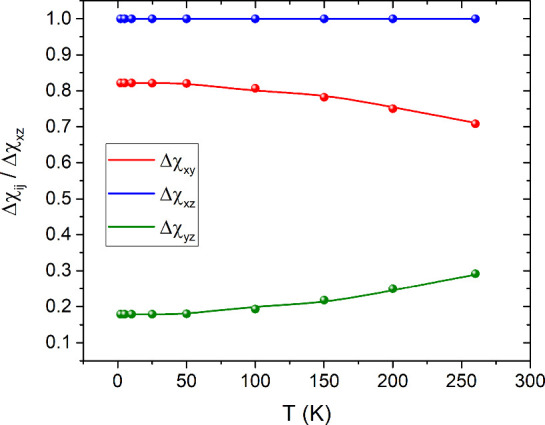 Figure 5
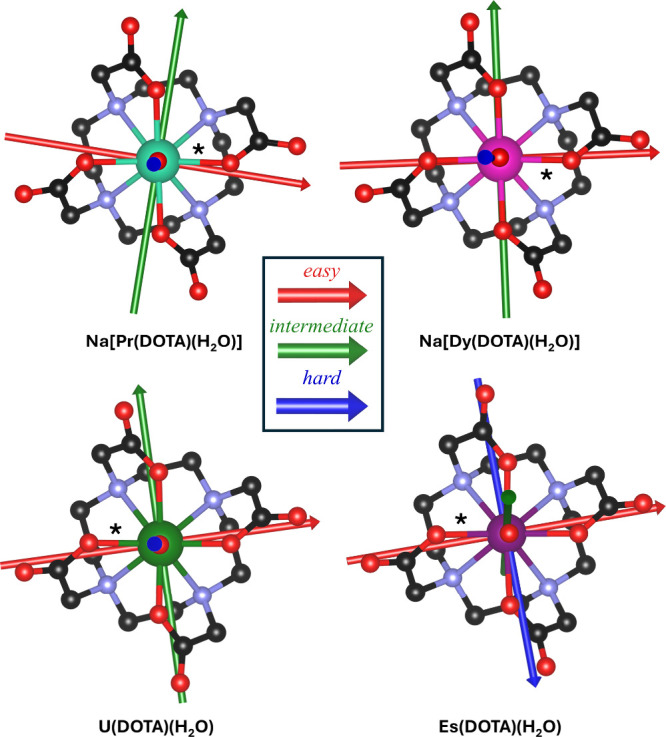 Figure 6
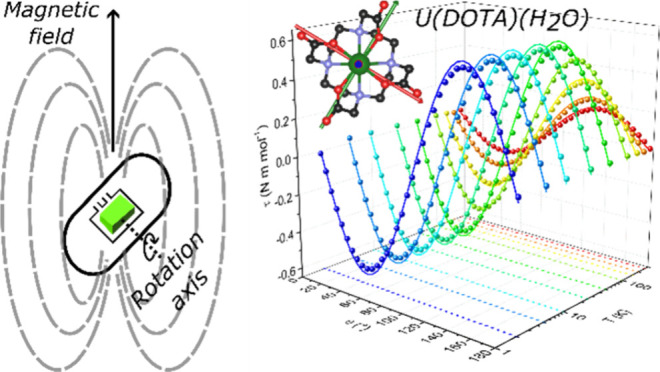 Figure 7
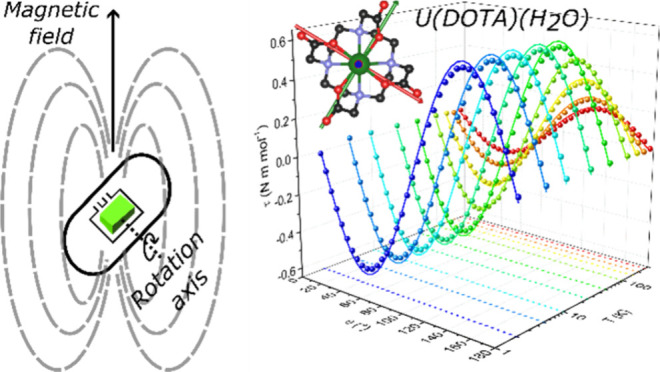 Figure 8
 Figure 9
 Figure 10
 Figure 11
 Figure 12
 Figure 13
 Figure 14
 Figure 15
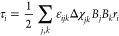 Figure 16
 Figure 17
 Figure 18
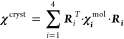 Figure 19
 Figure 20
 Figure 21
 Figure 22
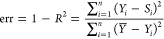 Figure 23
Peer Reviews
No public reviews on file for this paper yet. If you reviewed it on a platform where reviews are public (OpenReview, ICLR, NeurIPS, ICML), you can paste yours below so the community can read it here.
Videos
No videos yet. Explain this paper in a talk, walkthrough, or lecture? Add one.
Taxonomy
TopicsMagnetism in coordination complexes · Lanthanide and Transition Metal Complexes · Radioactive element chemistry and processing