Hydrogen-Bonded Organic Framework Enables Phase-Pure Layered Tin Perovskite Nanowires for Room-Temperature Lasing
Jeong Hui Kim, Jeffrey Simon, Wenhao Shao, Zhichen Nian, Hanjun Yang, Peigang Chen, Brandon Triplett, Zhixu Li, Pengfei Wu, Yuheng Chen, Henna Farheen, Karthik Pagadala, Kyu Ri Choi, Colton B. Fruhling, Jens Förstner, Alexandra Boltasseva, Brett M. Savoie, Vladimir M. Shalaev

TL;DR
A new method creates tin perovskite nanowires that enable efficient room-temperature lasing with minimal energy and high durability.
Contribution
A hydrogen-bonded organic framework enables phase-pure layered tin perovskite nanowires for robust room-temperature lasing.
Findings
Nanowires with n = 2 to 4 layers achieved lasing with a threshold as low as 75.8 μJ/cm².
Cavity quality factors exceeded 3000 with negligible degradation over 10⁶ pulses.
A cleaved coupled nanolaser was fabricated for photonic applications.
Abstract
Room-temperature lasing is a key milestone in the development of miniaturized optoelectronic and photonic devices. We present a simple approach to synthesize phase-pure quasi-2D layered tin perovskite nanowires with varying quantum well thicknesses (n = 1 to 4). By incorporating a new organic spacer capable of forming a hydrogen-bonded organic framework, this method promoted anisotropic crystal growth and enhanced lattice rigidity. Furthermore, introducing molecular intercalants enabled controlled crystallization into well-defined nanowires that function as Fabry–Pérot cavities. Cavities made from n = 2 to 4 perovskites support efficient and robust near-infrared, room-temperature optically pumped lasing with the threshold as low as 75.8 μJ/cm2, cavity quality factor over 3000, and negligible degradation over 106 pulses. A cleaved coupled nanolaser was fabricated as a proof-of-concept…
Genes, proteins, chemicals, diseases, species, mutations and cell lines named across the full text — each resolved to its canonical identifier and authoritative record.
Click any figure to enlarge with its caption.
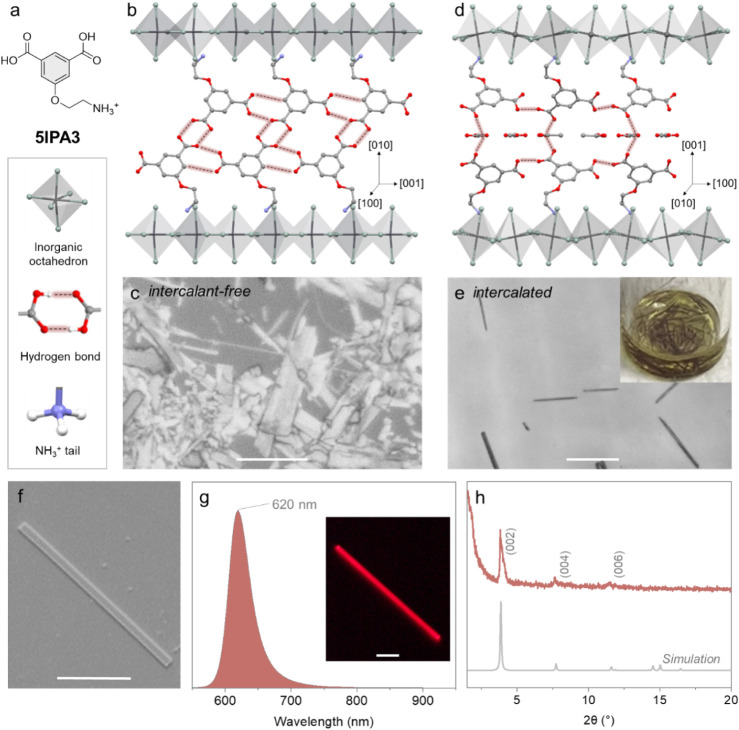 Figure 1
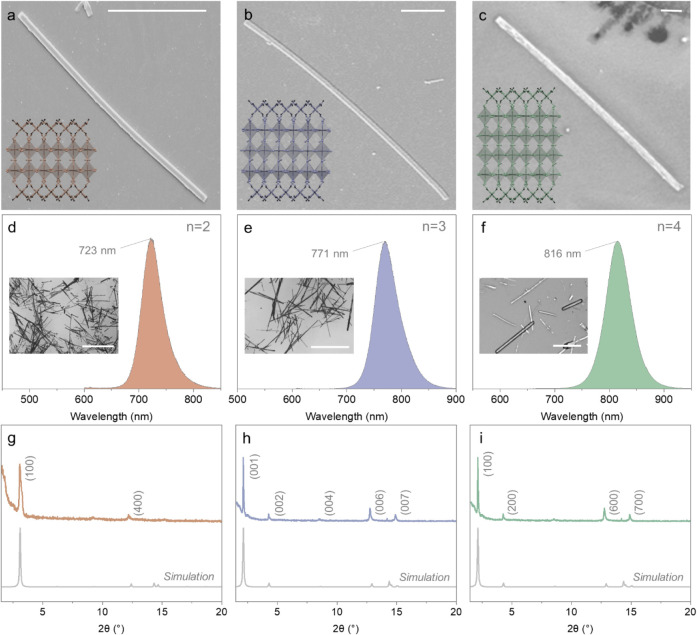 Figure 2
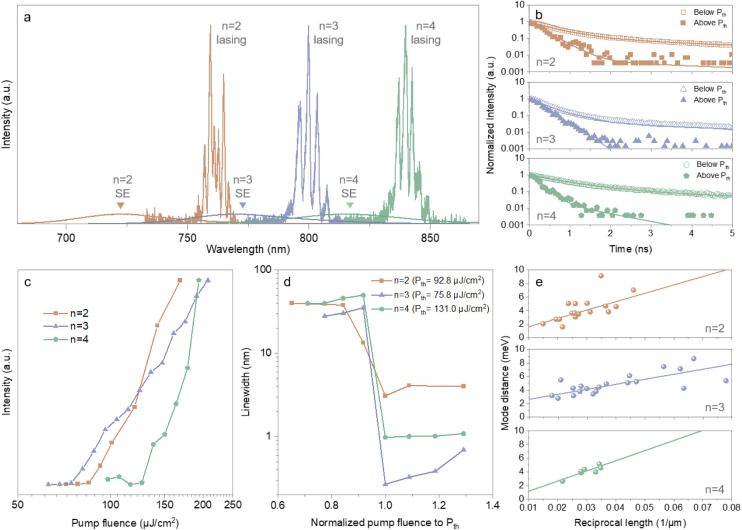 Figure 3
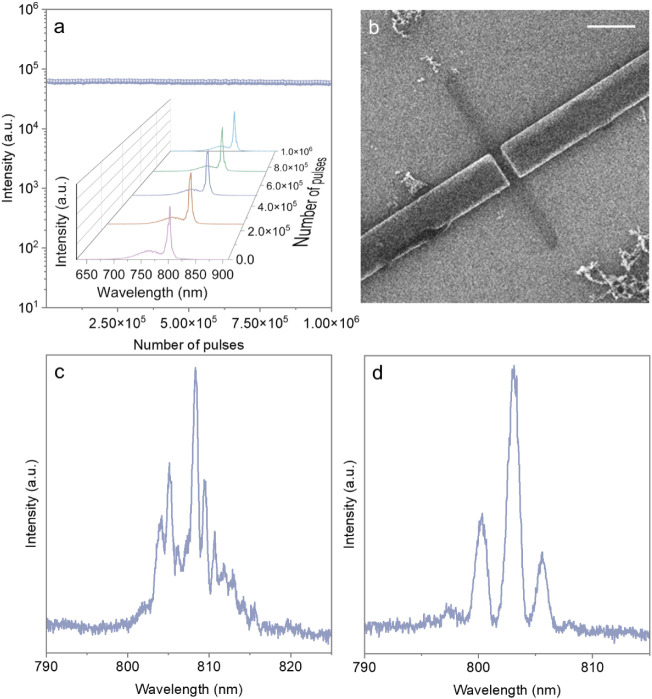 Figure 4
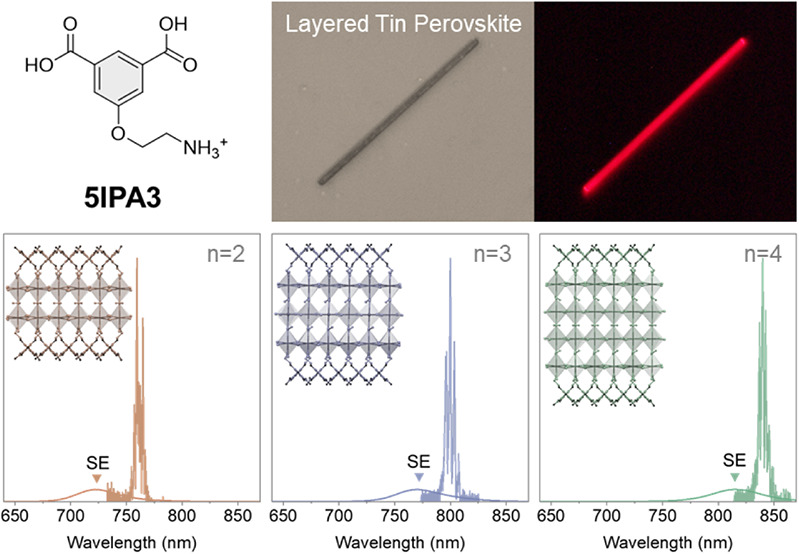 Figure 5
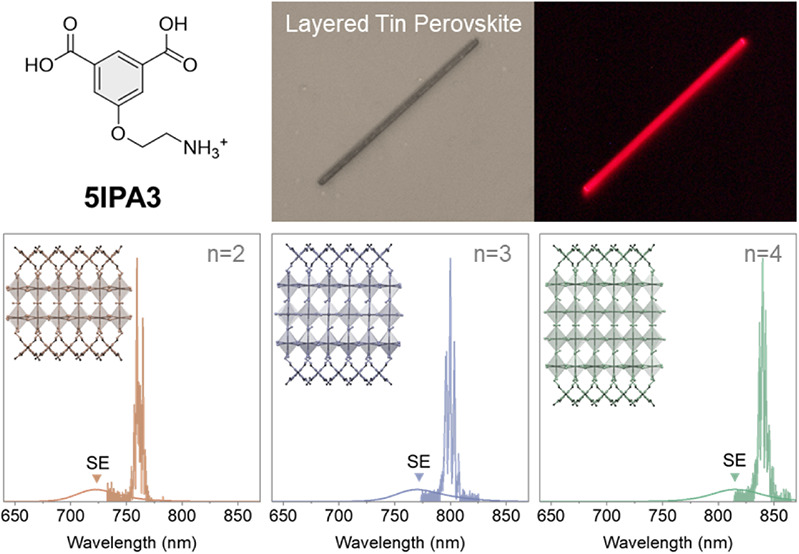 Figure 6
 Figure 7
Peer Reviews
No public reviews on file for this paper yet. If you reviewed it on a platform where reviews are public (OpenReview, ICLR, NeurIPS, ICML), you can paste yours below so the community can read it here.
Videos
No videos yet. Explain this paper in a talk, walkthrough, or lecture? Add one.
Taxonomy
TopicsPerovskite Materials and Applications · Strong Light-Matter Interactions · Metal-Organic Frameworks: Synthesis and Applications