How Dispersion Interactions at the Excited State Can Tune Photochromism of Embedded Chromophores
Ciro A. Guido, Lorenzo Cupellini, Benedetta Mennucci, Carles Curutchet

TL;DR
This paper introduces a new computational method to study how dispersion forces affect the behavior of chromophores in excited states.
Contribution
The novel QM/MMPol-cLR3 framework incorporates state-specific dispersion for accurate excited-state simulations.
Findings
Dispersion interactions control excited-state solvatochromism through two distinct mechanisms.
In azulene, dispersion causes opposite shifts of La and Lb states due to polarizability changes.
Application to the LH2 complex shows pigment-dependent dispersion shifts affecting energy transfer.
Abstract
We present QM/MMPol-cLR3, a polarizable embedding quantum mechanics/molecular mechanics (QM/MM) framework that includes explicit, state-specific dispersion terms. This method enables a rigorous treatment of dispersion on top of electrostatic and induction effects in ground- and excited-state calculations. Using QM/MMPol-cLR3, we show that dispersion interactions control excited-state solvatochromism through two distinct mechanisms. In azulene, opposite shifts of the La and Lb states arise from state-specific dispersion linked to changes in excited-state polarizability. In bacteriochlorophyll a, dispersion instead stems from the interplay between polarizability changes and transition-dipole-driven response, governing the Q y and Q x shifts. Finally, application to the LH2 complex reveals pigment-dependent dispersion shifts between the B800 and B850 rings, impacting the…
Genes, proteins, chemicals, diseases, species, mutations and cell lines named across the full text — each resolved to its canonical identifier and authoritative record.
Click any figure to enlarge with its caption.
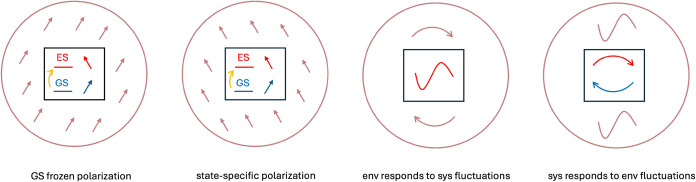 Figure 1
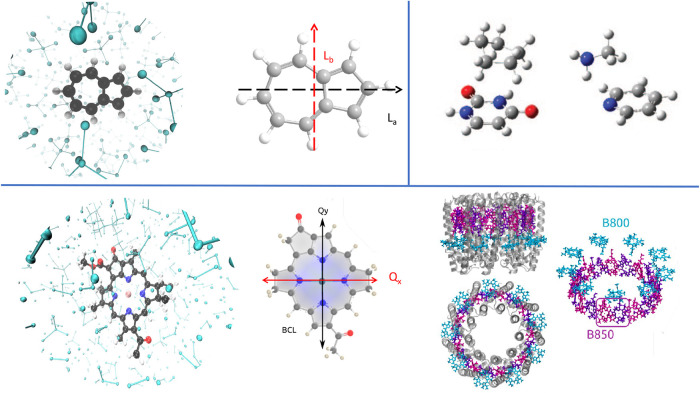 Figure 2
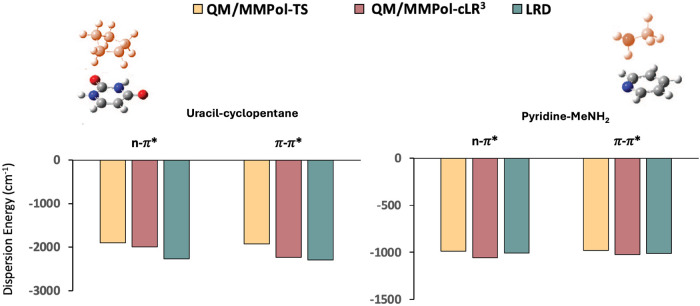 Figure 3
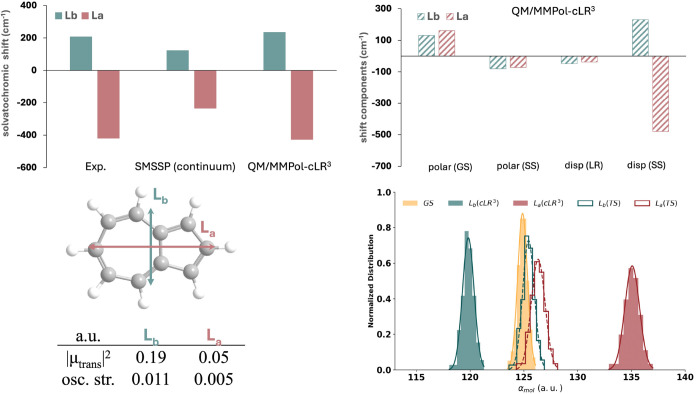 Figure 4
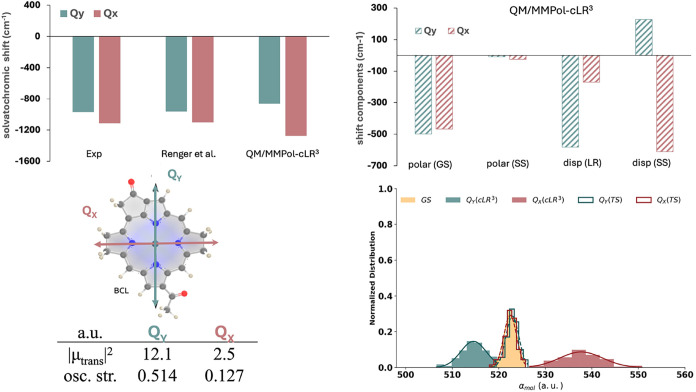 Figure 5
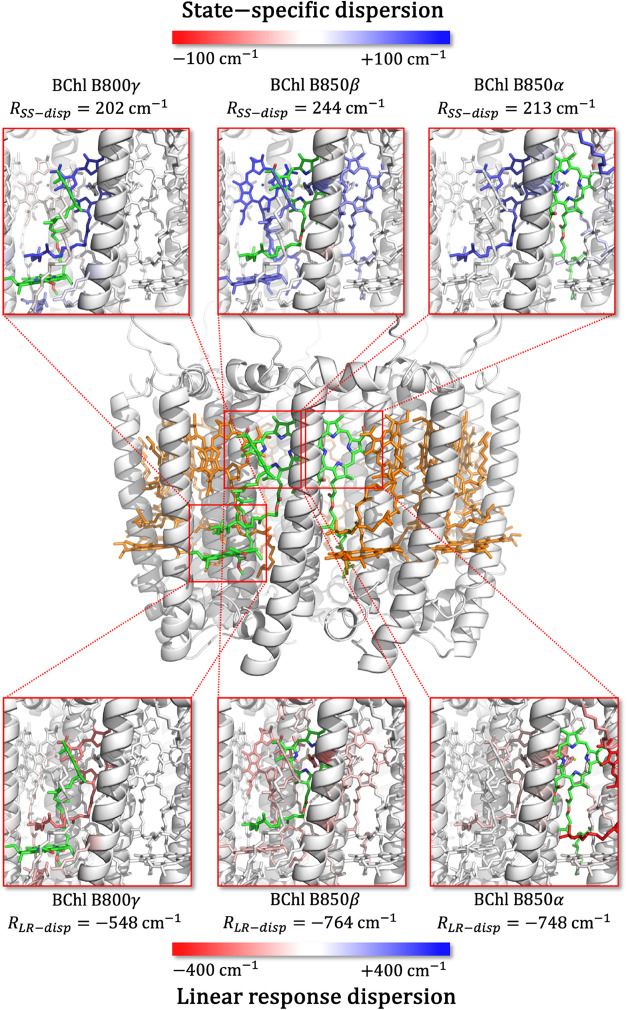 Figure 6
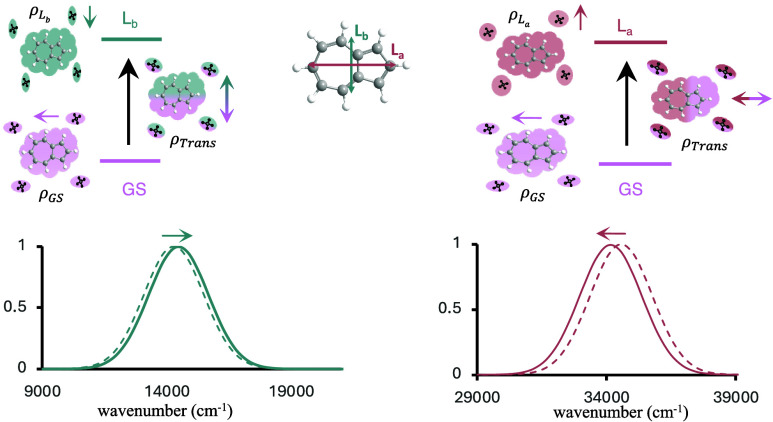 Figure 7
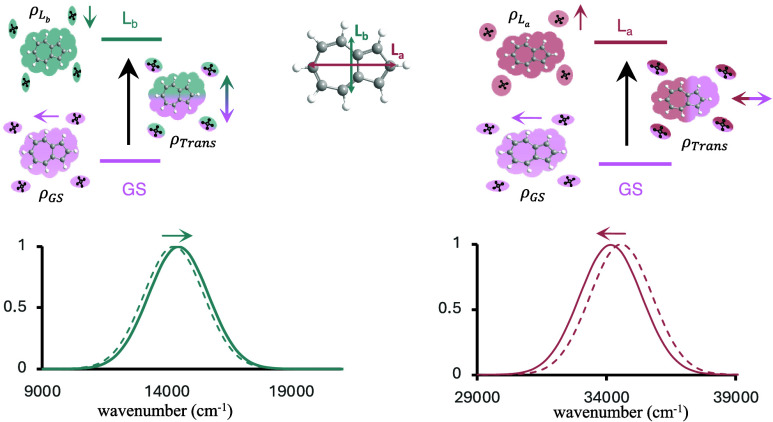 Figure 8
 Figure 9
 Figure 10
 Figure 11
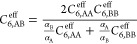 Figure 12
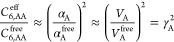 Figure 13
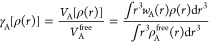 Figure 14
 Figure 15
 Figure 16
Peer Reviews
No public reviews on file for this paper yet. If you reviewed it on a platform where reviews are public (OpenReview, ICLR, NeurIPS, ICML), you can paste yours below so the community can read it here.
Videos
No videos yet. Explain this paper in a talk, walkthrough, or lecture? Add one.
Taxonomy
TopicsPhotochromic and Fluorescence Chemistry · Light effects on plants · Spectroscopy and Quantum Chemical Studies