Inducing Reactivity by Cluster Strain in Titanium Frameworks
Eloy P. Gómez-Oliveira, Vitor Fernandes de Almeida, Javier Castells-Gil, Herme G. Baldoví, Felipe Gándara, Neyvis Almora-Barrios, Sergio Tatay, Sergio Navalón, Natalia M. Padial, Carlos Martí-Gastaldo

TL;DR
Researchers showed that distorting titanium clusters in a framework can boost their reactivity for CO2 conversion.
Contribution
A new strategy for inducing reactivity in titanium frameworks through cluster strain engineering is demonstrated.
Findings
Replacing Ca2+ with larger cations in MUV-10 causes predictable distortions in Ti2M2 clusters.
Cluster strain enhances charge transfer and generates Ti3+ sites, improving CO2 methanation.
The Goldschmidt tolerance factor explains the distortion trend in reticular frameworks.
Abstract
Despite their potential to control charge separation and redox activity, deliberate strategies to distort metal–oxo clusters in molecular frameworks remain limited. Here we present a proof-of-concept for cluster strain engineering using the titanium–organic framework MUV-10 as a model. Replacing Ca2+ with larger alkaline-earth cations (Sr2+, Ba2+) induces predictable distortions of Ti2M2 clusters and a cubic-to-tetragonal cell transformation while preserving the overall connectivity. This local strain alters Ti–O coordination geometry, enhances ligand-to-metal charge transfer, and promotes the photogeneration of Ti3+ sites, as validated by photocatalytic CO2 methanation under standardized conditions. Importantly, the extent of distortion follows the trend anticipated from the Goldschmidt tolerance factor, a classical descriptor from perovskite chemistry, that we repurpose here to…
Genes, proteins, chemicals, diseases, species, mutations and cell lines named across the full text — each resolved to its canonical identifier and authoritative record.
Click any figure to enlarge with its caption.
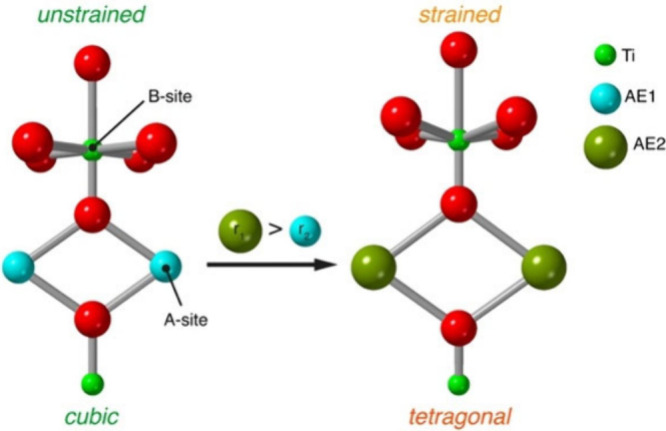 Figure 1
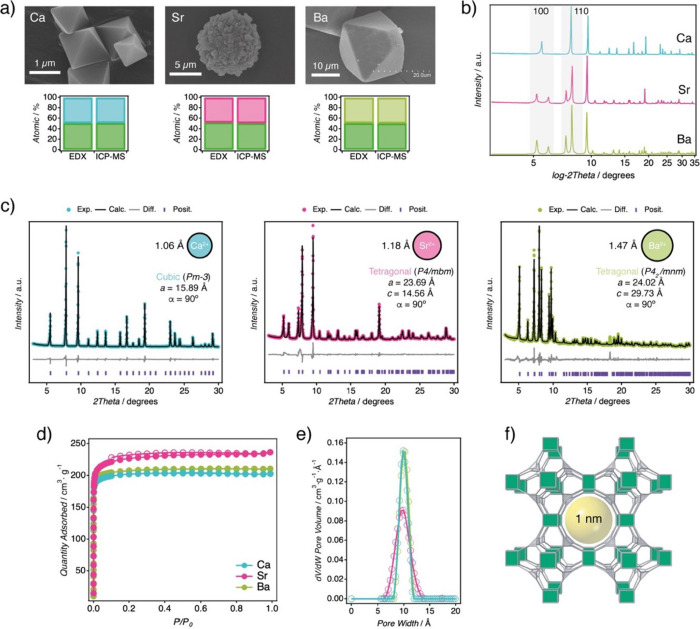 Figure 2
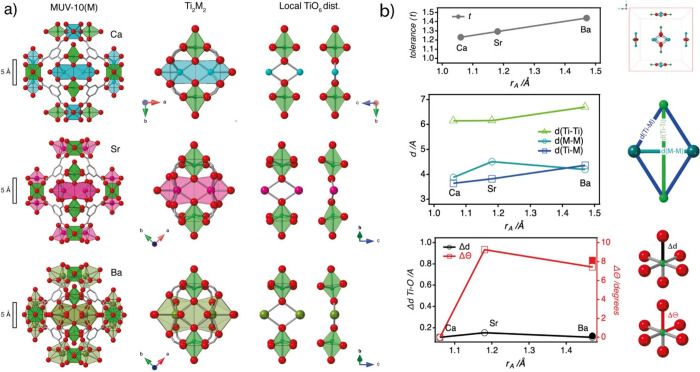 Figure 3
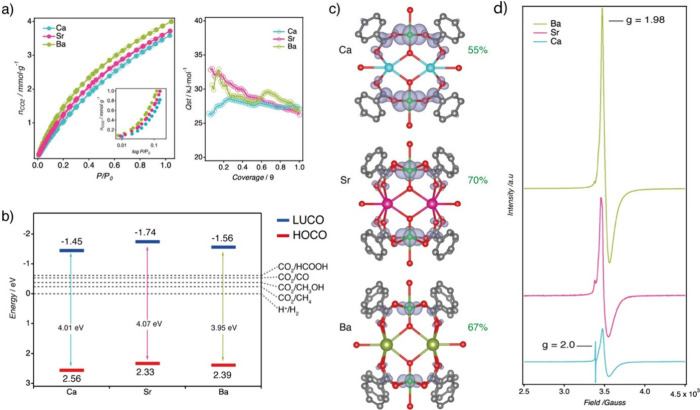 Figure 4
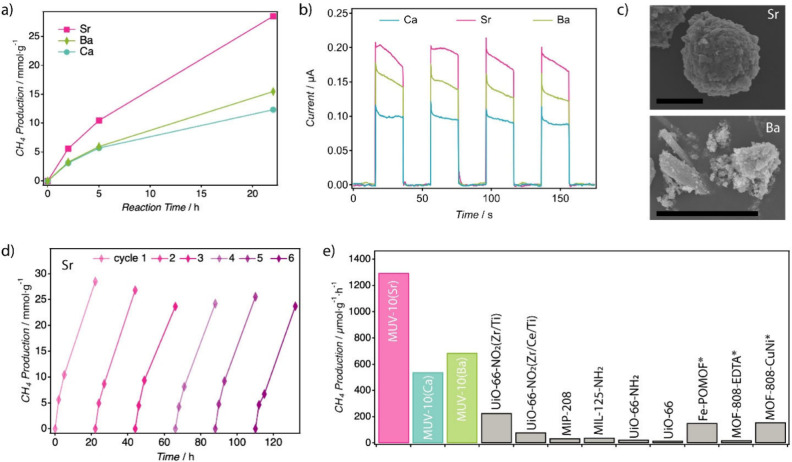 Figure 5
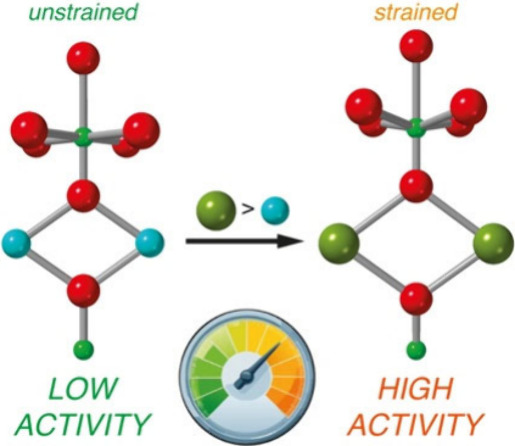 Figure 6
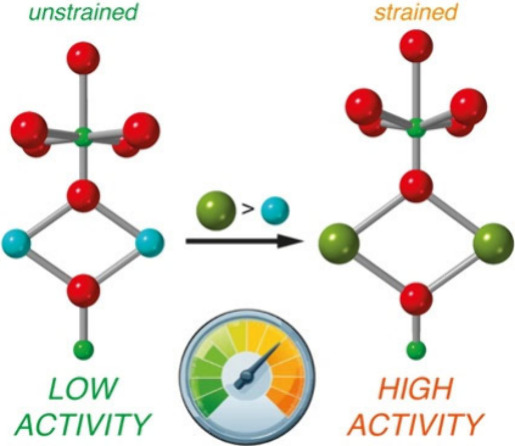 Figure 7
Peer Reviews
No public reviews on file for this paper yet. If you reviewed it on a platform where reviews are public (OpenReview, ICLR, NeurIPS, ICML), you can paste yours below so the community can read it here.
Videos
No videos yet. Explain this paper in a talk, walkthrough, or lecture? Add one.
Taxonomy
TopicsMetal-Organic Frameworks: Synthesis and Applications · Nanocluster Synthesis and Applications · Polyoxometalates: Synthesis and Applications