Dispersive Fluorine/Bromine Interactions as Key Selectivity Determinant: Asymmetric Cyclopropanations with 3,3,3-Trifluoro-2-diazopropionate Catalyzed by a Heterochiral-at-The-Metal Centers Dirhodium Paddlewheel Complex
Matthias Peeters, Lucas Marchal, Sofia Lerda, Giovanni Bistoni, Alois Fürstner

TL;DR
A new dirhodium catalyst enables selective asymmetric cyclopropanation reactions using fluorine and bromine interactions.
Contribution
A novel paddlewheel complex with backbone chirality achieves high selectivity via dispersive fluorine/bromine interactions.
Findings
A chiral-at-the-metal dirhodium complex enables asymmetric cyclopropanation of 3,3,3-trifluoro-2-diazopropionate.
Interhalogen dispersion interactions between CF3 and bromine enhance diastereoselectivity and optical purity.
The catalyst design benefits other fluorinated carbene donor reactions like [2 + 1] cycloadditions.
Abstract
Asymmetric cyclopropanation reactions of 3,3,3-trifluoro-2-diazopropionate have so far been largely beyond the scope of dirhodium catalysts. This significant gap in coverage is now closed with the aid of a new class of paddlewheel complex with “backbone chirality”, in which an array of only three different achiral ligands (acetamidate, trifluoroacetate, calix[4]arene dicarboxylate) renders the two rhodium centers inequivalent and chiral-at-the-metal each. The –NH group of the acetamidate engages the ester carbonyl of the metal carbene intermediate into favorable interligand hydrogen bonding, which in turn controls the trajectory of the incoming olefinic reaction partner. In addition, a dispersive interaction between the −CF3 group flanking the carbene center and a strategically placed bromine substituent on the calixarene dicarboxylate locks the conformation of the reactive…
Genes, proteins, chemicals, diseases, species, mutations and cell lines named across the full text — each resolved to its canonical identifier and authoritative record.
Click any figure to enlarge with its caption.
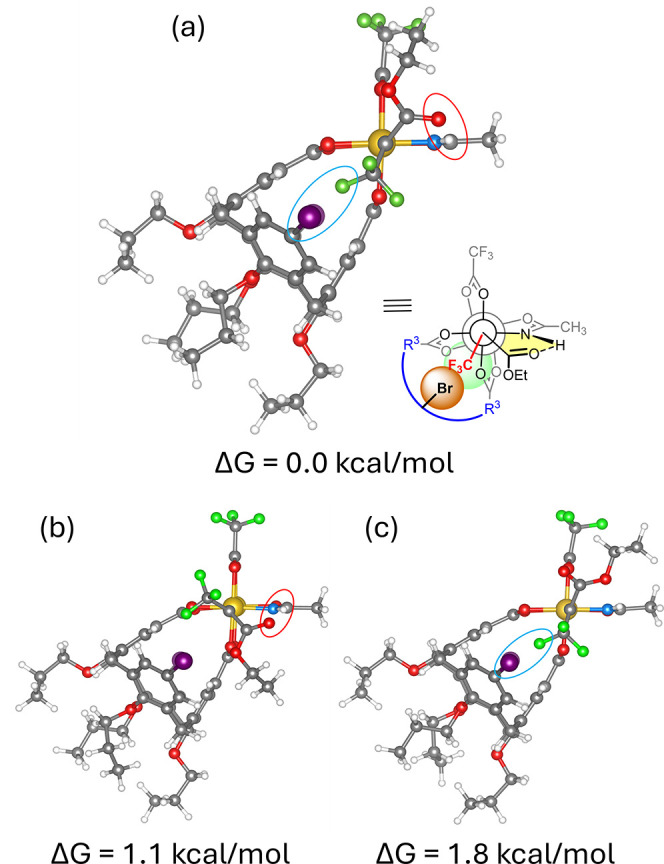 Figure 1
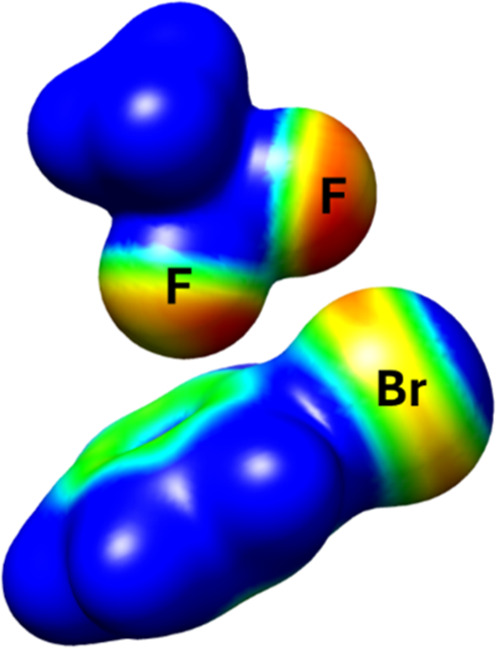 Figure 2
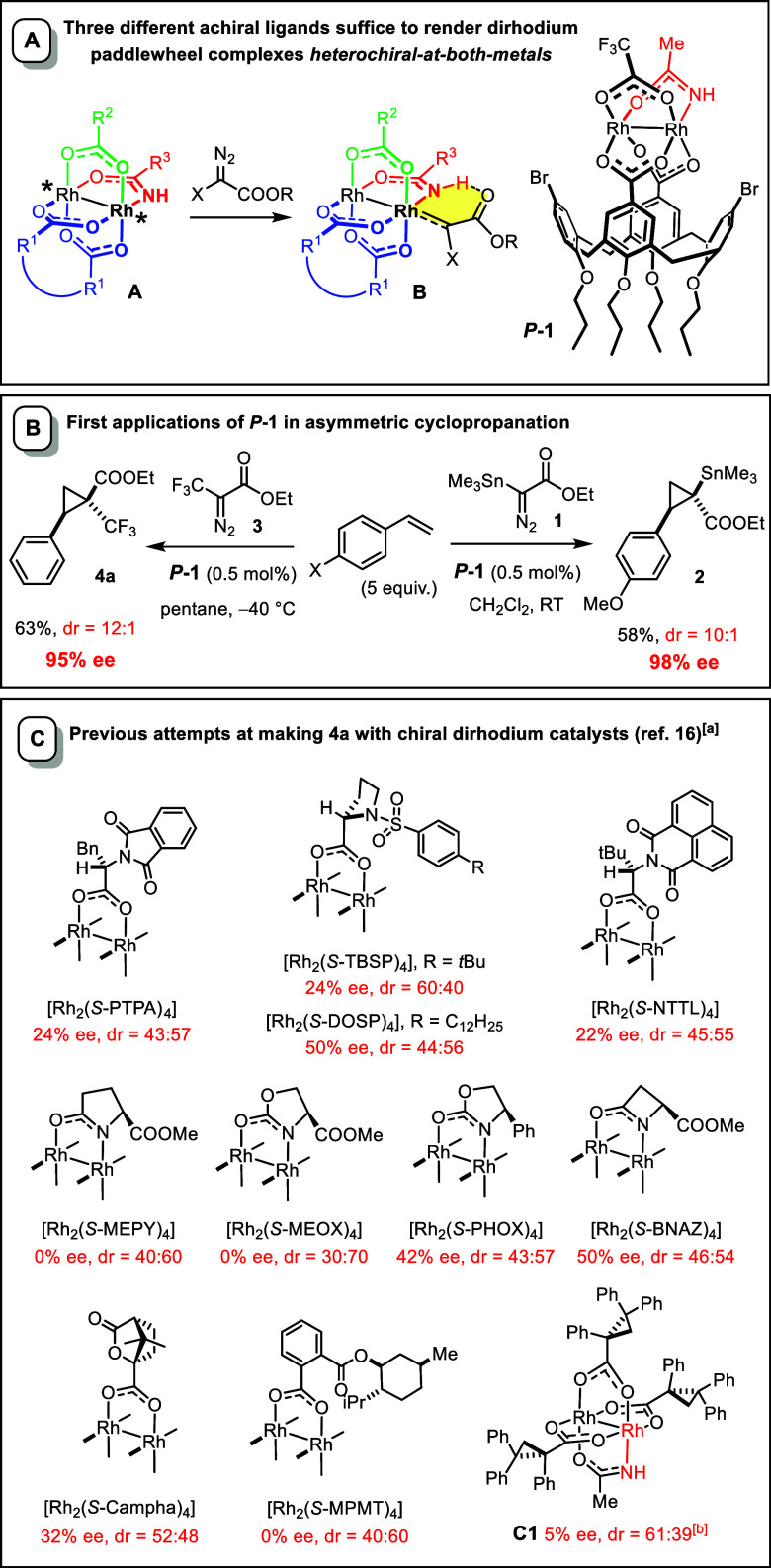 Figure 3
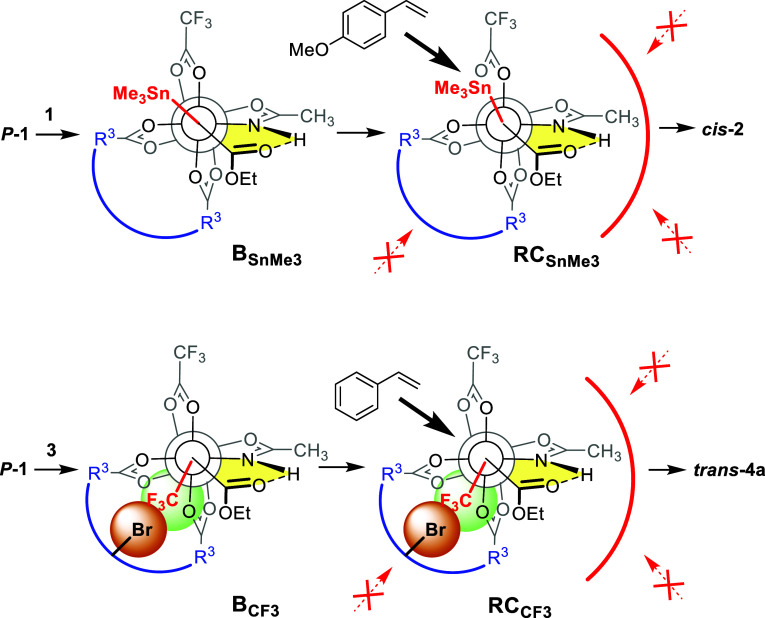 Figure 4
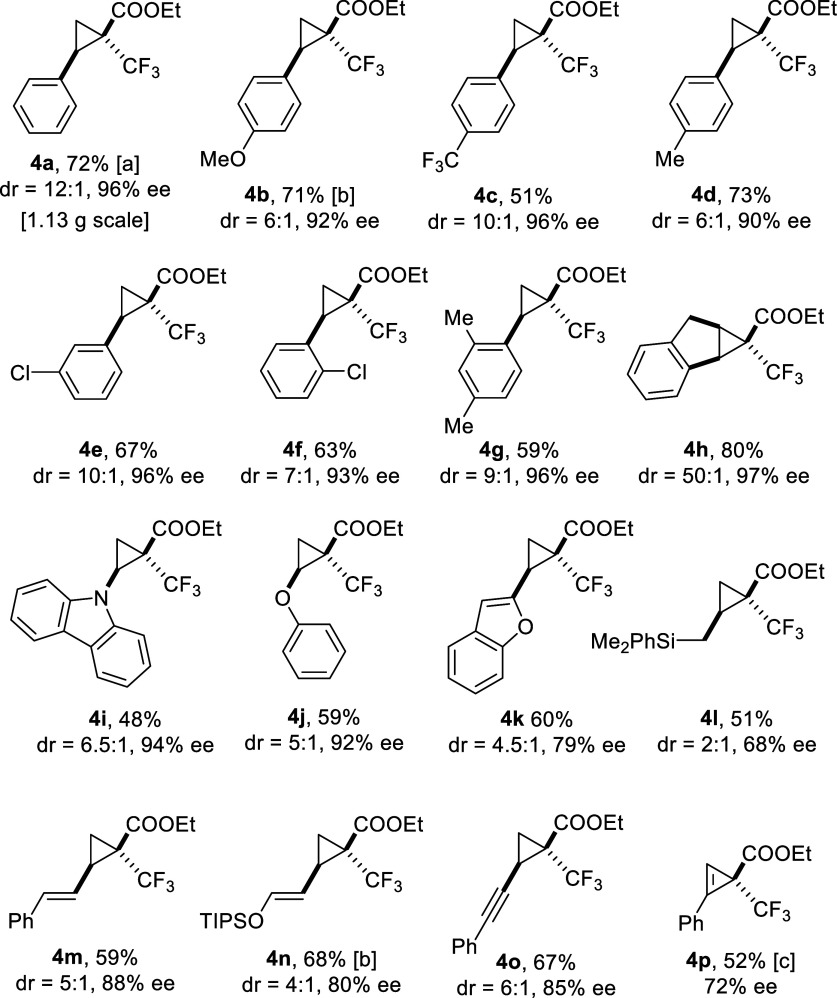 Figure 5
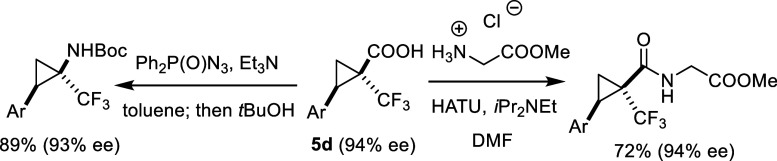 Figure 6
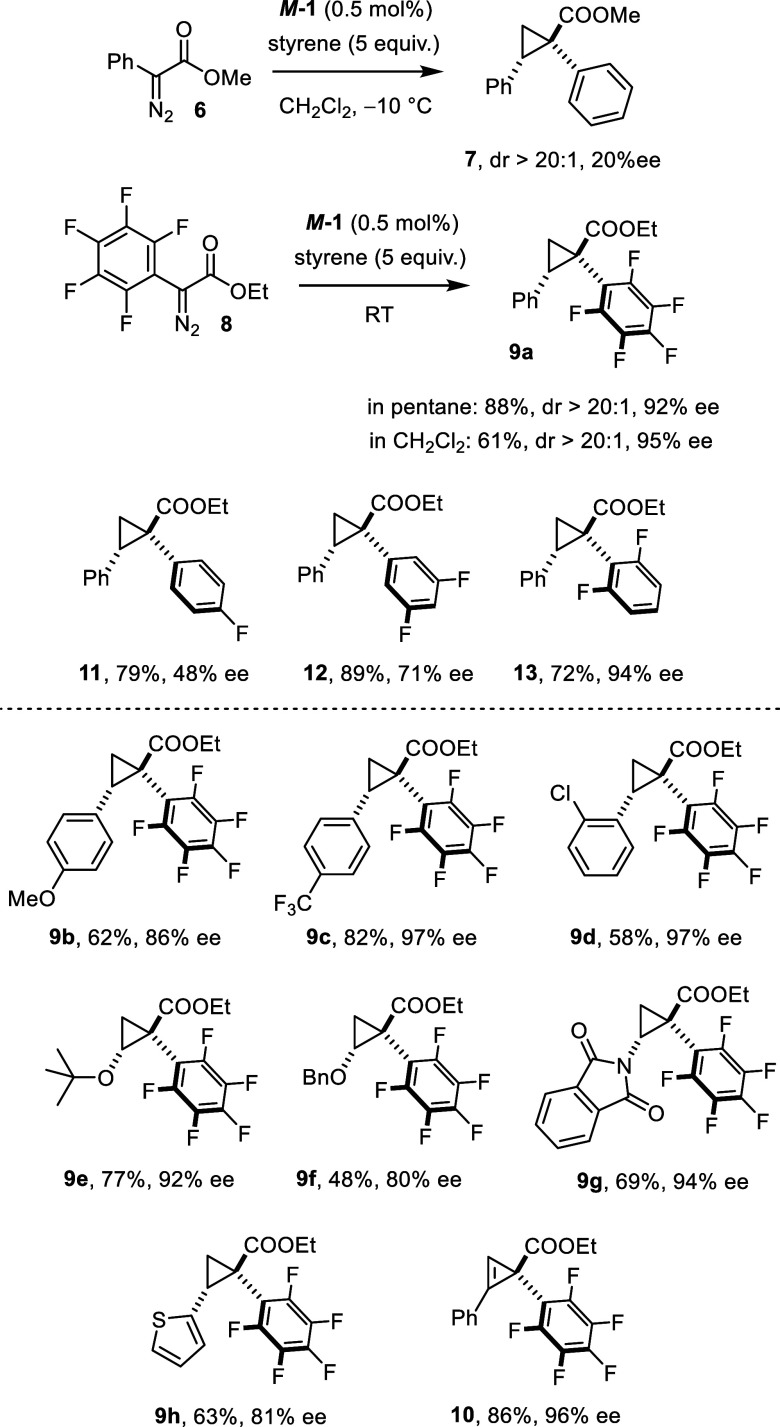 Figure 7
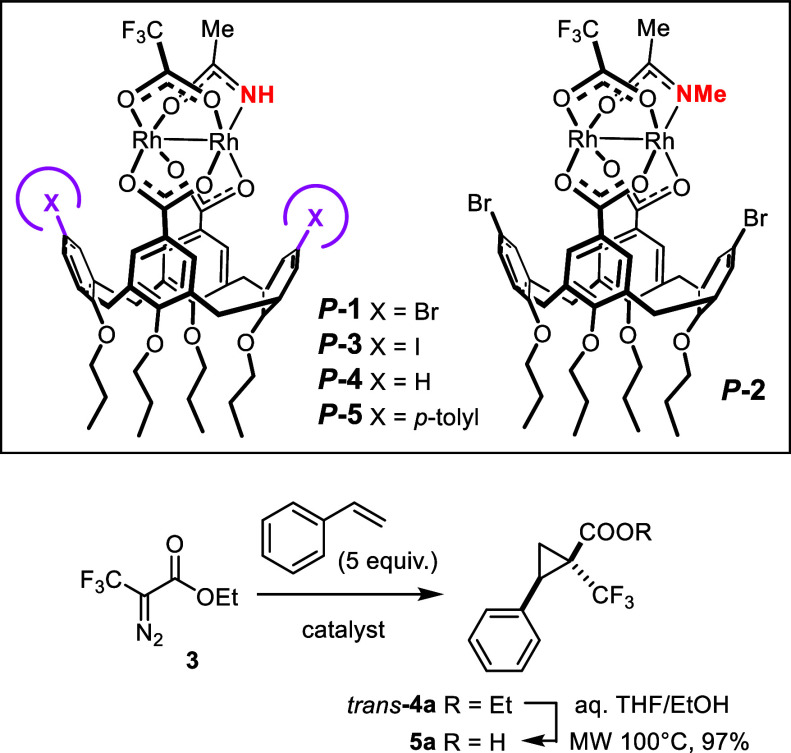 Figure 8
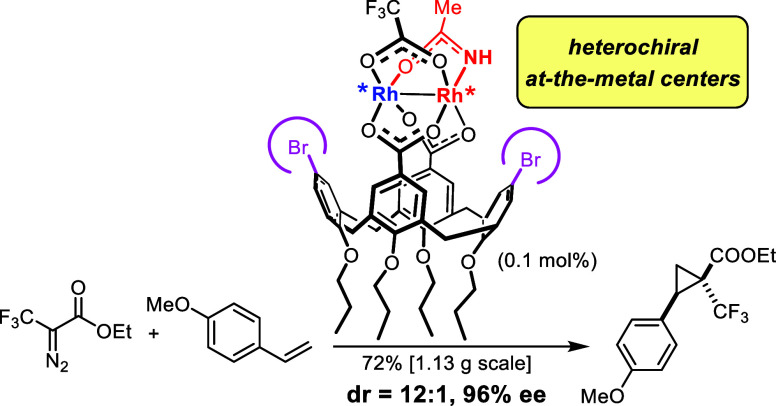 Figure 9
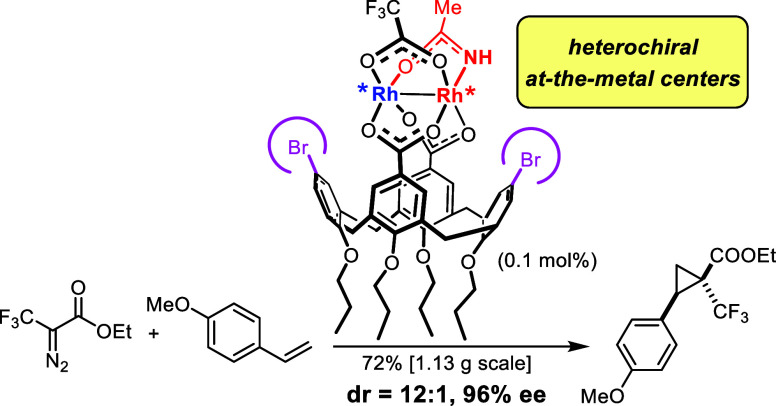 Figure 10
Peer Reviews
No public reviews on file for this paper yet. If you reviewed it on a platform where reviews are public (OpenReview, ICLR, NeurIPS, ICML), you can paste yours below so the community can read it here.
Videos
No videos yet. Explain this paper in a talk, walkthrough, or lecture? Add one.
Taxonomy
TopicsCyclopropane Reaction Mechanisms · Fluorine in Organic Chemistry · Organometallic Complex Synthesis and Catalysis