Polyhexanide, Povidone‐Iodine, and Hypochlorous Acid Show High In Vitro Antimicrobial Efficacy Against Pathogens Commonly Associated With Equine Infectious Keratitis
Leonie Maria Stolle, Hilke Oltmanns, Jessica Meißner, Frederik Heun, Ann‐Kathrin Schieder, Hinrich Tönjes Wolff, Bernhard Ohnesorge, Claudia Busse

TL;DR
This study tests how well three antiseptics kill bacteria commonly found in horse eye infections, finding they work well at low concentrations.
Contribution
The study provides new in vitro evidence on the efficacy of polyhexanide, povidone-iodine, and hypochlorous acid against equine ocular pathogens.
Findings
Polyhexanide, povidone-iodine, and hypochlorous acid showed high antimicrobial efficacy against equine ocular pathogens at low concentrations.
Methicillin-resistant and methicillin-susceptible Staphylococcus aureus isolates had comparable minimum bactericidal concentrations.
The tested antiseptics were effective at concentrations lower than those in commercial products.
Abstract
To determine the in vitro antimicrobial activity of specific antiseptics against common equine ocular surface pathogens. Staphylococcus aureus ( S. aureus ) (n = 12), Streptococcus equi subspecies zooepidemicus (S. zooepidemicus) (n = 9), Enterobacter hormaechei ( E. hormaechei ) (n = 6), and Bacillus cereus ( B. cereus ) (n = 5) were collected from corneal samples of horses with ulcerative keratitis. Reference strains were included. Minimum bactericidal concentrations (MBC) of polyhexanide, povidone‐iodine, and hypochlorous acid were tested using the microdilution method. After incubation with the antimicrobial agent, the inocula were subcultured according to the Clinical and Laboratory Standards Institute guidelines. Colony growth was manually counted and photographically documented. The MBC values of polyhexanide were 0.8–3.2 ppm for S. aureus , 0.8–1.6 ppm for S.…
Genes, proteins, chemicals, diseases, species, mutations and cell lines named across the full text — each resolved to its canonical identifier and authoritative record.
Click any figure to enlarge with its caption.
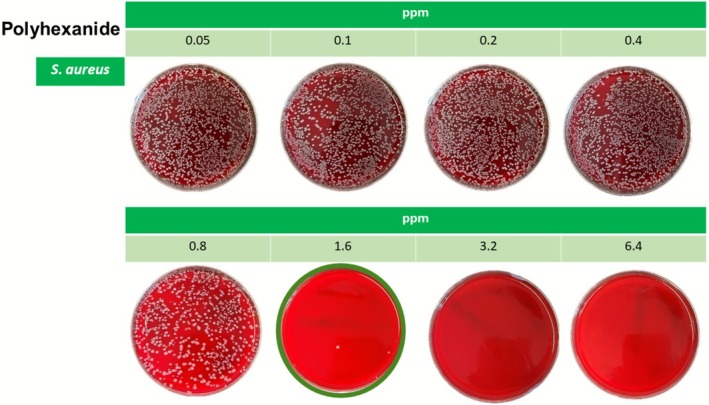 Figure 1
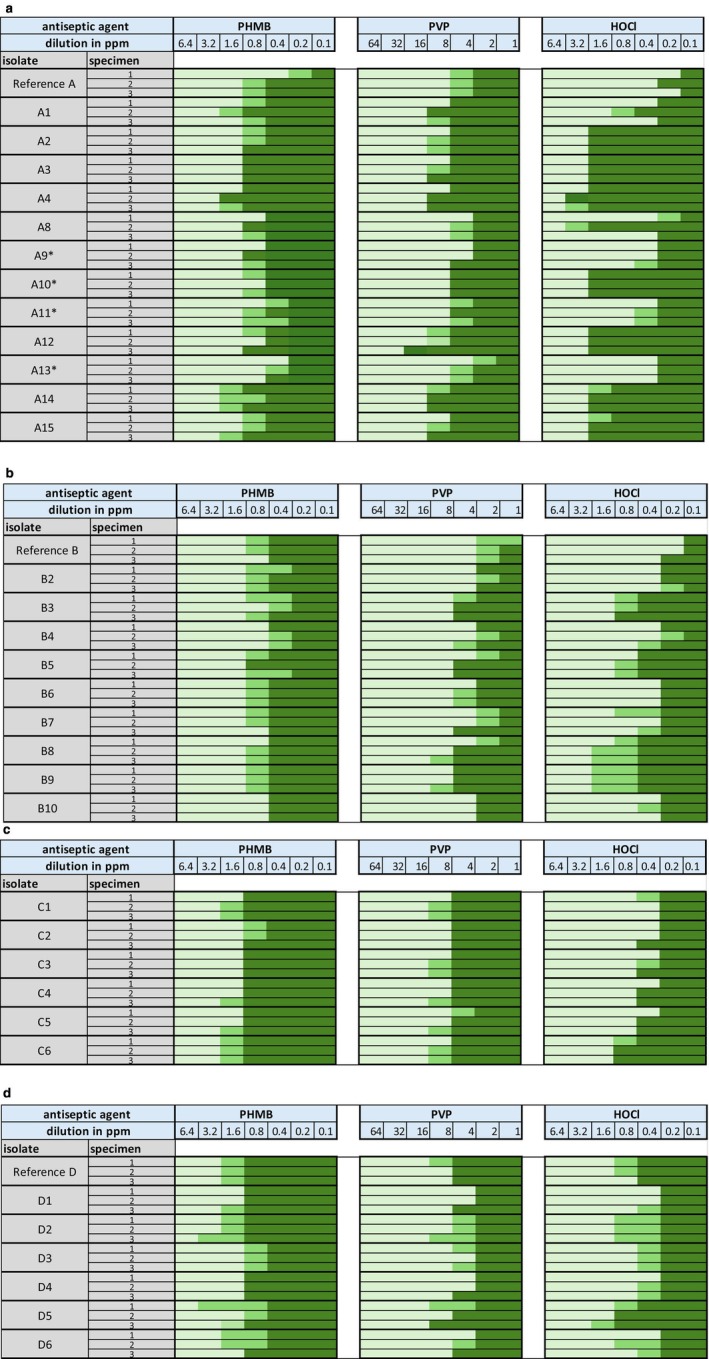 Figure 2
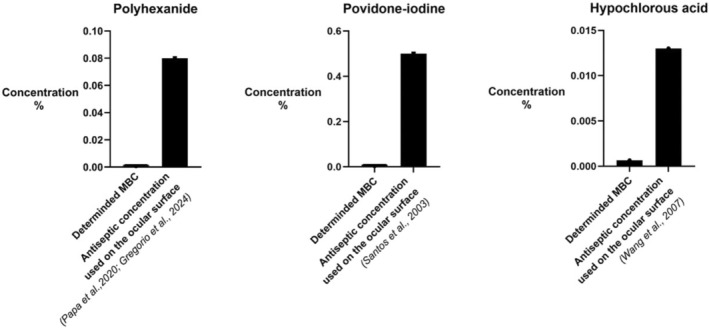 Figure 3
Peer Reviews
No public reviews on file for this paper yet. If you reviewed it on a platform where reviews are public (OpenReview, ICLR, NeurIPS, ICML), you can paste yours below so the community can read it here.
Videos
No videos yet. Explain this paper in a talk, walkthrough, or lecture? Add one.
Taxonomy
TopicsOcular Infections and Treatments · Antimicrobial agents and applications · Corneal Surgery and Treatments