Translation, cross‐cultural validity and reliability of a Danish version of the Banff Patella Instability Instrument 2.0 (BPII 2.0)
Torsten Grønbech Nielsen, Martin Lind, Simon Damgaard Petersen, Pia Kjær Kristensen

TL;DR
This study translated and validated a Danish version of a tool to assess patellar instability, finding it reliable and effective for use in Danish patients.
Contribution
The study provides a validated Danish version of the BPII 2.0 with confirmed reliability and cross-cultural validity.
Findings
The Danish version of BPII 2.0 showed high correlations with other established knee assessment tools like Kujala-DK and IKDC.
The tool demonstrated excellent internal consistency (Cronbach's alpha of 0.95) and high test-retest reliability (ICC of 0.90).
No ceiling or floor effects were observed, and a minimal detectable change of 15.3 points was identified.
Abstract
This study aimed to translate and cross‐culturally validate a Danish version of the BPII 2.0, and assess its construct validity, internal consistency and test‐retest reliability in a Danish population of patients with patellar instability. The BPII 2.0 was translated and cross‐culturally validated according to international guidelines, including 15 think‐aloud interviews in patients with patellar instability. Responses from 100 patients with patellar instability were accustomed to evaluating, construct validity, floor and ceiling effect, minimal detectable change, internal consistency and test‐retest reliability. Construct validity was assessed using Spearman Rho (r) comparing the BPII 2.0‐DK with the Kujala‐DK, the International Knee Documentation Committee (IKDC), the Victorian Institute of Sport Assessment‐Patella (VISA‐P) and the Tegner activity score (TAS). Structural validity was…
Genes, proteins, chemicals, diseases, species, mutations and cell lines named across the full text — each resolved to its canonical identifier and authoritative record.
Click any figure to enlarge with its caption.
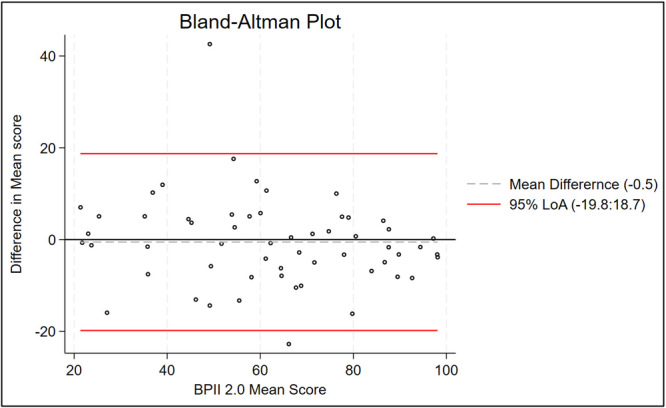 Figure 1
Peer Reviews
No public reviews on file for this paper yet. If you reviewed it on a platform where reviews are public (OpenReview, ICLR, NeurIPS, ICML), you can paste yours below so the community can read it here.
Videos
No videos yet. Explain this paper in a talk, walkthrough, or lecture? Add one.
Taxonomy
TopicsLower Extremity Biomechanics and Pathologies · Total Knee Arthroplasty Outcomes · Knee injuries and reconstruction techniques