Optimizing Stability in Dynamic Small-Molecule Binding Proteins
Marc Scherer, Mark Kriegel, Birte Höcker, Sarel J. Fleishman

TL;DR
This paper introduces a method to stabilize dynamic proteins by designing mutations compatible with both open and closed conformations, improving thermal stability without harming ligand binding.
Contribution
A new method for stabilizing dynamic proteins by incorporating conformational compatibility and structural constraints into mutation design.
Findings
Designing mutations compatible with both conformations reliably enhances thermal stability.
Using evolutionary constraints alone is insufficient to maintain wild-type-like binding affinity.
16 stabilized variants of periplasmic binding proteins were successfully designed with 7–28 mutations each.
Abstract
The function of dynamic proteins is determined by the stability of distinct conformational states and the energy barriers that separate these states. For most dynamic proteins, the molecular details of the energy barriers are not known, implying a fundamental limit to the ability of protein design methods to engineer beneficial mutations without disrupting activity. We hypothesized that designing mutations that are compatible with structurally distinct equilibrium conformations may enable a reliable stability design. We focus on periplasmic binding proteins (PBPs), a superfamily of dynamic proteins that change conformation from open to closed states in response to binding their small-molecule ligands. We find that the evolutionary constrained space of allowed mutations computed for one conformation is incompatible with that for the other. Therefore, putative conformational hinge points…
Genes, proteins, chemicals, diseases, species, mutations and cell lines named across the full text — each resolved to its canonical identifier and authoritative record.
Click any figure to enlarge with its caption.
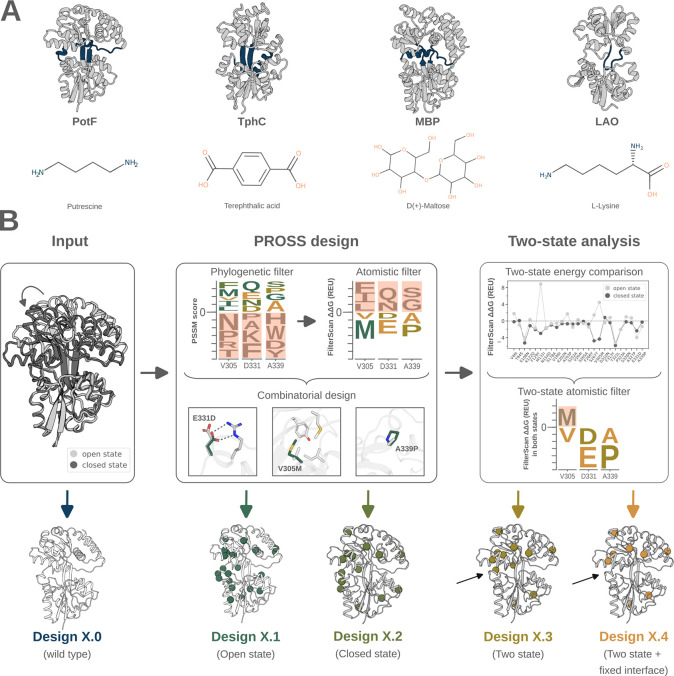 Figure 1
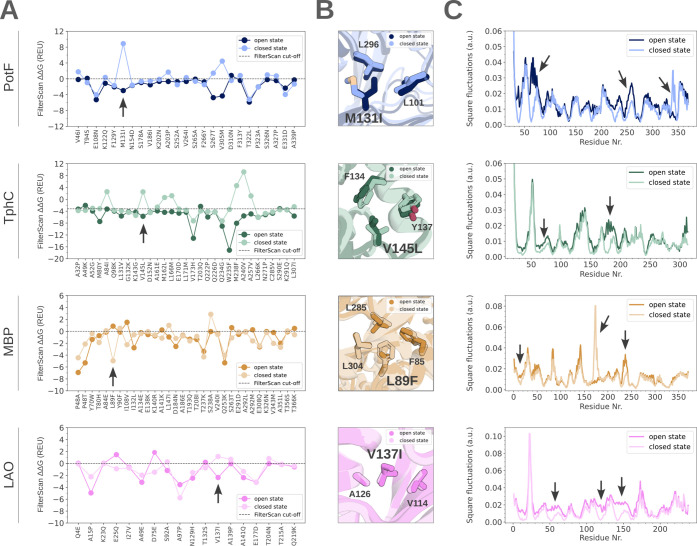 Figure 2
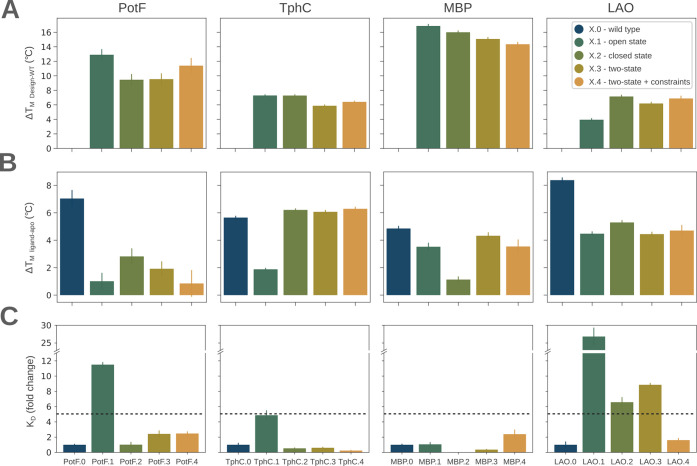 Figure 3
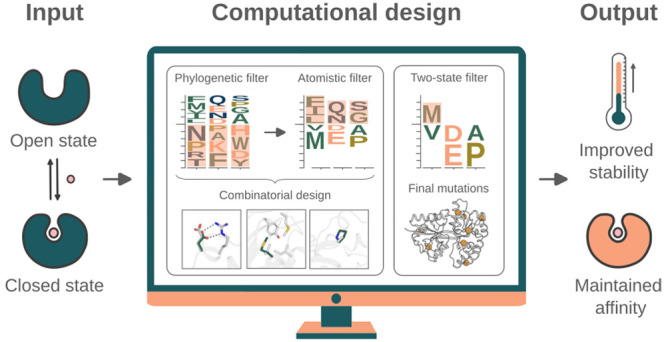 Figure 4
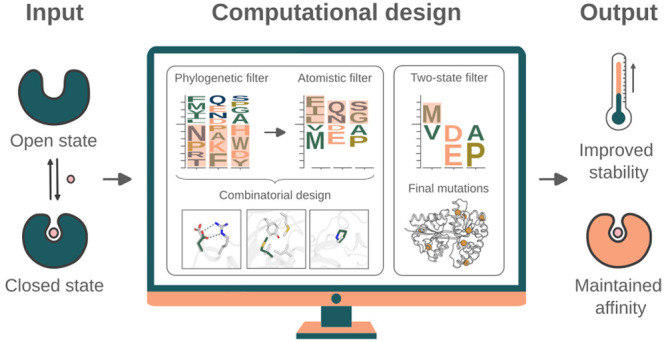 Figure 5
Peer Reviews
No public reviews on file for this paper yet. If you reviewed it on a platform where reviews are public (OpenReview, ICLR, NeurIPS, ICML), you can paste yours below so the community can read it here.
Videos
No videos yet. Explain this paper in a talk, walkthrough, or lecture? Add one.
Taxonomy
TopicsProtein Structure and Dynamics · Monoclonal and Polyclonal Antibodies Research · RNA and protein synthesis mechanisms