Attractive Noncovalent Interactions versus Steric Confinement in Asymmetric Supramolecular Catalysis
Cristina V. Craescu, Colton D. David, Elizabeth D. Heafner, Kenneth N. Raymond, Robert G. Bergman, F. Dean Toste

TL;DR
This paper compares two supramolecular catalysts to determine how noncovalent interactions and cavity size affect reaction rates and selectivity.
Contribution
The study reveals that stronger noncovalent interactions in a larger catalyst significantly enhance reaction rates and enantioselectivity.
Findings
The larger catalyst with stronger noncovalent interactions showed a 100-fold rate acceleration in ketone reduction.
The larger catalyst achieved 84% enantioselectivity compared to 14% in the smaller catalyst.
Stabilizing noncovalent interactions, not steric confinement, were found to be the main drivers of the observed effects.
Abstract
The remarkable catalytic performance of enzymes stems from their ability to engage in precise noncovalent interactions (NCIs) within a sterically confined space. Supramolecular catalysis seeks to emulate and understand these strategies through the rational design of simple and controlled catalyst microenvironments. While both steric confinement and attractive interactions have been invoked as key to host activity, their relative contribution to rate enhancement and selectivity, as well as potential trade-offs, remains an outstanding question. Here, we address this question by systematically comparing two metal–organic supramolecular catalysts, which differ in the strength of their attractive noncovalent interactions and in their cavity volume. Our findings reveal that the catalyst with the larger cavity, and with stronger available NCIs, exhibits both significant rate acceleration…
Genes, proteins, chemicals, diseases, species, mutations and cell lines named across the full text — each resolved to its canonical identifier and authoritative record.
Click any figure to enlarge with its caption.
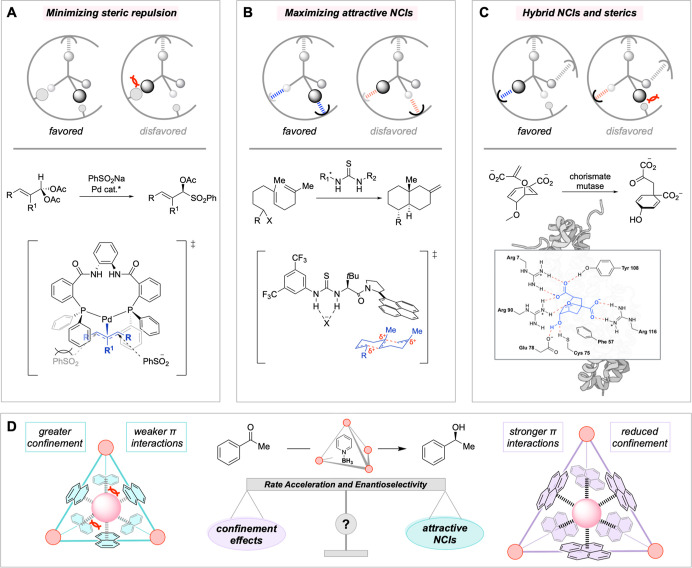 Figure 1
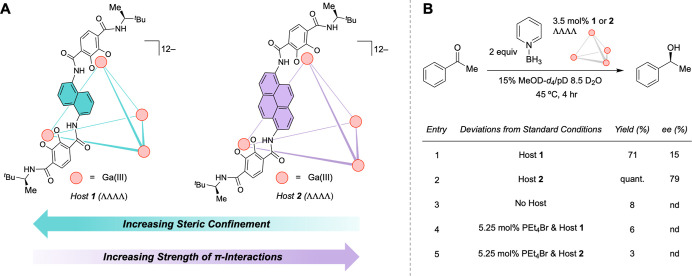 Figure 2
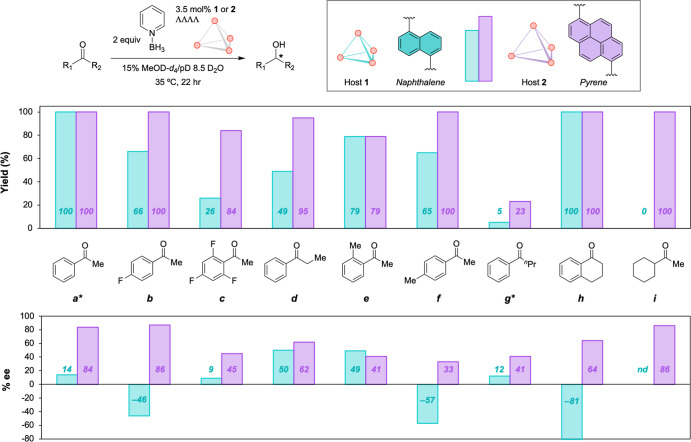 Figure 3
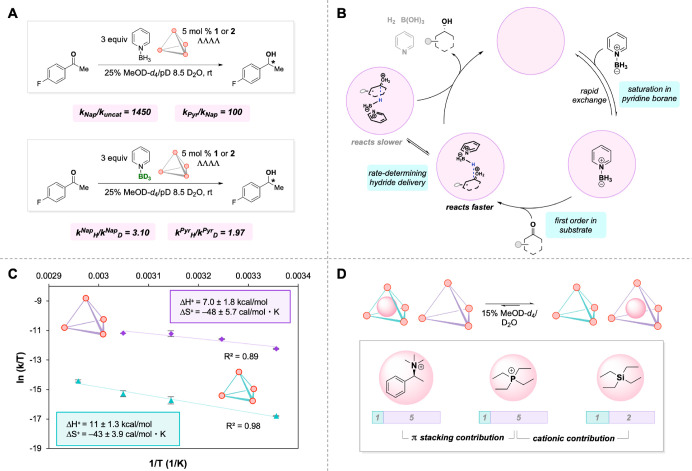 Figure 4
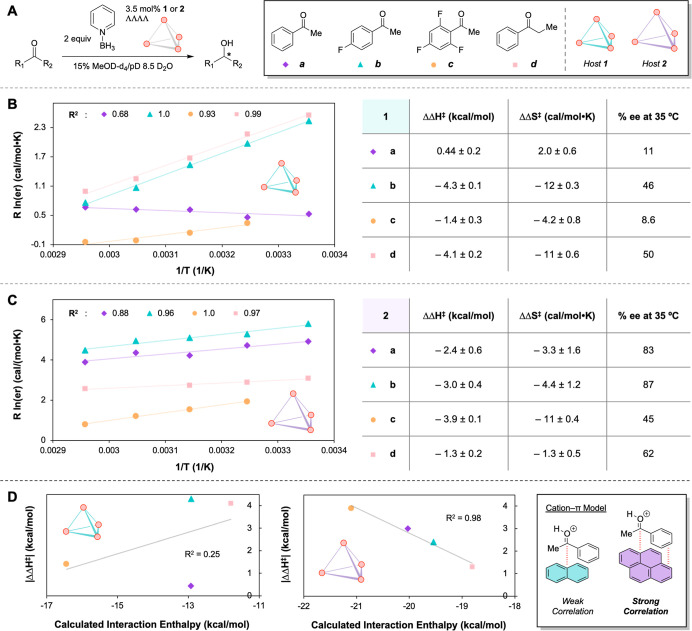 Figure 5
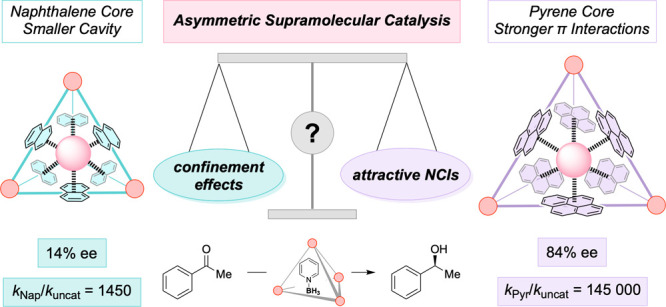 Figure 6
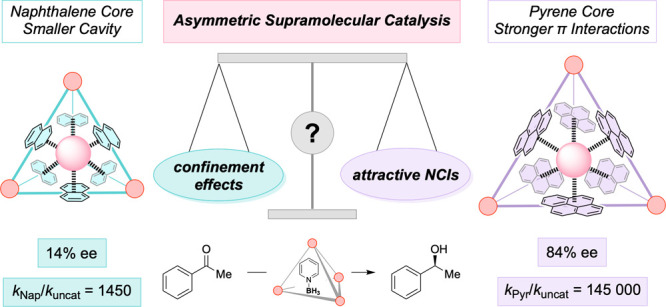 Figure 7
Peer Reviews
No public reviews on file for this paper yet. If you reviewed it on a platform where reviews are public (OpenReview, ICLR, NeurIPS, ICML), you can paste yours below so the community can read it here.
Videos
No videos yet. Explain this paper in a talk, walkthrough, or lecture? Add one.
Taxonomy
TopicsSupramolecular Chemistry and Complexes · Supramolecular Self-Assembly in Materials · Surface Chemistry and Catalysis