Longitudinal analysis of rotator cuff repair: joint kinematics and clinical outcomes
Sujata Khandare, Rebekah L. Lawrence, Alena Jalics, Roger Zauel, Vasilios Moutzouros, Eric C. Makhni, Stephanie Muh, Michael J. Bey

TL;DR
This study tracks shoulder movement and recovery in patients after rotator cuff surgery over two years, finding improved strength and function but some joint changes.
Contribution
The study provides longitudinal insights into joint kinematics and clinical outcomes after rotator cuff repair, revealing subtle biomechanical changes and healing patterns.
Findings
Surgical rotator cuff repair improved pain and function within the first 3 months.
Shoulder strength significantly increased at 12 and 24 months post-surgery.
Subtle changes in joint motion occurred, with a superior shift in the center of contact on the glenoid over time.
Abstract
Rotator cuff repair is a common surgical procedure, but postoperative outcomes can be highly variable, and postoperative repair tissue healing remains a significant clinical challenge. Furthermore, the biomechanical effects of rotator cuff repair are not fully understood. Twenty-two participants scheduled for arthroscopic rotator cuff repair were evaluated preoperatively and at 3, 12, and 24 months postsurgery. The following data were recorded at each time point: glenohumeral and scapulothoracic kinematics, shoulder strength, and patient-reported measures of pain and function. Postoperative repair integrity was assessed via magnetic resonance imaging at 3 months and 24 months postsurgery. At 3 months postsurgery, 5 of 20 patients were identified as having a recurrent tear. An additional 4 patients had a recurrent tear at 24 months postsurgery. The center of contact of the humerus on…
Genes, proteins, chemicals, diseases, species, mutations and cell lines named across the full text — each resolved to its canonical identifier and authoritative record.
Click any figure to enlarge with its caption.
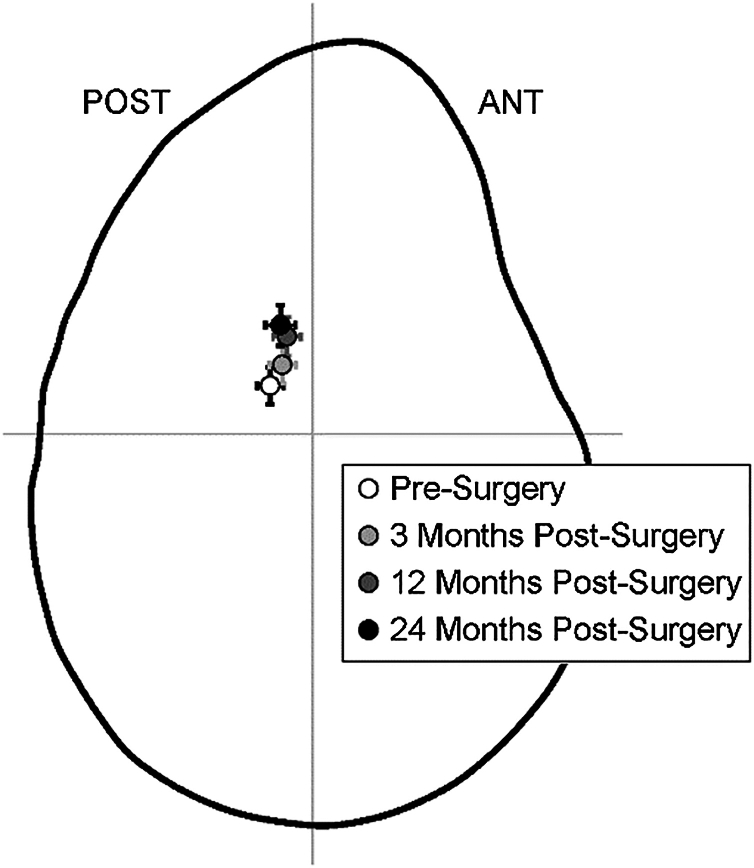 Figure 1
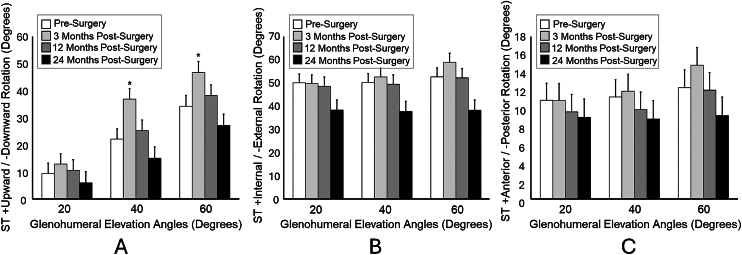 Figure 2
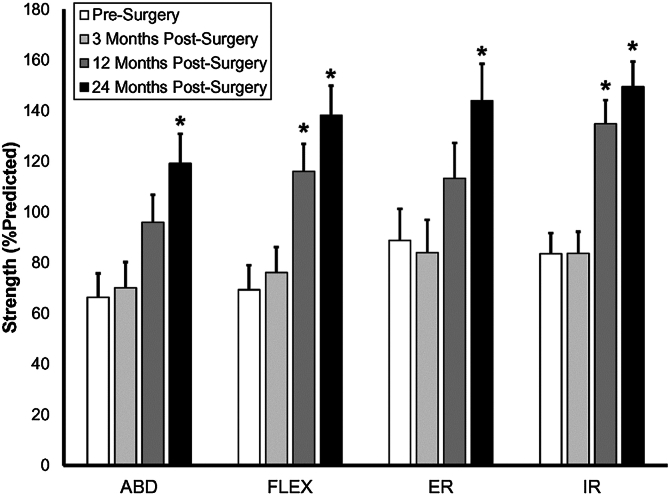 Figure 3
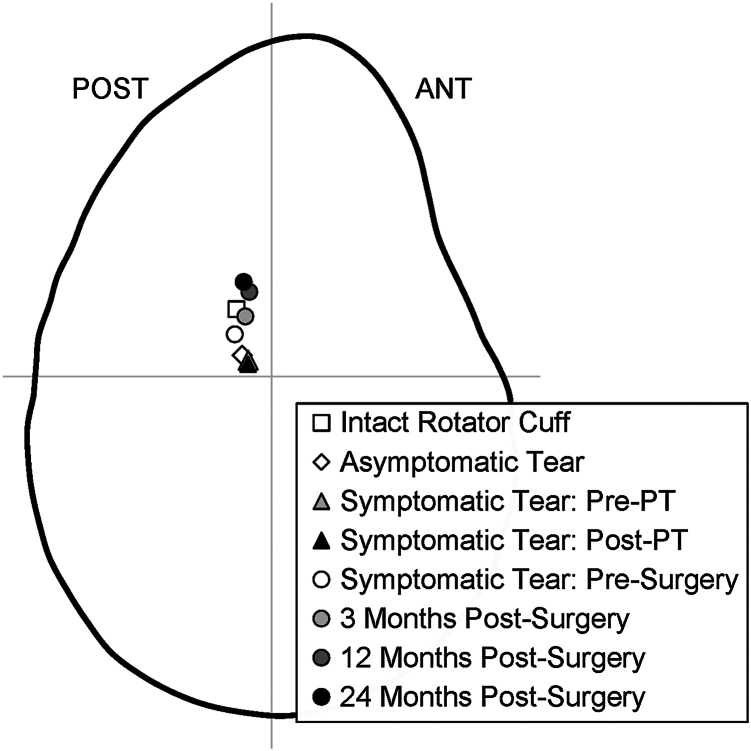 Figure 4
Peer Reviews
No public reviews on file for this paper yet. If you reviewed it on a platform where reviews are public (OpenReview, ICLR, NeurIPS, ICML), you can paste yours below so the community can read it here.
Videos
No videos yet. Explain this paper in a talk, walkthrough, or lecture? Add one.
Taxonomy
TopicsShoulder Injury and Treatment · Nerve Injury and Rehabilitation · Shoulder and Clavicle Injuries