A Gold-PROTAC Degrades the Oncogenic Tyrosine Kinase MERTK: Insights into the Degradome from a Steady-State System
Sophie R. Thomas, Thomas Iellici, Mihyun Park, Elisabeth Klaus, Andrea Bileck, Christopher Gerner, Samuel M. Meier-Menches, Angela Casini

TL;DR
This study introduces a covalent gold-based PROTAC that degrades the cancer-related protein MERTK and identifies its targets using a steady-state cell system.
Contribution
The paper presents a novel covalent gold-based PROTAC and a steady-state system for unbiased degradome profiling.
Findings
The AuPROTAC degrades MERTK and TXNL1, with degradation rescued by proteasome inhibition.
The AuPROTAC degrades 95 proteins, showing higher selectivity compared to ACBI2, which degrades 221 proteins.
Abstract
Proteolysis targeting chimeras (PROTACs) are bifunctional molecules designed to induce the degradation of specific proteins within a cell. While most PROTACs are noncovalent interactors, covalent PROTACs may benefit from improved selectivity and pharmacodynamics, yet remain largely understudied. Here, a covalent gold-based PROTAC (AuPROTAC) was synthesized, featuring a Au(III)-warhead, known to induce cysteine-arylation in a gold-templated two-step mechanism, linked to a cereblon binding moiety. The degradome of the AuPROTAC was characterized by establishing a cycloheximide chase assay in a nonproliferative steady-state HL-60 cell culture, enabling the identification of PROTAC degradation targets uncoupled from confounding effects originating from cell-cycle-dependent translational patterns. The method was verified using the known SMARCA2 and PBRM1-degrader ACBI2. AuPROTAC could…
Genes, proteins, chemicals, diseases, species, mutations and cell lines named across the full text — each resolved to its canonical identifier and authoritative record.
Click any figure to enlarge with its caption.
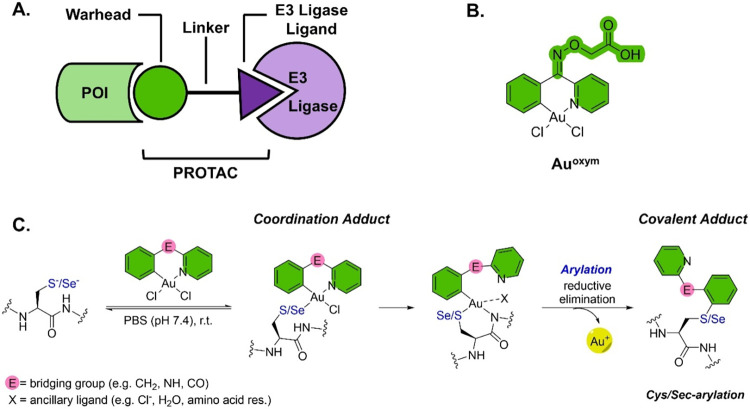 Figure 1
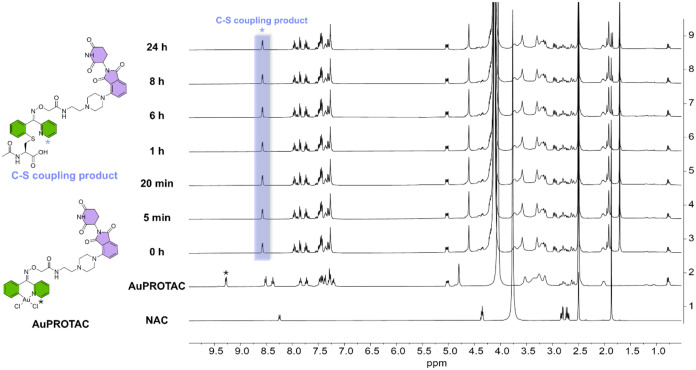 Figure 2
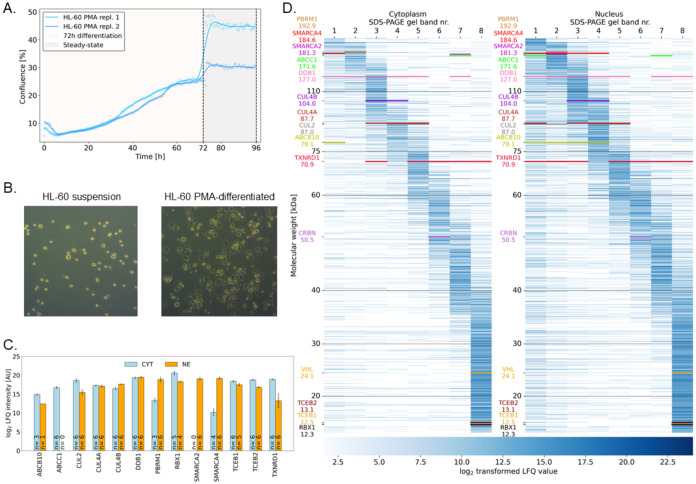 Figure 3
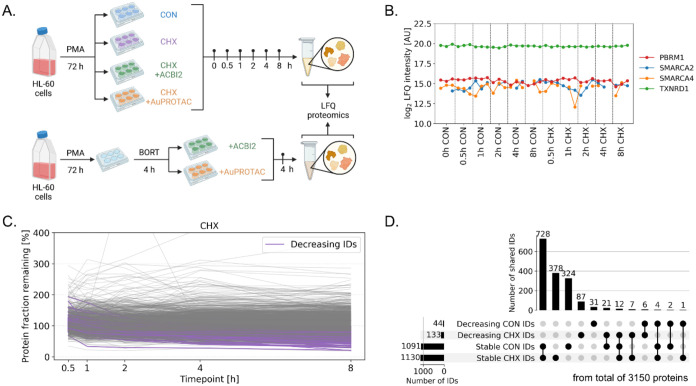 Figure 4
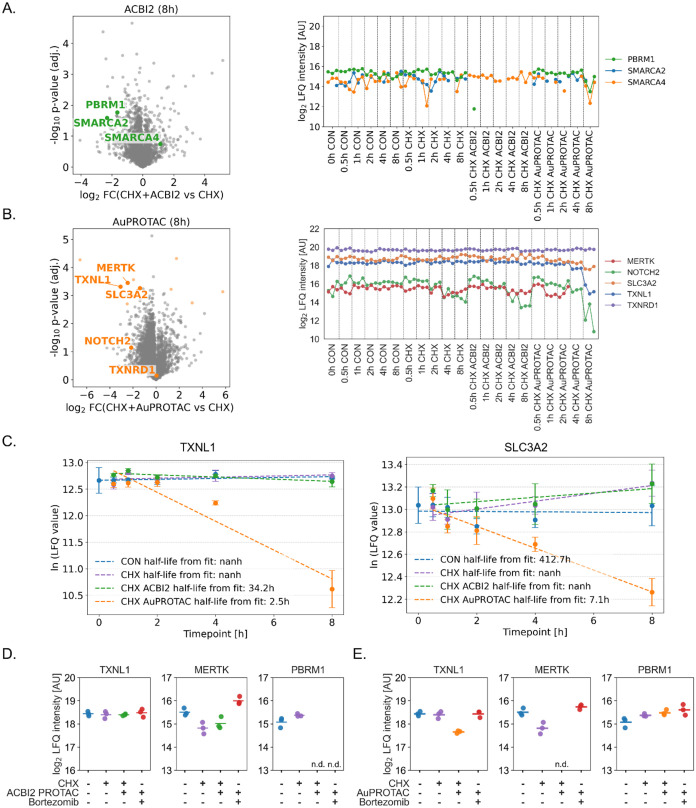 Figure 5
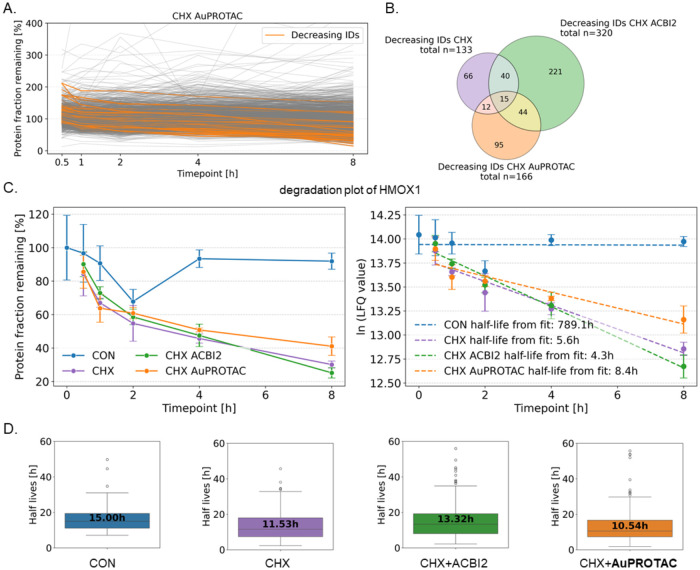 Figure 6
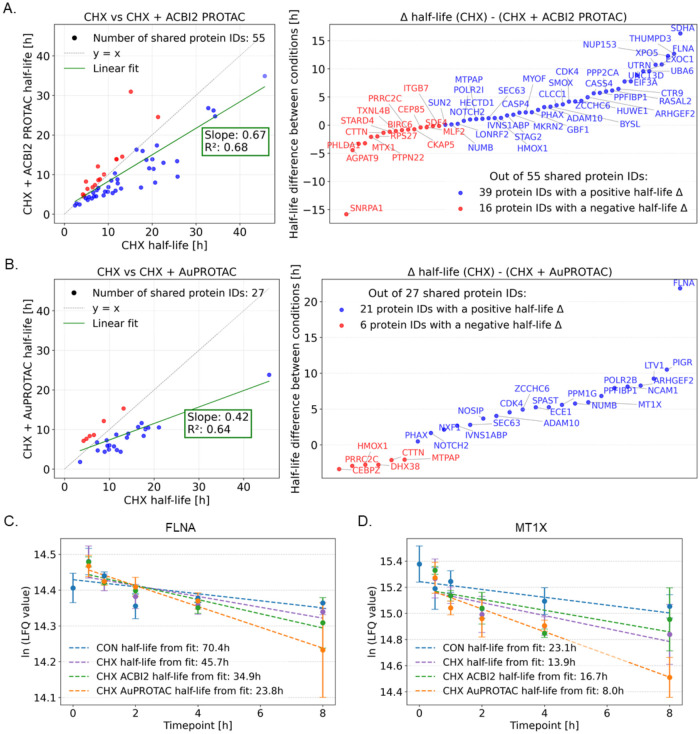 Figure 7
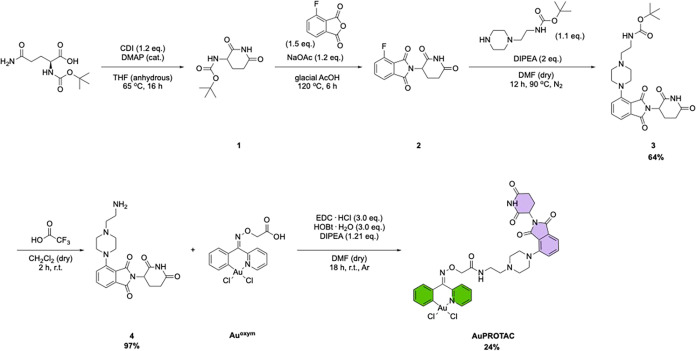 Figure 8
 Figure 9
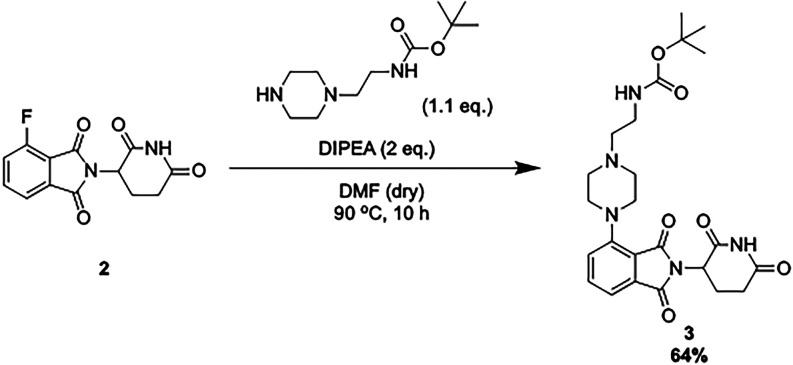 Figure 10
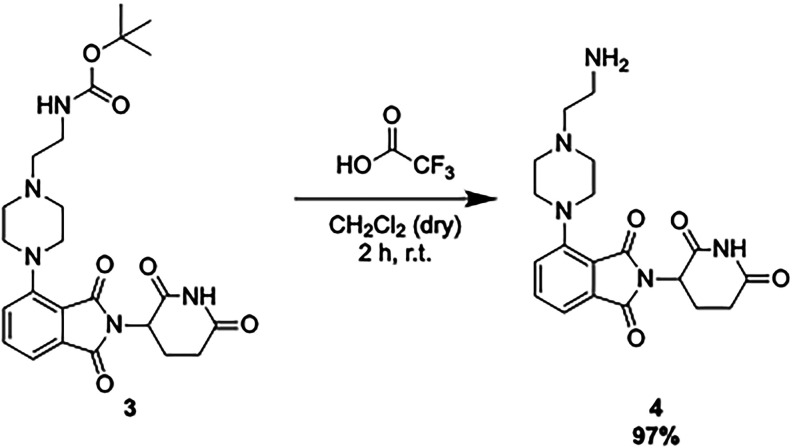 Figure 11
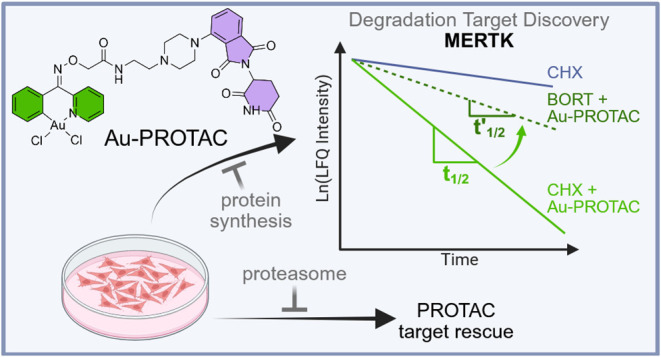 Figure 12
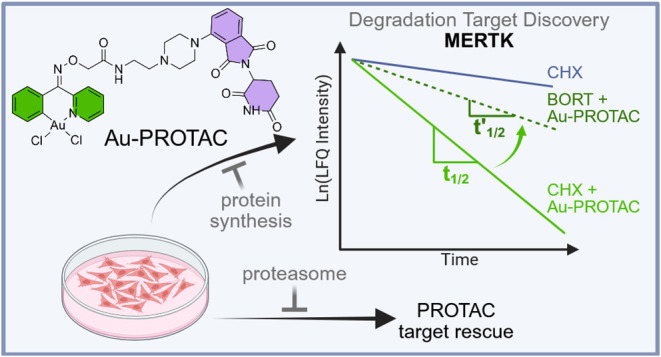 Figure 13
 Figure 14
 Figure 15
 Figure 16
Peer Reviews
No public reviews on file for this paper yet. If you reviewed it on a platform where reviews are public (OpenReview, ICLR, NeurIPS, ICML), you can paste yours below so the community can read it here.
Videos
No videos yet. Explain this paper in a talk, walkthrough, or lecture? Add one.
Taxonomy
TopicsProtein Degradation and Inhibitors · Click Chemistry and Applications · Chromatin Remodeling and Cancer