Conformational Preferences for N‑Glycans at the Surface of CEACAM1-Ig1
Alexander Eletsky, Chin Huang, Yinglong Miao, Kelley W. Moremen, Laura C. Morris, James H. Prestegard

TL;DR
This study uses NMR and simulations to explore how glycans on a protein's surface adopt specific shapes that may help stabilize the protein.
Contribution
The study demonstrates the successful application of Pep-GaMD to glycan conformations using NMR data for validation.
Findings
NMR data confirmed preferred glycan conformations at the CEACAM1-Ig1 surface.
Hydrophobic interactions between glycans and protein residues contribute to stability.
Pep-GaMD simulations effectively sampled glycan conformations relevant to protein function.
Abstract
Glycans on glycoproteins play roles that range from quality control in protein folding, to mediation of interactions with other proteins, to stabilization of the protein to which they are attached. Computation can suggest structures that underlie these roles, but confidence is limited by the accuracy of energetic calculations and their applicability to the aqueous environment in which proteins function. Experimental validation of suggested structures is therefore of primary importance. Here we use NMR data, including long-range pseudocontact shifts (PCSs) and residual dipolar couplings (RDCs), to screen structures produced by a version of accelerated molecular dynamics (Pep-GaMD). This version was designed to improve the search for peptide–protein interactions, but here it is successfully applied to glycans attached to a target protein. The target protein, the N-terminal domain of human…
Genes, proteins, chemicals, diseases, species, mutations and cell lines named across the full text — each resolved to its canonical identifier and authoritative record.
Click any figure to enlarge with its caption.
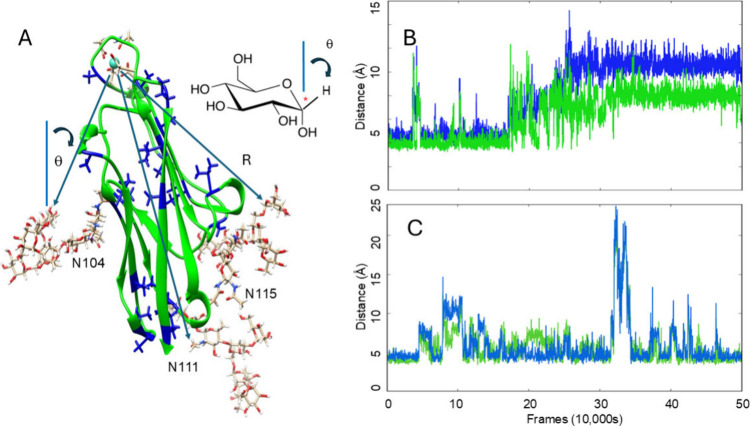 Figure 1
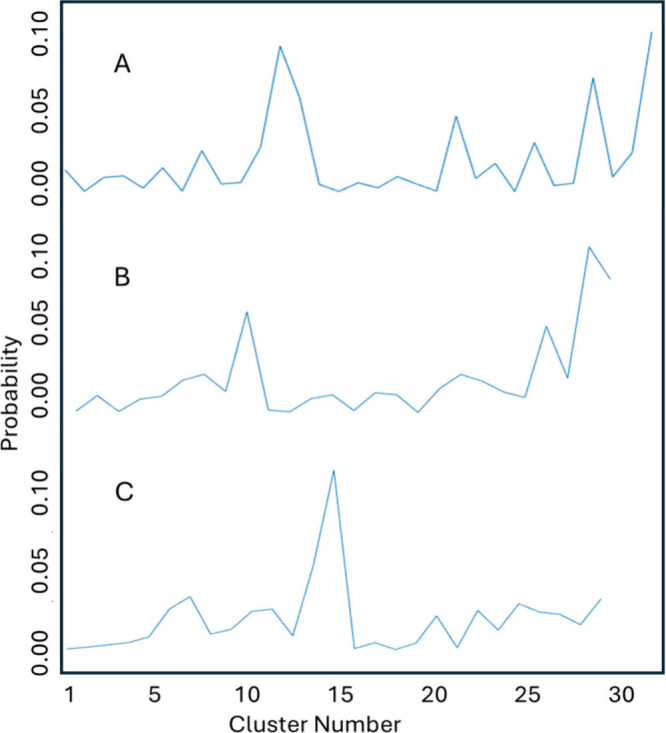 Figure 2
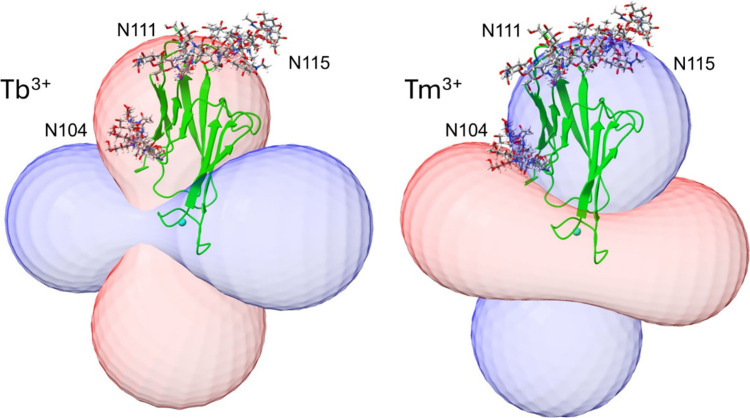 Figure 3
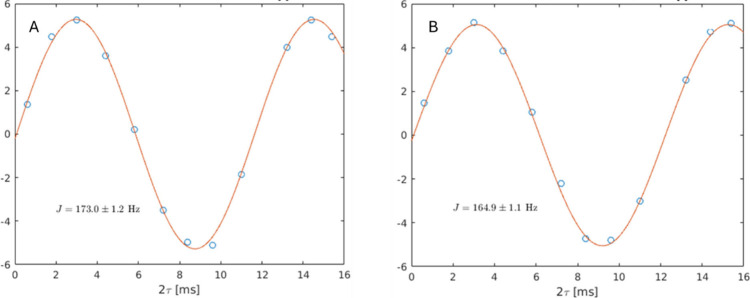 Figure 4
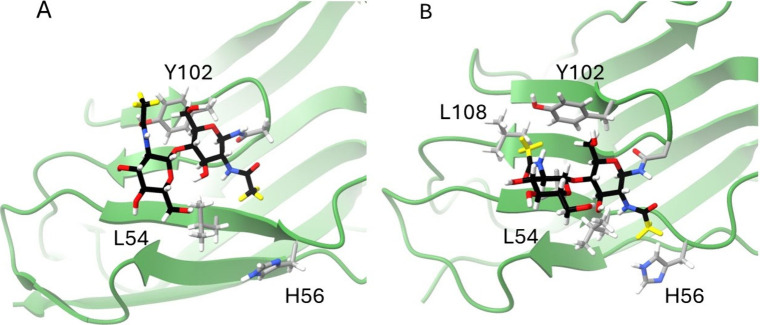 Figure 5
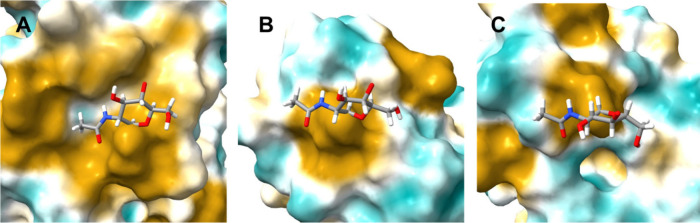 Figure 6
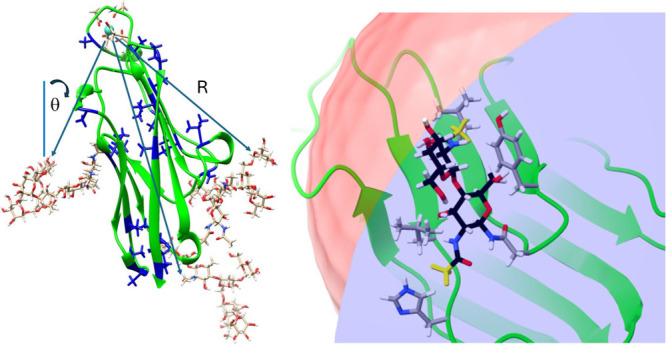 Figure 7
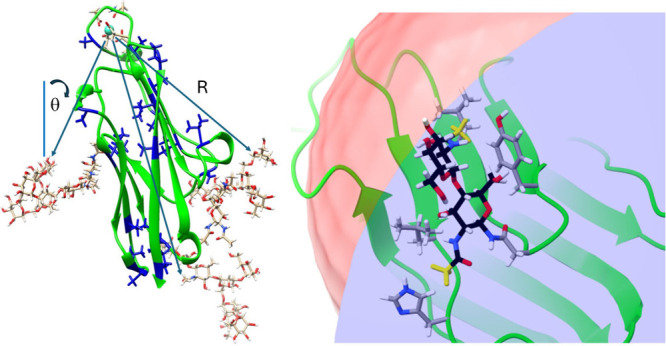 Figure 8
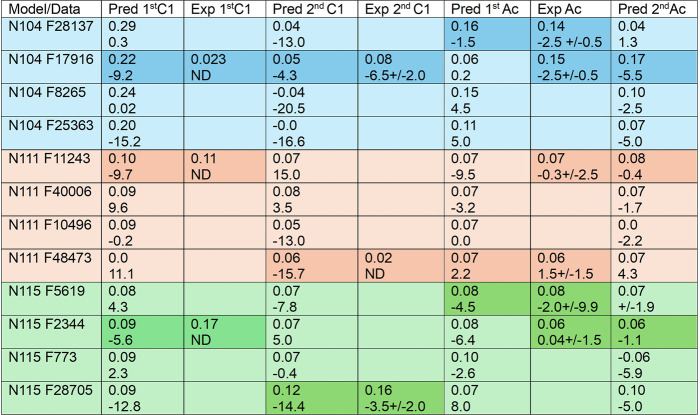 Figure 9
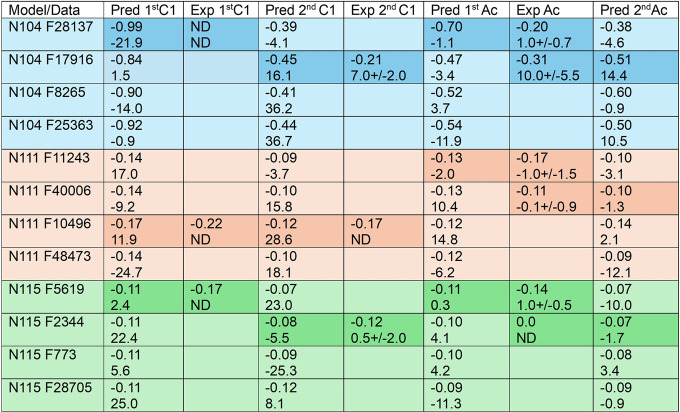 Figure 10
 Figure 11
 Figure 12
Peer Reviews
No public reviews on file for this paper yet. If you reviewed it on a platform where reviews are public (OpenReview, ICLR, NeurIPS, ICML), you can paste yours below so the community can read it here.
Videos
No videos yet. Explain this paper in a talk, walkthrough, or lecture? Add one.
Taxonomy
TopicsMonoclonal and Polyclonal Antibodies Research · Glycosylation and Glycoproteins Research · Radiopharmaceutical Chemistry and Applications