Residual eDNA in eRNA Extracts Skews eRNA‐Based Biodiversity Assessment: Call for Optimised DNase Treatment
Fuwen Wang, Wei Xiong, Xuena Huang, Shiguo Li, Aibin Zhan

TL;DR
Residual DNA in environmental RNA samples can falsely inflate biodiversity estimates, and better DNase treatment is needed to improve accuracy.
Contribution
Demonstrates that residual eDNA in eRNA extracts leads to false positives and recommends optimized DNase treatment protocols.
Findings
Untreated eRNA samples showed over 25% more taxa per site compared to DNase-treated samples.
Residual eDNA caused over 10-fold increases in some taxon abundances.
Community composition shifted significantly between treated and untreated samples due to residual eDNA.
Abstract
Environmental RNA (eRNA) metabarcoding has rapidly emerged as a powerful tool for assessing contemporary biodiversity patterns across diverse ecosystems. However, the potential for false positive detections caused by co‐extracted environmental DNA (eDNA) remains unquantified. Distinguishing true signals from false positives caused by residual eDNA is a technical challenge in eRNA‐based metabarcoding. To address this issue, we employed a freshwater river receiving treated effluent from a wastewater treatment plant as a model system. In such settings, eDNA in the treated effluent can lead to the detection of non‐local species (e.g., marine taxa). Treated effluent typically contains minimal or no eRNA, making it well‐suited for evaluating the influence of eDNA carryover. By comparing DNase‐treated and untreated eRNA samples, we assessed the impact of residual eDNA on fish species richness…
Genes, proteins, chemicals, diseases, species, mutations and cell lines named across the full text — each resolved to its canonical identifier and authoritative record.
Click any figure to enlarge with its caption.
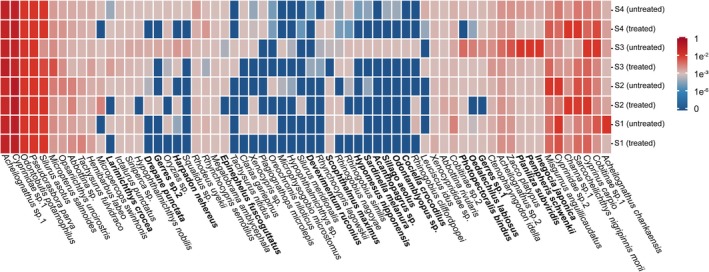 Figure 1
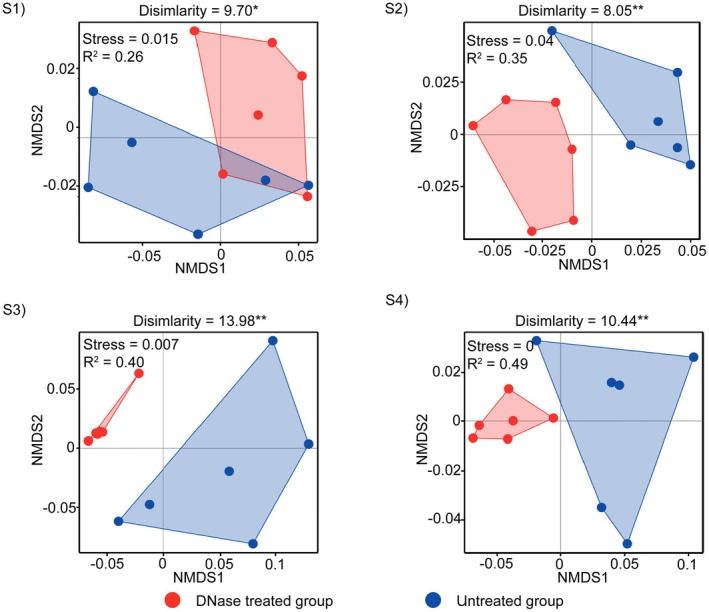 Figure 2
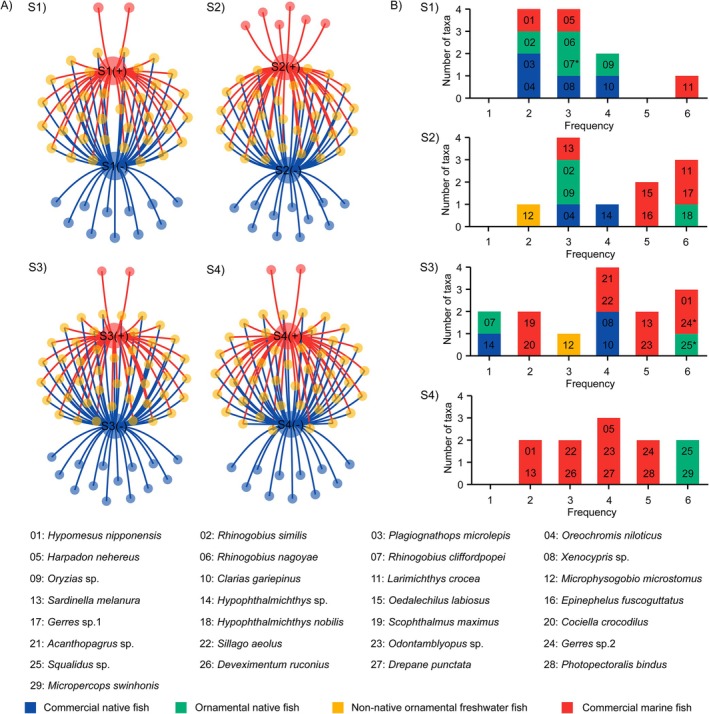 Figure 3
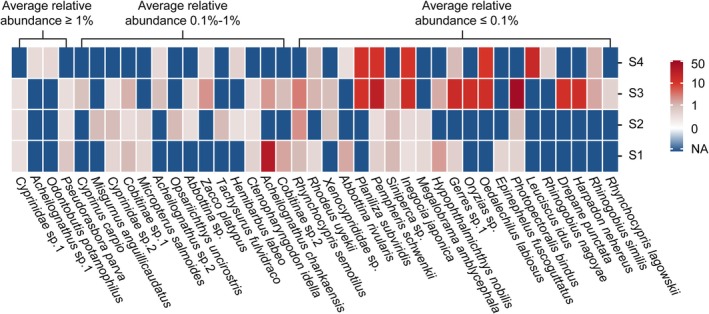 Figure 4
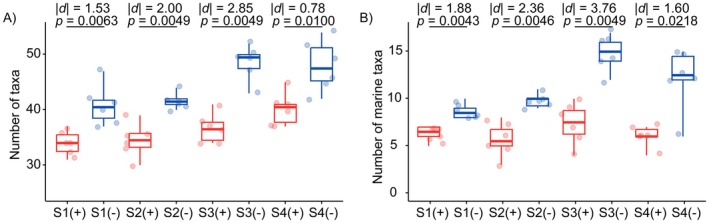 Figure 5
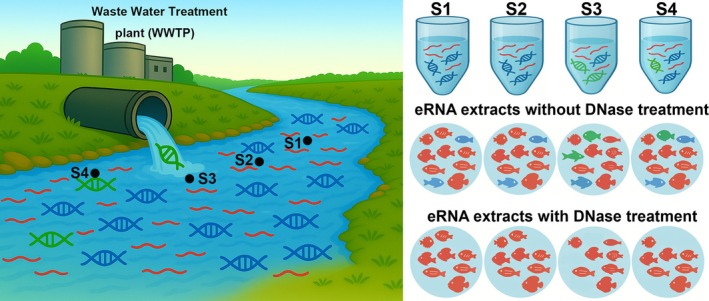 Figure 6
Peer Reviews
No public reviews on file for this paper yet. If you reviewed it on a platform where reviews are public (OpenReview, ICLR, NeurIPS, ICML), you can paste yours below so the community can read it here.
Videos
No videos yet. Explain this paper in a talk, walkthrough, or lecture? Add one.
Taxonomy
TopicsEnvironmental DNA in Biodiversity Studies · Genomics and Phylogenetic Studies · Species Distribution and Climate Change