Rare Dual Genetic Diagnosis of Wiskott-Aldrich Syndrome and Ghoshal Hematodiaphyseal Dysplasia: Clinical, Diagnostic, and Management Challenges
Eby P Baby, Shruti Verma, Abhishek Bhagel, Savitri Singh, Nita Radhakrishnan

TL;DR
This paper reports the first case of a child with two rare genetic disorders, Wiskott-Aldrich syndrome and Ghoshal hematodiaphyseal dysplasia, highlighting the challenges in diagnosis and treatment.
Contribution
The paper presents the first documented case of dual inheritance of Wiskott-Aldrich syndrome and Ghoshal hematodiaphyseal dysplasia in a single patient.
Findings
The patient had a hemizygous frameshift mutation in the WAS gene and a homozygous missense mutation in TBXAS1.
The combined condition resulted in a blended phenotype with early marrow fibrosis not explained by either disorder alone.
Molecular testing was critical for diagnosing the dual genetic condition in a child with atypical cytopenias.
Abstract
Wiskott-Aldrich syndrome (WAS) is a rare X-linked immunodeficiency characterized by microthrombocytopenia, recurrent infections, eczema, and risk of autoimmunity or malignancy. Ghoshal hematodiaphyseal dysplasia (GHD) is an extremely rare autosomal recessive disorder caused by pathogenic variants in the TBXAS1 gene, leading to bone marrow fibrosis, transfusion-dependent anemia, and skeletal dysplasia. While each disorder individually is rare, their co-inheritance in the same patient has not been reported. With the increasing use of next-generation sequencing, dual genetic diagnoses are being recognized, particularly in consanguineous populations, and often present with blended phenotypes that complicate diagnosis and management. We describe a 14-month-old boy, the third child of consanguineous parents, presenting with transfusion-dependent anemia from early infancy, severe…
Genes, proteins, chemicals, diseases, species, mutations and cell lines named across the full text — each resolved to its canonical identifier and authoritative record.
Click any figure to enlarge with its caption.
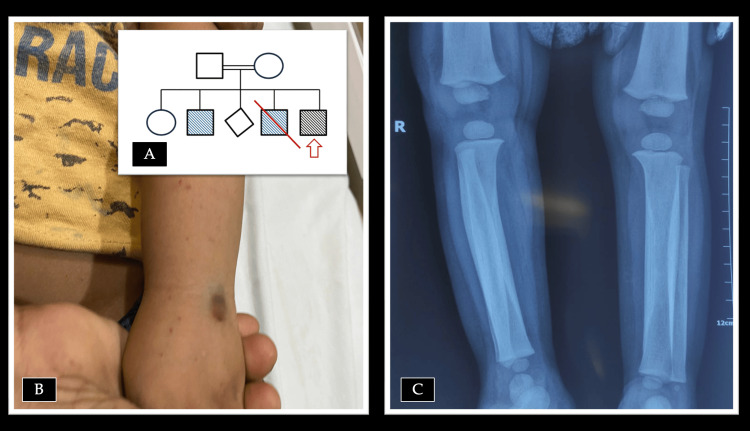 Figure 1
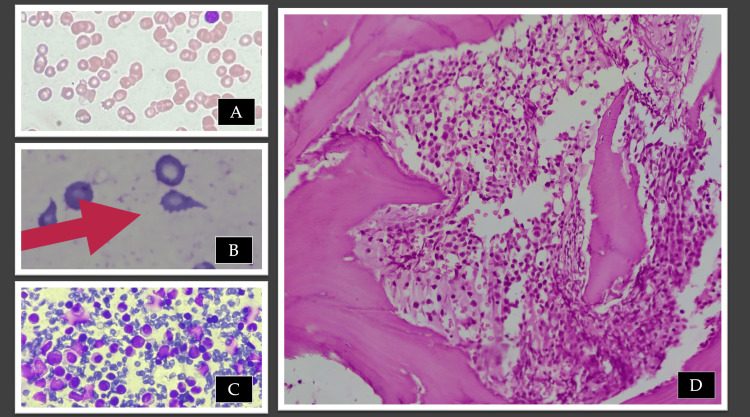 Figure 2
Peer Reviews
No public reviews on file for this paper yet. If you reviewed it on a platform where reviews are public (OpenReview, ICLR, NeurIPS, ICML), you can paste yours below so the community can read it here.
Videos
No videos yet. Explain this paper in a talk, walkthrough, or lecture? Add one.
Taxonomy
TopicsCellular Mechanics and Interactions · Connective tissue disorders research · Cell Adhesion Molecules Research