Structural Connectivity Disruption and Structural–Functional Decoupling in Working Memory Networks Across Pre‐Dialysis and Maintenance Hemodialysis End‐Stage Renal Disease Patients
Xiaoling Xu, Shaohui Ma, Siyao Liu, Zhaoyao Luo, Qiange Zhu, Huijie Yuan, Xinyi Zhu, Wen Gu, Peng Li, Jianjun Zhang, Ming Zhang, Junya Mu

TL;DR
Pre-dialysis ESRD patients show disrupted brain connectivity and worse working memory, while hemodialysis patients show partial recovery.
Contribution
Identifies structural and functional connectivity changes in ESRD patients and links them to serum markers and cognitive performance.
Findings
Pre-dialysis ESRD patients had reduced frontoparietal structural connectivity and widespread SFC reductions.
Elevated urea and lower sodium in pre-dialysis patients correlated with weaker connectivity and worse working memory.
Maintenance hemodialysis patients showed near-normal working memory and partially restored connectivity.
Abstract
End‐stage renal disease (ESRD) is associated with working memory (WM) impairment. We assessed how structural connectivity (SC), functional connectivity (FC), and structural–functional coupling (SFC) differ between pre‐dialysis ESRD (ESRDp), maintenance hemodialysis ESRD (ESRDm), and healthy controls (HCs), and how these changes relate to serum markers and WM performance. 29 ESRDp, 29 ESRDm, and 46 HCs completed 0‐, 1‐, and 2‐back tasks, diffusion MRI, and fMRI. WM nodes were defined by overlaying a meta‐analytic map with the Harvard–Oxford atlas. SC, FC, and regional SFC were computed among WM‐related regions. Group differences, correlations with serum markers, and mediation models were examined. ESRDp showed markedly lower n‐back accuracy, longer reaction time (RT), reduced frontoparietal SC, and widespread SFC reductions compared with ESRDm and HCs, whereas ESRDm exhibited…
Genes, proteins, chemicals, diseases, species, mutations and cell lines named across the full text — each resolved to its canonical identifier and authoritative record.
Click any figure to enlarge with its caption.
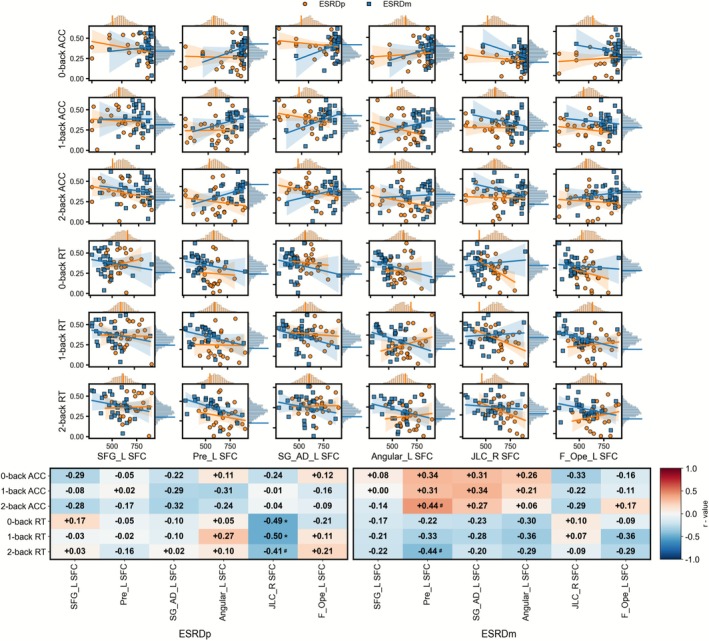 Figure 1
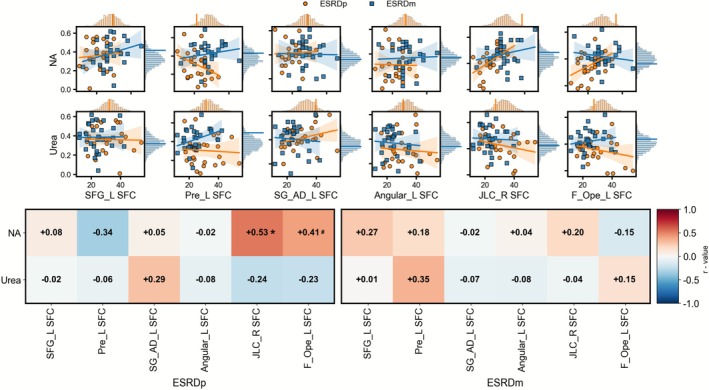 Figure 2
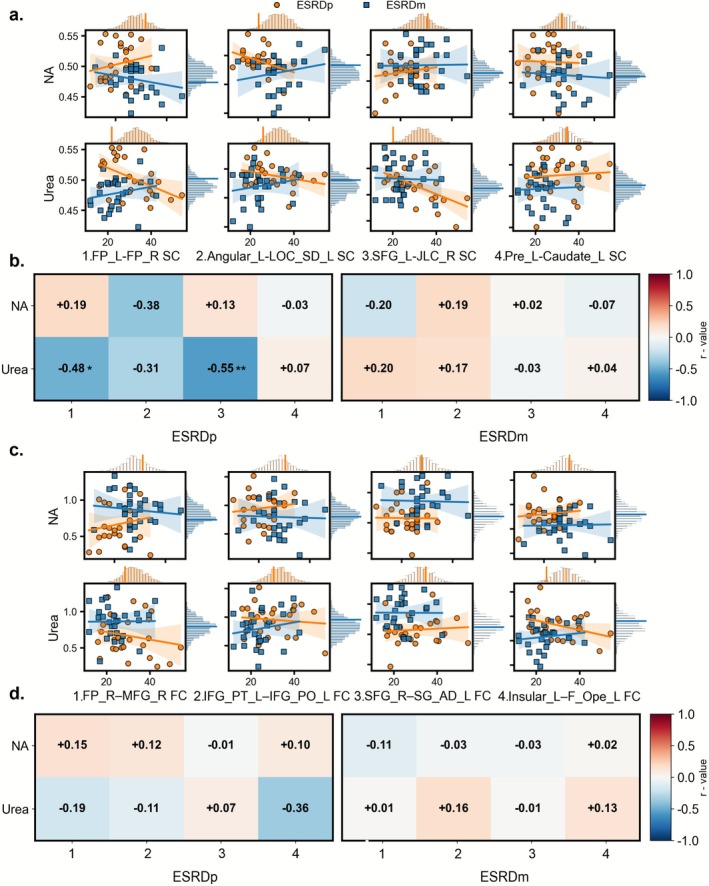 Figure 3
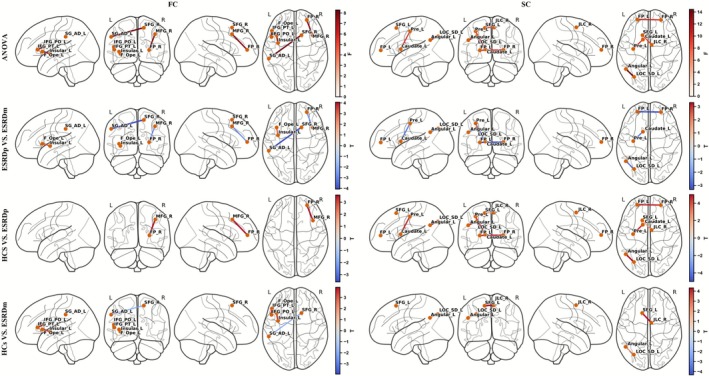 Figure 4
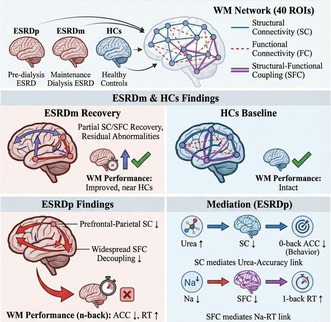 Figure 5
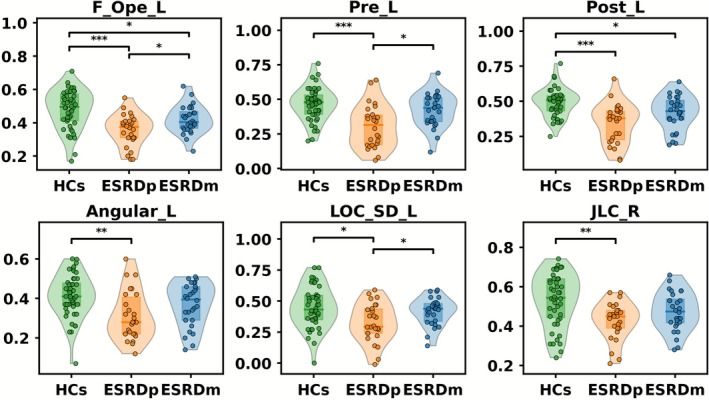 Figure 6
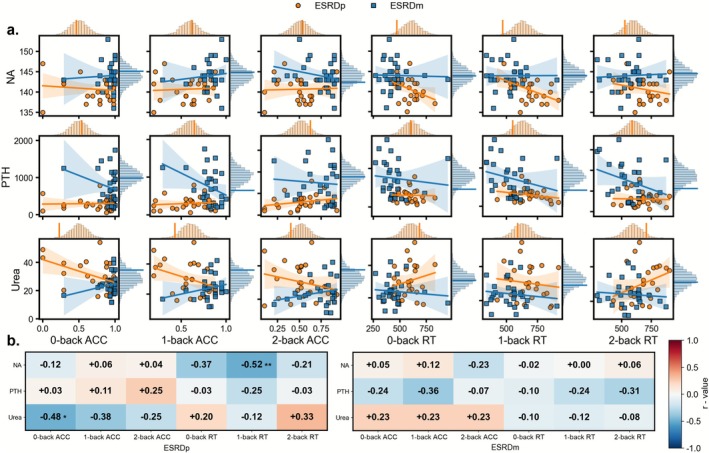 Figure 7
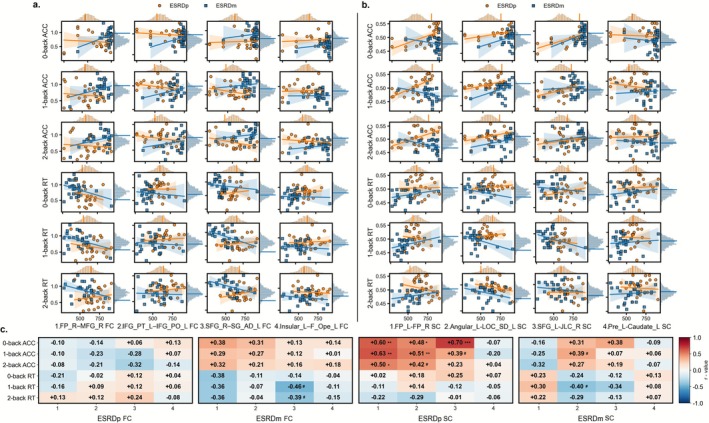 Figure 8
Peer Reviews
No public reviews on file for this paper yet. If you reviewed it on a platform where reviews are public (OpenReview, ICLR, NeurIPS, ICML), you can paste yours below so the community can read it here.
Videos
No videos yet. Explain this paper in a talk, walkthrough, or lecture? Add one.
Taxonomy
TopicsFunctional Brain Connectivity Studies · Dialysis and Renal Disease Management · Dementia and Cognitive Impairment Research