Altered Brain Function and Network Topology in Patients With Acromegaly: Resting‐State fMRI Study of Networks Related to Cognitive and Emotional Processing
Zerui Wu, Xuejie Yu, Yingyue Zhang, Jinming Yang, Qilin Zhang, Shun Yao, Xuefei Shou, Xiang Zhou, Yongfei Wang, Hao Li, Liguo Jia, Yifei Yu, Weiwei Wang, Zengyi Ma, Wenqiang He

TL;DR
This study finds that patients with acromegaly have altered brain activity and network disruptions linked to cognitive decline.
Contribution
The study reveals novel insights into how excess growth hormone affects brain function and connectivity in acromegaly patients.
Findings
Patients with acromegaly show increased ALFF in default mode network regions and decreased fALFF in frontal–parietal areas.
ReHo is elevated in the visual network but reduced in the frontal–parietal network in acromegaly patients.
Disruptions in key hub nodes of the default mode and visual networks were observed, with 85.11% classification accuracy using MK-SVM.
Abstract
Neurodegenerative diseases are particularly prevalent among patients with acromegaly, but their functional alterations remain poorly understood. To explore the neurobiological mechanisms of excess growth hormone (GH) on brain functional activity and connectivity in acromegaly. Neuropsychological assessments and resting‐state functional magnetic resonance imaging (fMRI) were conducted on 27 patients with acromegaly and 25 healthy controls. The amplitude of low‐frequency fluctuations (ALFF), fractional ALFF (fALFF), and regional homogeneity (ReHo) were compared between groups via voxel‐based analyses, while graph theory was used to assess brain network topology. T‐tests and multikernel support vector machine (MK‐SVM) were used to identify discriminative connectome features for classification. Patients with acromegaly exhibited lower Montreal Cognitive Assessment scores, increased ALFF…
Genes, proteins, chemicals, diseases, species, mutations and cell lines named across the full text — each resolved to its canonical identifier and authoritative record.
Click any figure to enlarge with its caption.
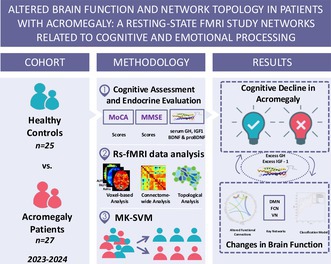 Figure 1
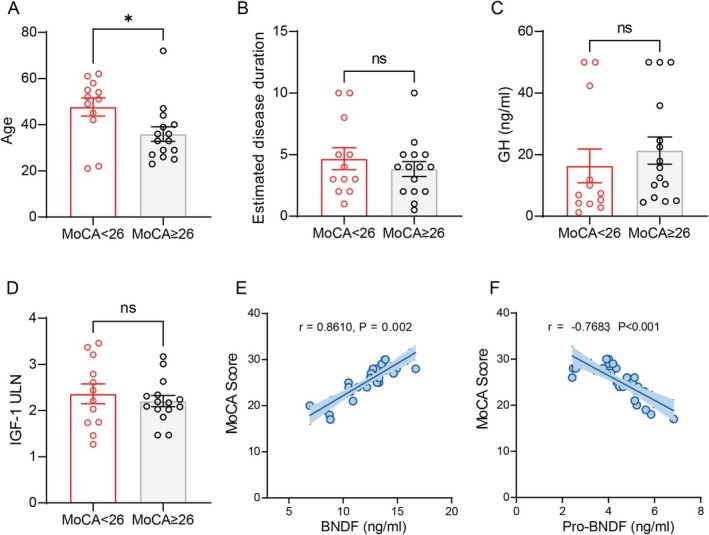 Figure 2
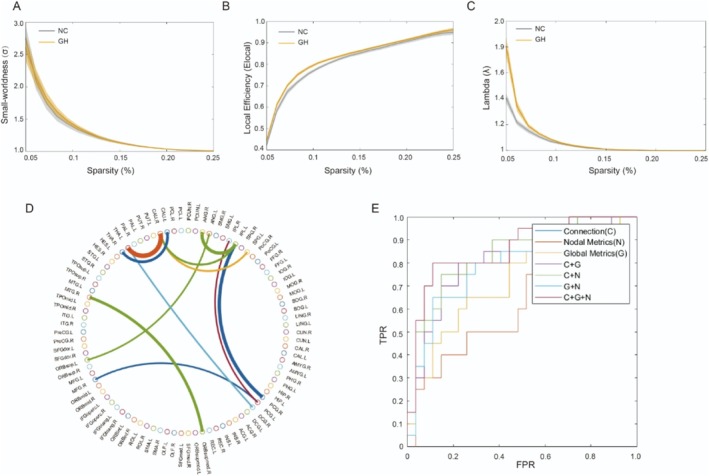 Figure 3
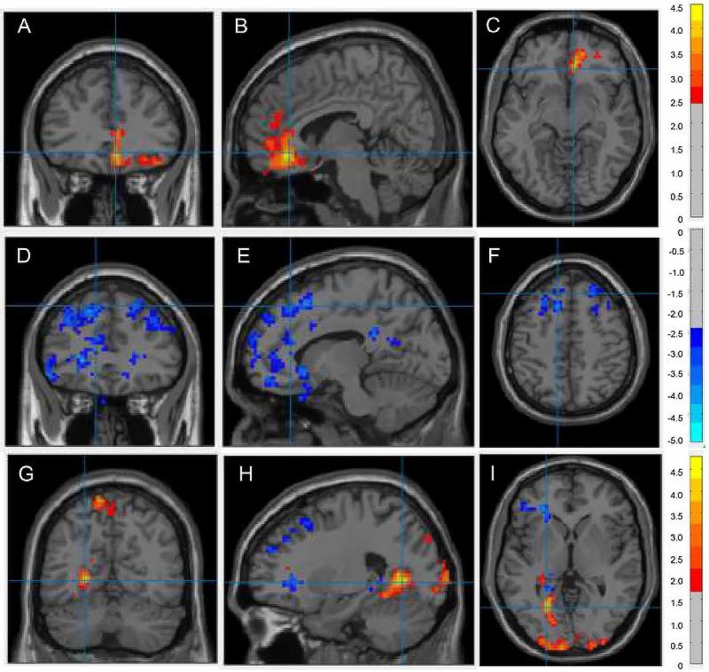 Figure 4
Peer Reviews
No public reviews on file for this paper yet. If you reviewed it on a platform where reviews are public (OpenReview, ICLR, NeurIPS, ICML), you can paste yours below so the community can read it here.
Videos
No videos yet. Explain this paper in a talk, walkthrough, or lecture? Add one.
Taxonomy
TopicsPituitary Gland Disorders and Treatments · Functional Brain Connectivity Studies · Dementia and Cognitive Impairment Research