Flight performance of great cormorants Phalacrocorax carbo sinensis suggests sufficient muscle capacity for adaptive speed adjustment
Anders Hedenström, Marco KleinHeerenbrink, Susanne Åkesson

TL;DR
Greater cormorants can adjust their flight speed in response to ecological needs and wind conditions, suggesting sufficient muscle power despite their large body size.
Contribution
This study shows that greater cormorants can adaptively adjust flight speeds, challenging previous assumptions about their limited flight performance.
Findings
Cormorants can achieve airspeeds beyond minimum power speed during migration and foraging.
They demonstrate partial wind drift compensation by adjusting flight headings along coastlines.
Flight speed adjustments to headwinds were inconsistent in some situations.
Abstract
Power required to fly for a bird generally follows a U-shaped function of airspeed, with higher cost at both low and high speeds. Because power required increases with body mass faster than power available from flight muscles, larger birds may experience restricted flight speed ranges and climbing capabilities. Previous studies found limited flight performance in cormorants. Adapted for both flight and sub-surface swimming, they trade off larger flight muscles for powerful leg muscles used for diving. Our study tested whether the flight performance of greater cormorants is constrained by measuring airspeed under various seasonal and wind conditions. If flight muscles severely limit the range of flight speeds, cormorants would not be able to adopt ecologically relevant speeds between seasons and not increase speed in headwinds to minimize cost of transport. Results suggest that…
Genes, proteins, chemicals, diseases, species, mutations and cell lines named across the full text — each resolved to its canonical identifier and authoritative record.
Click any figure to enlarge with its caption.
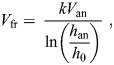 Figure 1
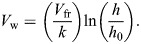 Figure 2
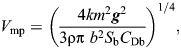 Figure 3
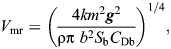 Figure 4
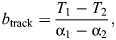 Figure 5
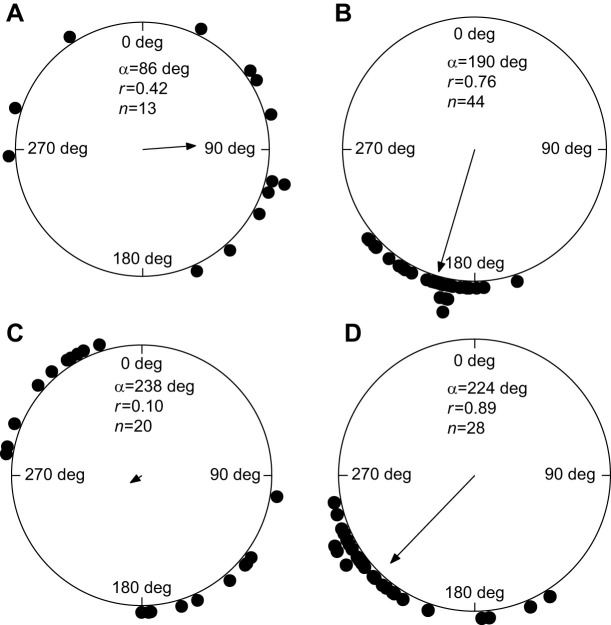 Figure 6
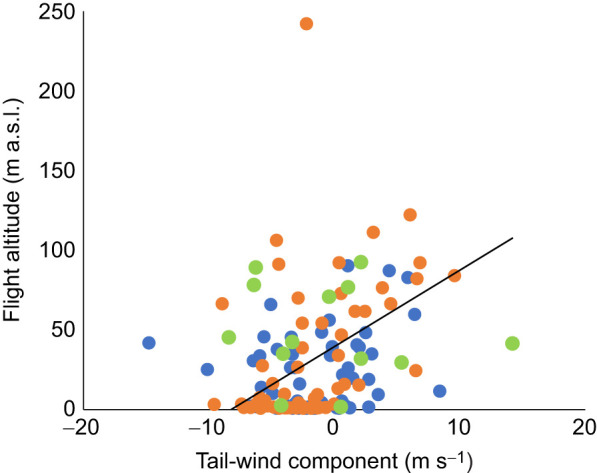 Figure 7
Peer Reviews
No public reviews on file for this paper yet. If you reviewed it on a platform where reviews are public (OpenReview, ICLR, NeurIPS, ICML), you can paste yours below so the community can read it here.
Videos
No videos yet. Explain this paper in a talk, walkthrough, or lecture? Add one.
Taxonomy
TopicsBiomimetic flight and propulsion mechanisms · Avian ecology and behavior · Animal Behavior and Reproduction