Broadening the Clinical Spectrum of Axonal Hereditary Neuropathies: A Comparative Case Study on DNAJB2‐ and HINT1‐Related Disease
Bogdan Bjelica, Corinna Hendrich, Sandra von Hardenberg, Milica Vukojevic, Sonja Körner, Thomas Gschwendtberger, Aiden Haghikia, Stojan Peric, Susanne Petri

TL;DR
This study compares two rare genetic neuropathies, DNAJB2 and HINT1, to better understand their symptoms and quality of life effects.
Contribution
The study provides the first direct comparison of DNAJB2- and HINT1-related neuropathies, highlighting distinct non-motor features and quality of life differences.
Findings
Both DNAJB2 and HINT1 variants cause a CMT2 phenotype with predominantly motor axonal neuropathy.
DNAJB2 patients show later onset, more severe neuropathy, and higher rates of depression and restless legs syndrome.
Quality of life is significantly reduced in DNAJB2 patients compared to healthy controls but not between DNAJB2 and HINT1 groups.
Abstract
Differentiating hereditary axonal polyneuropathies caused by distinct gene variants remains a clinical challenge. This comparative case study of DNAJB2‐ and HINT1‐related neuropathies aimed to broaden the phenotypic spectrum associated with these genes and to explore non‐motor symptoms and quality of life (QoL) in affected individuals. Six patients carrying two novel DNAJB2 variants and six age‐matched patients with HINT1 variants underwent detailed clinical and electrophysiological characterization. Motor function was assessed longitudinally using the Medical Research Council (MRC) scale. Non‐motor symptoms (neuropathic pain, autonomic dysfunction, depression, fatigue, restless legs syndrome) and QoL were evaluated with patient‐reported outcomes and compared to four healthy controls (HC). Both patient groups exhibited a CMT2 phenotype. Nerve conduction studies revealed a…
Genes, proteins, chemicals, diseases, species, mutations and cell lines named across the full text — each resolved to its canonical identifier and authoritative record.
Click any figure to enlarge with its caption.
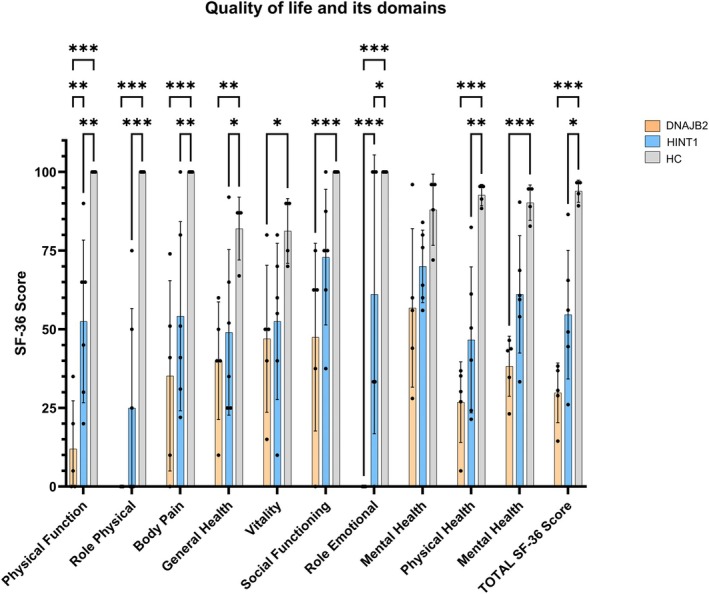 Figure 1
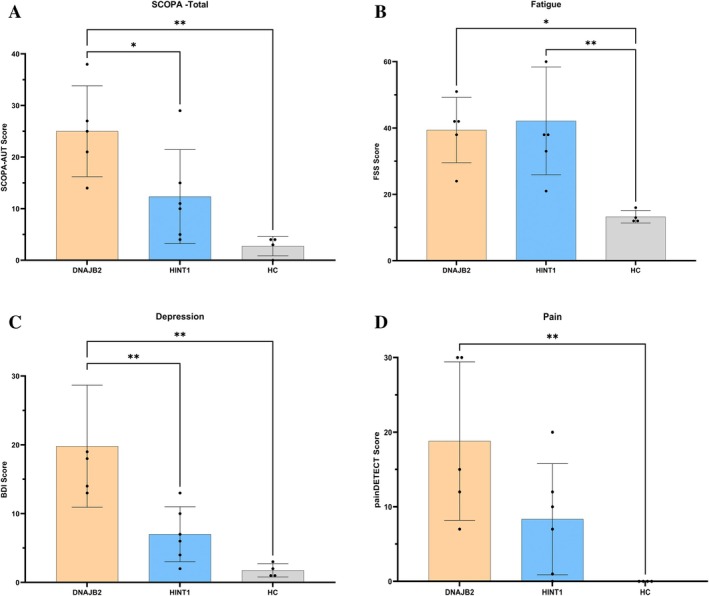 Figure 2
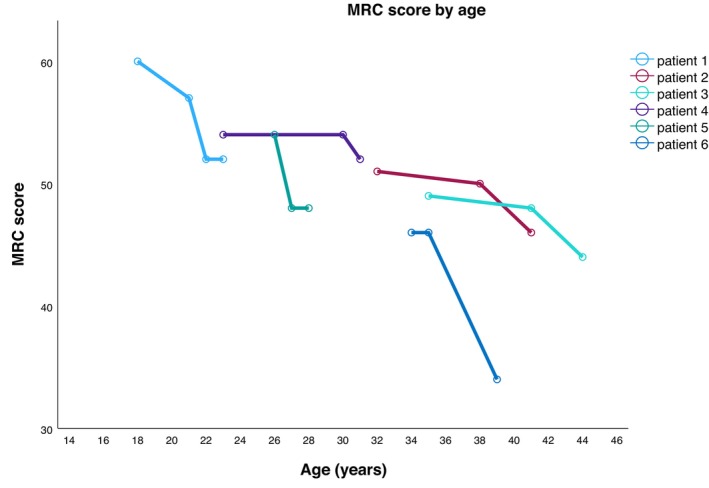 Figure 3
Peer Reviews
No public reviews on file for this paper yet. If you reviewed it on a platform where reviews are public (OpenReview, ICLR, NeurIPS, ICML), you can paste yours below so the community can read it here.
Videos
No videos yet. Explain this paper in a talk, walkthrough, or lecture? Add one.
Taxonomy
TopicsHereditary Neurological Disorders · Skin and Cellular Biology Research · Neurological diseases and metabolism