A Thorough QT Study to Assess the Effects of Milvexian on Cardiac Repolarization in Healthy Participants
Peter Zannikos, JongHanne Park, Anna Dari, Samiha Takhtoukh, Paul Levesque, Alexei N. Plotnikov, Amitava Mitra, Antoinette Ajavon‐Hartmann, Samira Merali, Juan Jose Perez Ruixo, Navin Goyal

TL;DR
This study evaluated the heart safety of milvexian, finding no significant QT interval prolongation in healthy participants.
Contribution
Demonstrated that milvexian does not prolong QTc intervals at clinically relevant concentrations.
Findings
The upper limit of the 90% confidence interval for ΔΔQTcF was less than 10 ms for all milvexian regimens.
Milvexian had weak-to-moderate potency on ion channels at concentrations higher than those observed in participants.
Milvexian was safe and well tolerated in all treatment periods.
Abstract
Milvexian is an oral factor XIa inhibitor in development for prevention of major thromboembolic conditions. This randomized, double‐blind, placebo‐ and positive‐controlled, multiple‐dose, four‐period crossover study assessed the cardic safety of milvexian (including effects on the QT interval of the electrocardiogram), with a supporting in vitro component. Sixty‐six participants were enrolled. In each treatment period, participants received milvexian (100 or 200 mg) or placebo every 12 h for 4 days. A single‐dose moxifloxacin (400 mg) served as a positive control. Electrocardiographs and time‐matched pharmacokinetic samples were collected during each period. In mixed‐effects models, the upper limit of the two‐sided 90% confidence interval for the least squares means for change from baseline QTc (Fridericia [QTcF], as the primary correction method) for milvexian versus placebo (ΔΔQTc)…
Genes, proteins, chemicals, diseases, species, mutations and cell lines named across the full text — each resolved to its canonical identifier and authoritative record.
Click any figure to enlarge with its caption.
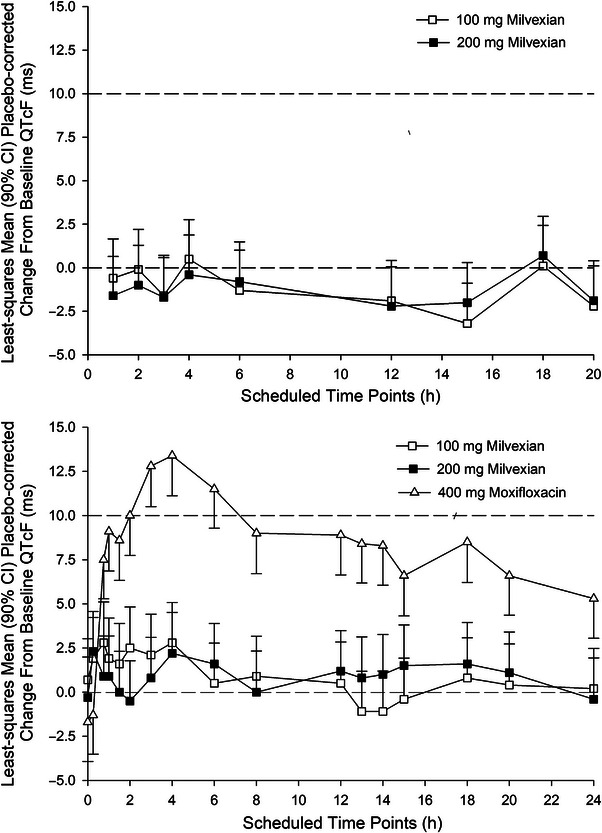 Figure 1
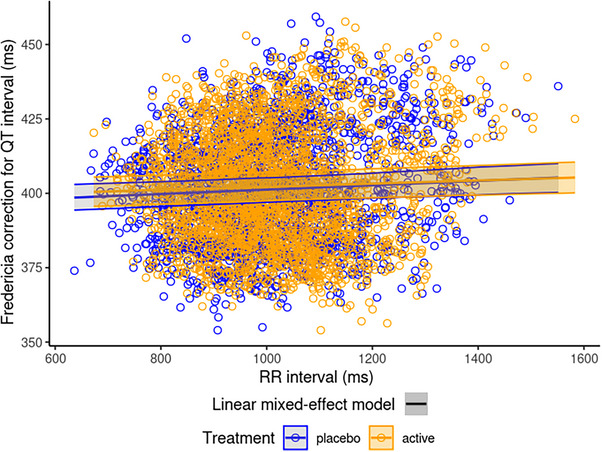 Figure 2
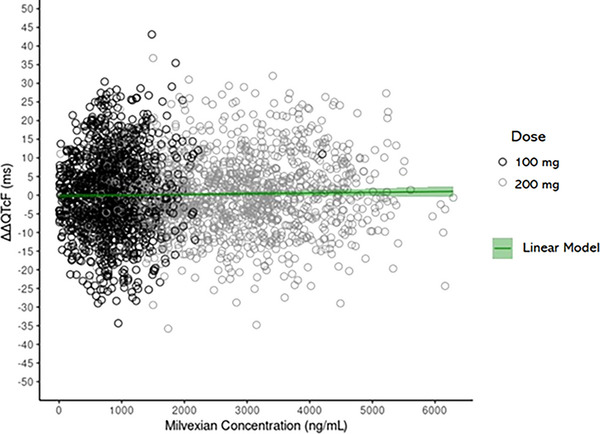 Figure 3
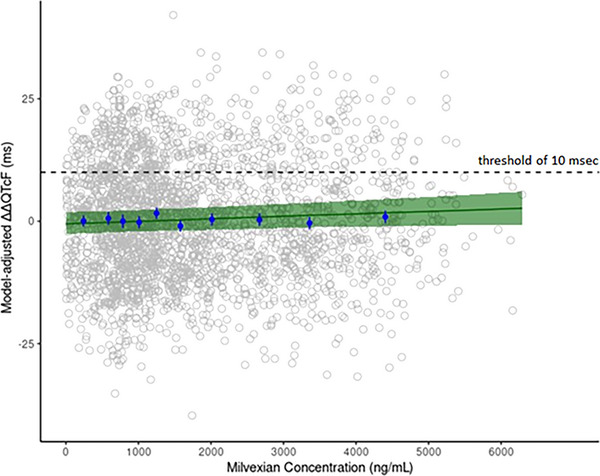 Figure 4
Peer Reviews
No public reviews on file for this paper yet. If you reviewed it on a platform where reviews are public (OpenReview, ICLR, NeurIPS, ICML), you can paste yours below so the community can read it here.
Videos
No videos yet. Explain this paper in a talk, walkthrough, or lecture? Add one.
Taxonomy
TopicsCoagulation, Bradykinin, Polyphosphates, and Angioedema · Vitamin K Research Studies · Blood Coagulation and Thrombosis Mechanisms