Microbubble Formation and Hemolysis in Pulsed Field Ablation for Treating Arrhythmia: Risks, Mechanisms, and Prevention
Pegah Ranjbartehrani

TL;DR
Pulsed Field Ablation (PFA) shows promise for treating arrhythmia but carries risks like microbubble formation and hemolysis, which need to be better understood and managed.
Contribution
The paper identifies mechanisms and prevention strategies for energy-related complications in PFA.
Findings
Microbubble formation occurs due to electrolysis, boiling, and degassing during PFA.
Hemolysis results from energy dissipation into the bloodstream, potentially affecting kidney function.
Optimized waveform and catheter design can reduce these complications.
Abstract
Pulsed Field Ablation (PFA) is an emerging energy modality for cardiac ablation, offering shorter atrial dwell times and reduced collateral damage compared to thermal methods. However, energy‐related complications, specifically gaseous microbubble formation and hemolysis, require further evaluation. Microbubble formation, driven by electrolysis, boiling, and degassing, poses a potential risk for embolic events. Similarly, hemolysis results from unintended energy dissipation into the bloodstream, affecting kidney function. Both complications can be mitigated through optimized waveform and catheter design and other procedural strategies. Enhancing PFA safety requires a deeper understanding of its biophysical interactions and continuous refinement of ablation protocols to minimize risks while preserving clinical efficacy.
Genes, proteins, chemicals, diseases, species, mutations and cell lines named across the full text — each resolved to its canonical identifier and authoritative record.
Click any figure to enlarge with its caption.
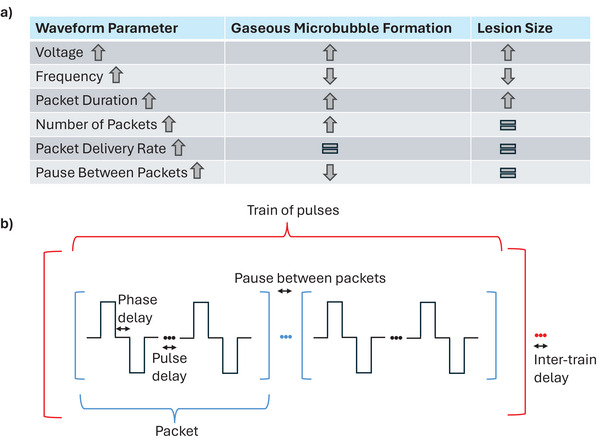 Figure 1
Peer Reviews
No public reviews on file for this paper yet. If you reviewed it on a platform where reviews are public (OpenReview, ICLR, NeurIPS, ICML), you can paste yours below so the community can read it here.
Videos
No videos yet. Explain this paper in a talk, walkthrough, or lecture? Add one.
Taxonomy
TopicsMicrobial Inactivation Methods · Cardiac Arrhythmias and Treatments · Atrial Fibrillation Management and Outcomes