Association of triglyceride and cholesterol with vestibular vertigo: Evidence from univariable and multivariable mendelian randomization and mediation analysis
Ying Mu, Yacheng Lu, Wei Fu

TL;DR
This study finds that high triglyceride and cholesterol levels may cause vestibular vertigo, with vitamin D playing a mediating role.
Contribution
The study identifies vitamin D as a mediator in the causal relationship between cholesterol and vestibular vertigo using Mendelian randomization.
Findings
Genetically predicted triglyceride and cholesterol are positively linked to vestibular vertigo risk.
Vitamin D mediates the causal effect of cholesterol on vestibular vertigo.
Adjusting for vitamin D removes the association between triglyceride/cholesterol and vestibular vertigo.
Abstract
•Triglyceride and cholesterol are causally associated with vestibular vertigo.•Vitamin D mediated the causal effect of cholesterol on vestibular vertigo.•Vitamin D supplement may be helpful treatment of vestibular vertigo. Triglyceride and cholesterol are causally associated with vestibular vertigo. Vitamin D mediated the causal effect of cholesterol on vestibular vertigo. Vitamin D supplement may be helpful treatment of vestibular vertigo. This study aimed to use Mendelian Randomization (MR) method to explore the potential causal association of triglyceride and cholesterol on the risk of vestibular vertigo and potential mediating factors. We extracted genetic variants associated with triglyceride and cholesterol from the genome-wide association study. Univariable two-sample MR were performed to evaluate the effects of triglyceride and cholesterol on the vestibular vertigo.…
Genes, proteins, chemicals, diseases, species, mutations and cell lines named across the full text — each resolved to its canonical identifier and authoritative record.
Click any figure to enlarge with its caption.
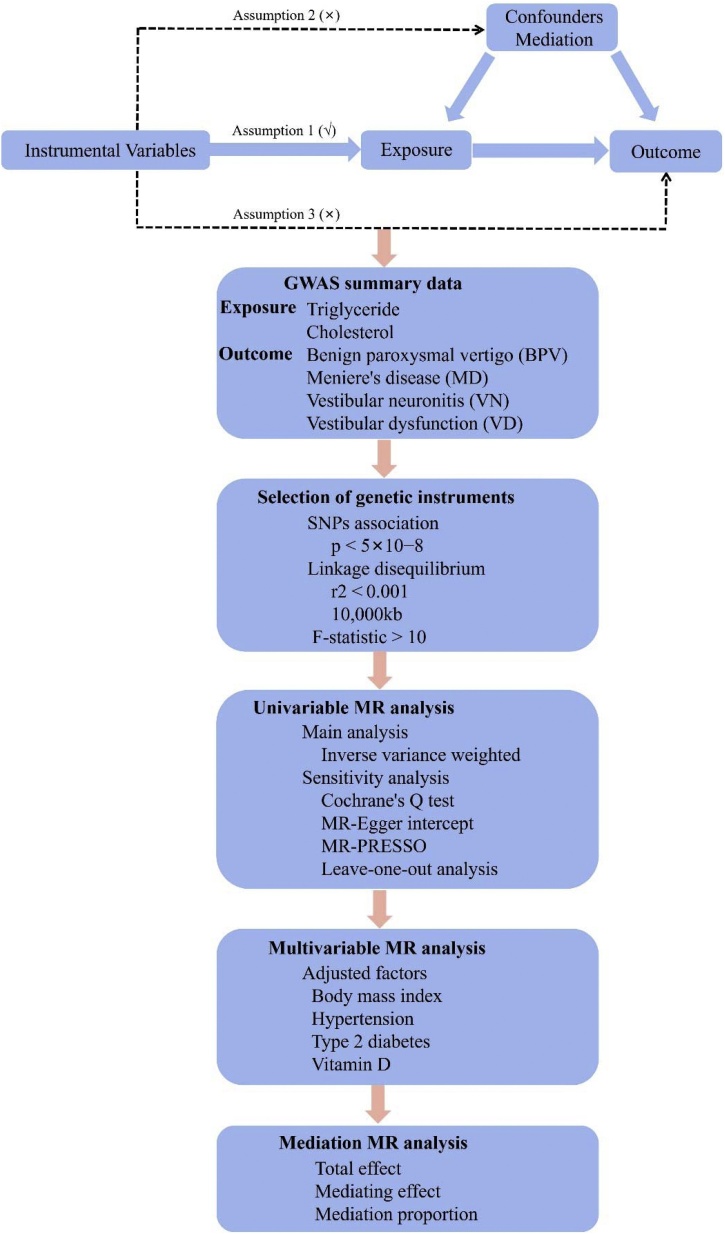 Figure 1
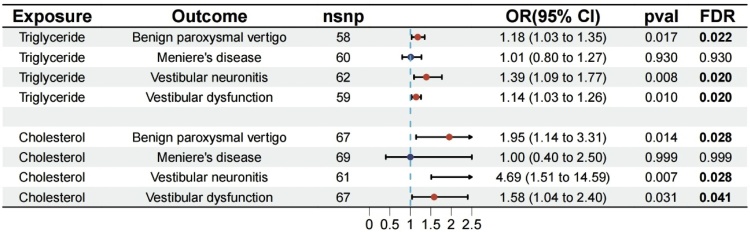 Figure 2
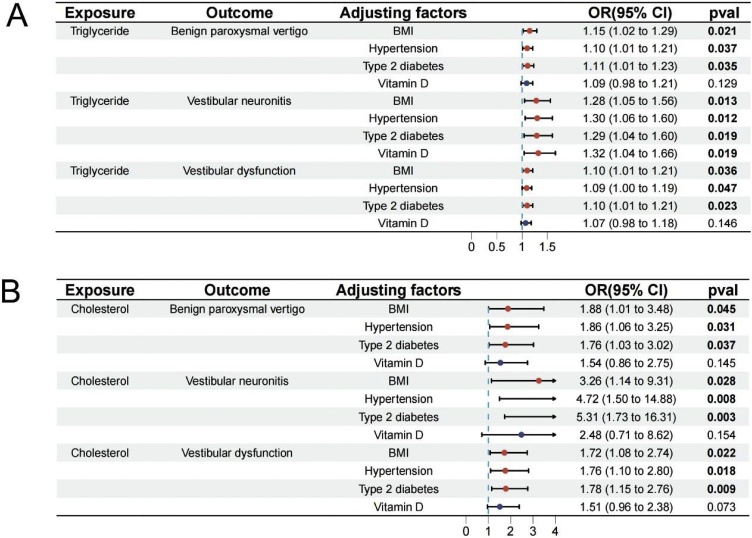 Figure 3
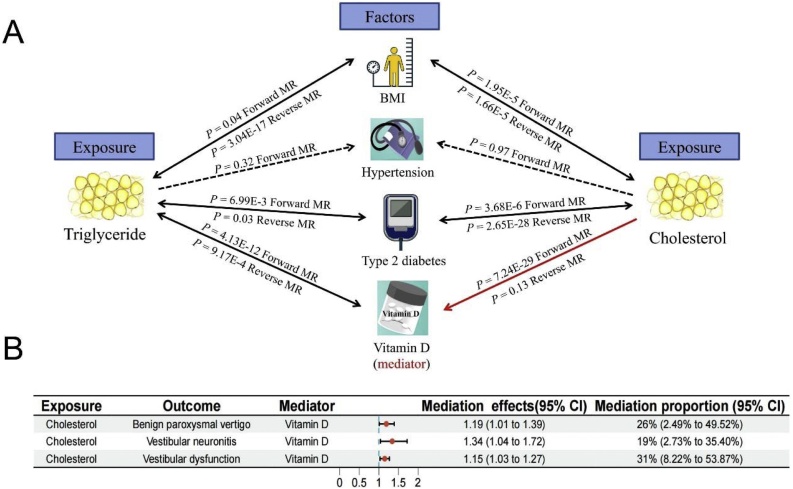 Figure 4
Peer Reviews
No public reviews on file for this paper yet. If you reviewed it on a platform where reviews are public (OpenReview, ICLR, NeurIPS, ICML), you can paste yours below so the community can read it here.
Videos
No videos yet. Explain this paper in a talk, walkthrough, or lecture? Add one.
Taxonomy
TopicsVestibular and auditory disorders · Hearing, Cochlea, Tinnitus, Genetics · Hemispheric Asymmetry in Neuroscience