The migration of placenta even after 30 gestational weeks is a risk factor for postpartum hemorrhage
Gaku Yamamoto, Kosuke Hiramatsu, Yoko Kawanishi, Mamoru Kakuda, Koji Nakamura, Tatsuya Miyake, Kazuya Mimura, Toshihiro Kimura, Masayuki Endo, Tadashi Kimura, Michiko Kodama

TL;DR
Late placental migration after 30 weeks of pregnancy increases the risk of heavy bleeding after childbirth.
Contribution
This study identifies 30 gestational weeks as a critical cutoff for predicting postpartum hemorrhage risk based on placental migration timing.
Findings
Placental migration after 30 weeks is strongly associated with increased postpartum hemorrhage risk.
A cutoff of 30 gestational weeks for placental migration predicts PPH with high accuracy.
Women with late placental migration (after 30 weeks) had significantly higher PPH rates (87.7%) compared to earlier migration (52.6%).
Abstract
•The timing of placental migration is associated with the risk of PPH•The cutoff value of placental migration to predict PPH is 30 gestational weeks. The timing of placental migration is associated with the risk of PPH The cutoff value of placental migration to predict PPH is 30 gestational weeks. Almost 10% of all pregnant women are diagnosed with placental location abnormalities (PLA), including placenta previa and low-lying placenta; however, most of PLA resolve as pregnancy process. Despite of placental migration, postpartum hemorrhage (PPH) is often experienced in those cases. The association between the timing of placental migration and the risk of PPH has remained unclear. The aim of this study is to investigate the relationship between the timing of placental migration and the PPH, and to establish a cutoff value to accurately predict the risk of PPH in cases who underwent…
Genes, proteins, chemicals, diseases, species, mutations and cell lines named across the full text — each resolved to its canonical identifier and authoritative record.
Click any figure to enlarge with its caption.
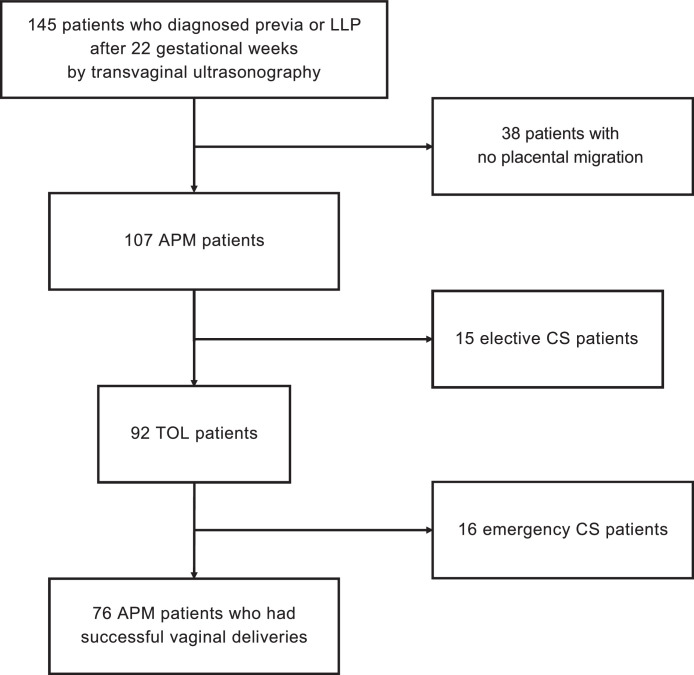 Figure 1
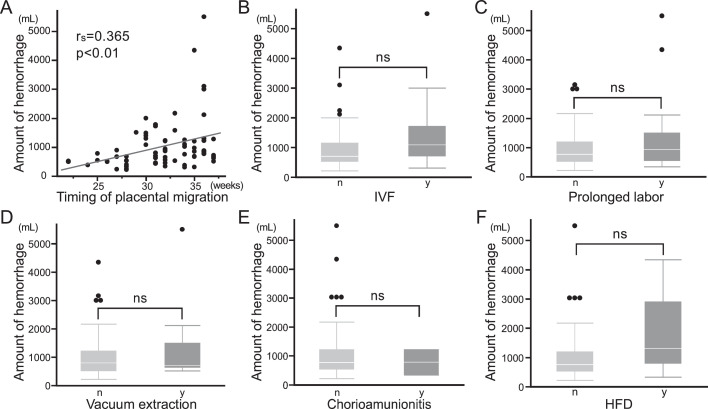 Figure 2
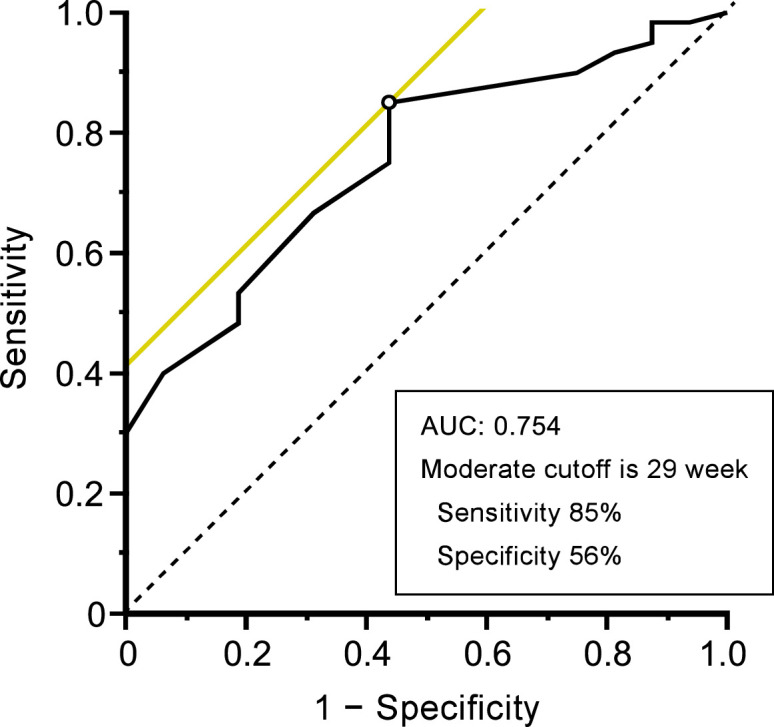 Figure 3
Peer Reviews
No public reviews on file for this paper yet. If you reviewed it on a platform where reviews are public (OpenReview, ICLR, NeurIPS, ICML), you can paste yours below so the community can read it here.
Videos
No videos yet. Explain this paper in a talk, walkthrough, or lecture? Add one.
Taxonomy
TopicsMaternal and fetal healthcare · Pregnancy and preeclampsia studies · Trauma, Hemostasis, Coagulopathy, Resuscitation