Beer Production With Umbu (Spondias tuberosa) Using Conventional and Nonconventional Yeast
Diego Pádua de Almeida, Hygor Lendell Silva de Souza, Ana Luiza Dozol, Mariana Moysés Delorme, Vanessa Naciuk Castelo‐Branco, Adriene Ribeiro Lima, Alexandre Soares dos Santos, Nadia Nara Batista, Rosane Freitas Schwan, Gustavo Molina, Cintia Lacerda Ramos

TL;DR
This study explores using Pichia kluyveri and Saccharomyces pastorianus yeasts to produce beer with umbu pulp, highlighting differences in flavor, alcohol content, and health benefits.
Contribution
The study introduces Pichia kluyveri as a novel yeast for producing low-alcohol, bioactive beers with unique flavor profiles.
Findings
P. kluyveri produced beers with higher antioxidant activity and phenolic compound retention.
Cocultivation of yeasts preserved volatile compounds and sensory characteristics.
P. kluyveri beers inhibited L. monocytogenes and S. aureus, showing antimicrobial potential.
Abstract
This study evaluated the fermentation performance and bioactive properties of beers produced by Pichia kluyveri L131 and commercial Saccharomyces pastorianus, individually and in coculture, in wort enriched with umbu pulp. Fermentation profiles were assessed over 12 days, focusing on yeast population dynamics, carbohydrate consumption, and metabolite production. Antioxidant and antimicrobial activities and volatile and bioactive compounds were evaluated in wort and fermented assays. While P. kluyveri demonstrated lower maltose metabolism and ethanol production (6.07 g/L), it produced higher fruity and floral ester concentrations, contributing to a unique sensory profile. P. kluyveri exhibited beers with increased antioxidant activity and phenolic compound retention compared to those produced with S. pastorianus. Cocultivation preserved key characteristics of both yeasts, mainly…
Genes, proteins, chemicals, diseases, species, mutations and cell lines named across the full text — each resolved to its canonical identifier and authoritative record.
Click any figure to enlarge with its caption.
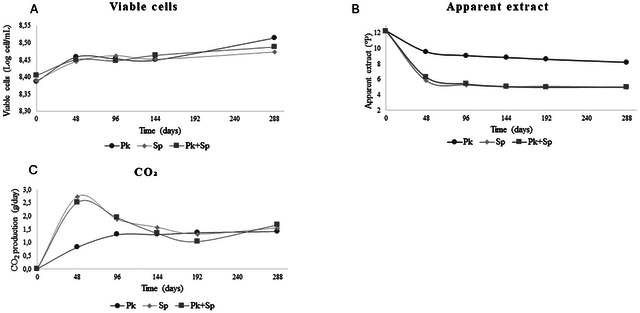 Figure 1
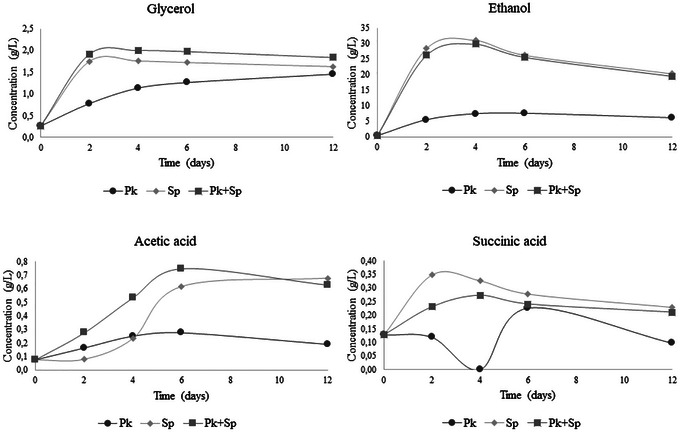 Figure 2
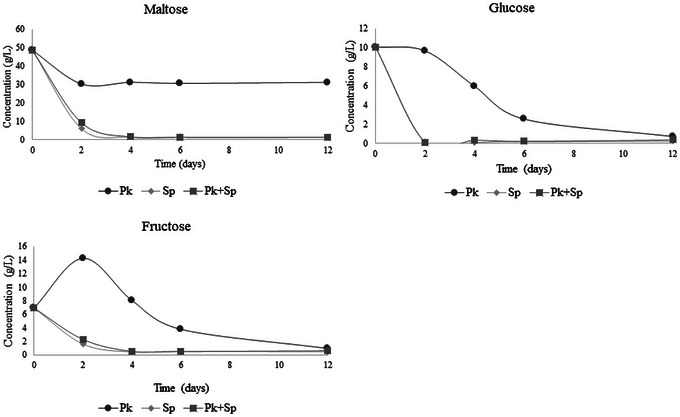 Figure 3
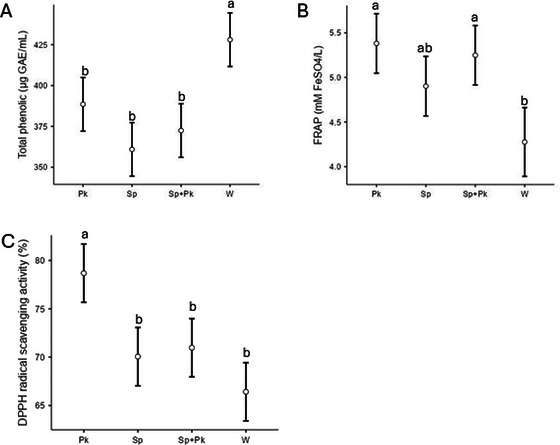 Figure 4
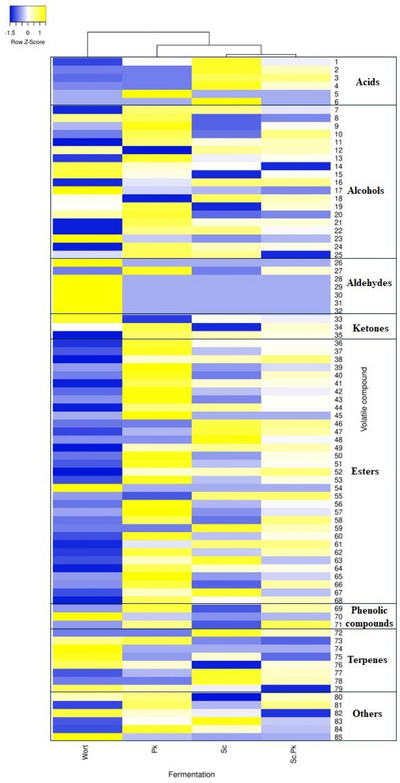 Figure 5
Peer Reviews
No public reviews on file for this paper yet. If you reviewed it on a platform where reviews are public (OpenReview, ICLR, NeurIPS, ICML), you can paste yours below so the community can read it here.
Videos
No videos yet. Explain this paper in a talk, walkthrough, or lecture? Add one.
Taxonomy
TopicsFermentation and Sensory Analysis · Hops Chemistry and Applications · Probiotics and Fermented Foods