Early Detection of Monopolar Radiofrequency Tip Rupture Using Polarized Dermoscopy: A Preventive Approach Against Treatment‐Related Burns
Shiou‐Han Wang, Patricia Yu‐Chun Peng, Hsien‐Li Peter Peng

TL;DR
This study shows that using polarized dermoscopy and preventive steps can detect device ruptures early and prevent burns during a skin treatment.
Contribution
Introduces polarized dermoscopy as a novel method for early detection of monopolar radiofrequency tip ruptures.
Findings
Polarized dermoscopy detected 5 ruptures with 0% burn incidence, compared to 100% with naked-eye observation.
Preventive measures reduced the number of CM rupture events significantly.
Combining detection and prevention completely prevented treatment-related burns.
Abstract
Monopolar radiofrequency (MRF) devices use a capacitive membrane (CM) tip to deliver uniform heat to tissue. A peri‐procedural CM rupture, while rare, risks causing thermoelectric burns. To evaluate whether using polarized dermoscopy and preventive measures can detect CM ruptures early and prevent burns in MRF treatments. We retrospectively reviewed all patients who underwent monopolar radiofrequency (MRF) treatment at a single dermatologic clinic between 2012 and 2024 and experienced a peri‐procedural capacitive membrane (CM) rupture event. Non‐contact polarized‐dermoscopy‐aided CM rupture detection and relevant preventive measures (cryogen checking, shaving, and patient education) were introduced since 2017. Clinical photographs were assessed by two board‐certified dermatologists to verify thermoelectric burns. Among 13 cases of capacitive membrane (CM) rupture identified between…
Genes, proteins, chemicals, diseases, species, mutations and cell lines named across the full text — each resolved to its canonical identifier and authoritative record.
Click any figure to enlarge with its caption.
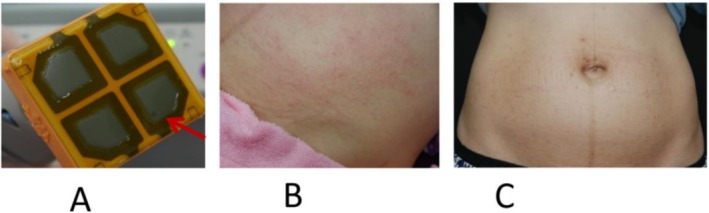 Figure 1
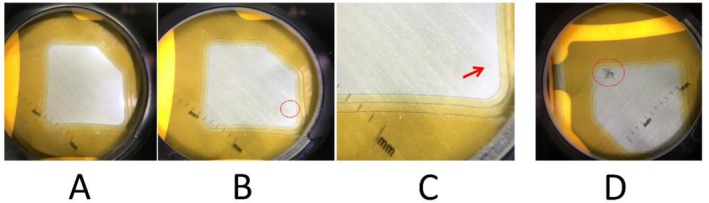 Figure 2
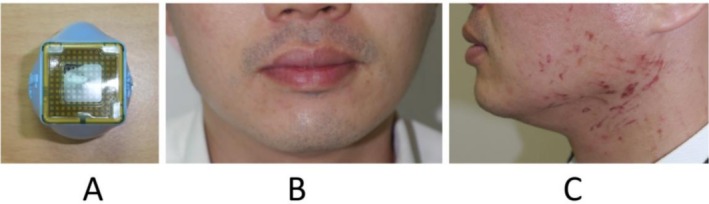 Figure 3
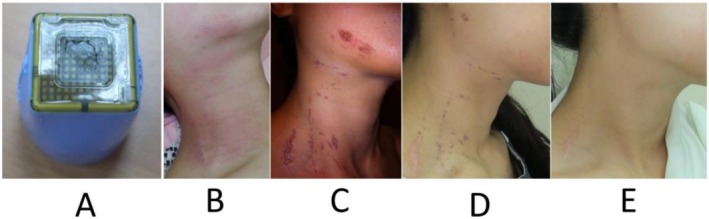 Figure 4
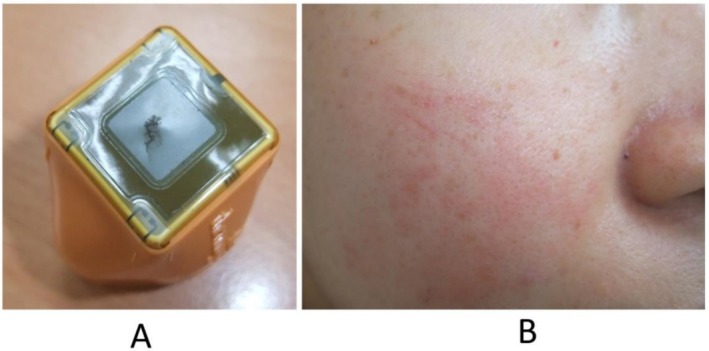 Figure 5
Peer Reviews
No public reviews on file for this paper yet. If you reviewed it on a platform where reviews are public (OpenReview, ICLR, NeurIPS, ICML), you can paste yours below so the community can read it here.
Videos
No videos yet. Explain this paper in a talk, walkthrough, or lecture? Add one.
Taxonomy
TopicsDermatologic Treatments and Research · Burn Injury Management and Outcomes · Wound Healing and Treatments