Comparison of meglumine antimoniate versus miltefosine in the treatment of new world cutaneous leishmaniasis: a systematic review and meta-analysis
Ana Carolina Putini Vieira, Fernanda Cronemberger Lins, Arianne Costa Baquião

TL;DR
This study compares two treatments for cutaneous leishmaniasis, finding that miltefosine has better early results and fewer systemic side effects than meglumine antimoniate.
Contribution
The study provides a systematic review and meta-analysis comparing miltefosine and meglumine antimoniate for New World cutaneous leishmaniasis.
Findings
Miltefosine showed significantly higher cure rates at two months compared to meglumine antimoniate.
Miltefosine had more gastrointestinal side effects, while meglumine antimoniate caused more hepatic enzyme elevations and arthralgia.
The certainty of evidence ranged from very low to high, with limitations due to heterogeneity and small sample sizes.
Abstract
Cutaneous Leishmaniasis (CL) affects up to 1.2 million people annually, mainly in resource-limited regions. Meglumine antimoniate, the standard treatment, is limited by systemic toxicity, injectable administration, and increasing resistance. Miltefosine, an oral alternative, offers practical advantages, although comparative efficacy and safety data remain inconsistent. To compare the efficacy and safety of miltefosine versus meglumine antimoniate for New World CL. The authors systematically searched PubMed, Embase, Scopus, and the Cochrane Library for randomized controlled trials directly comparing miltefosine and meglumine antimoniate. Risk Ratios (RRs) with 95% Confidence Intervals (95% CIs) were calculated using random-effects models. Heterogeneity was assessed with the I² statistic. Risk of bias was evaluated using the Cochrane RoB-2 tool. Certainty of evidence was assessed using…
Genes, proteins, chemicals, diseases, species, mutations and cell lines named across the full text — each resolved to its canonical identifier and authoritative record.
Click any figure to enlarge with its caption.
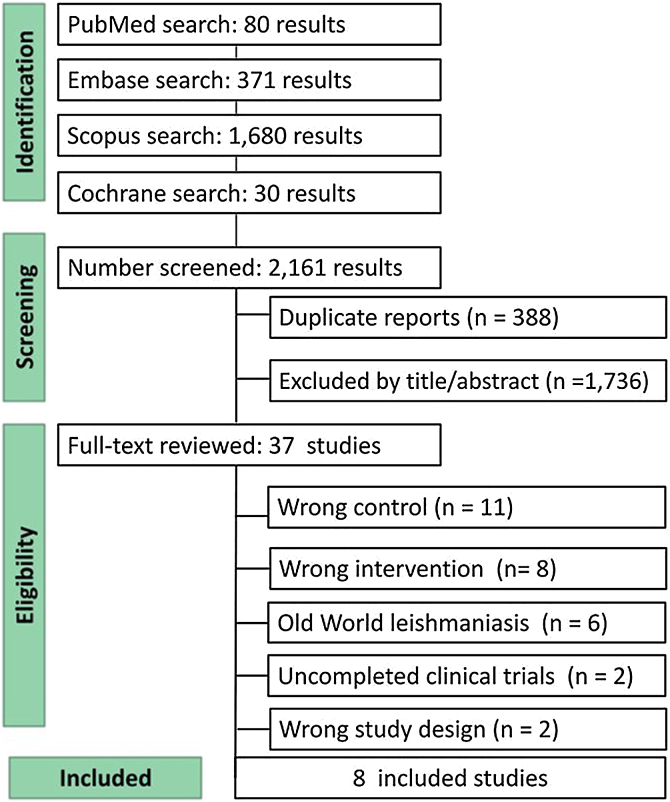 Figure 1
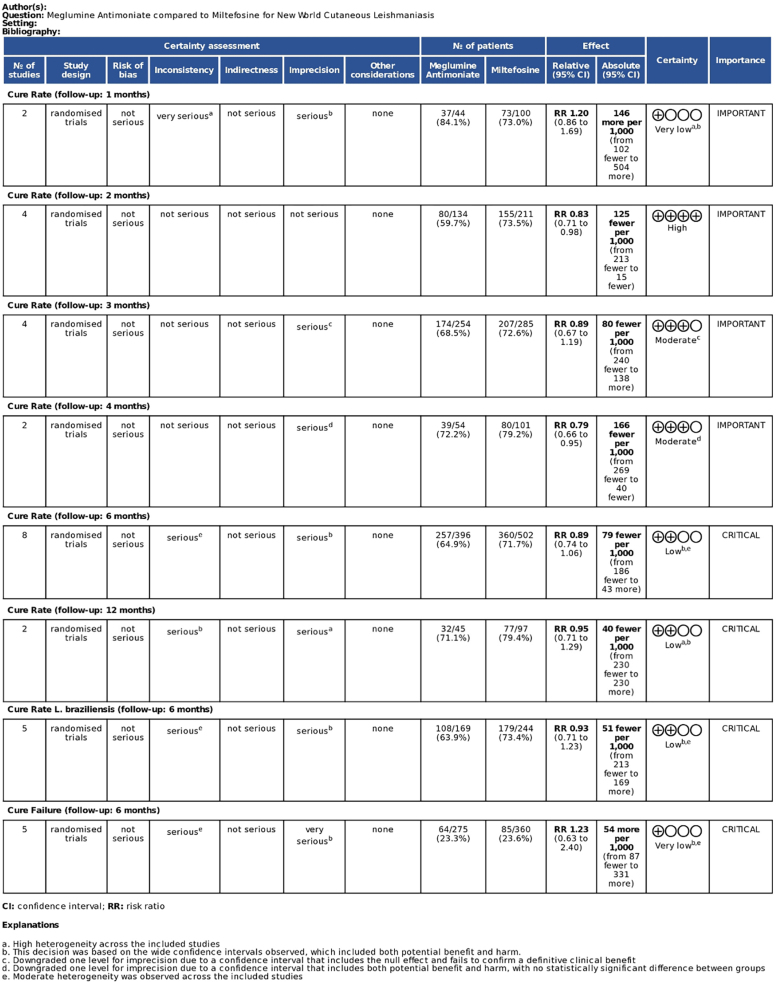 Figure 2
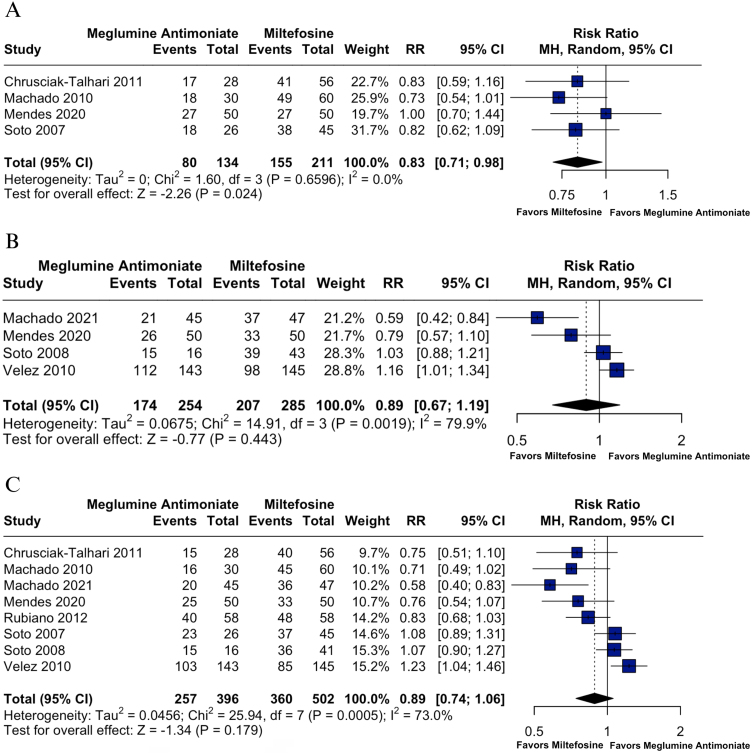 Figure 3
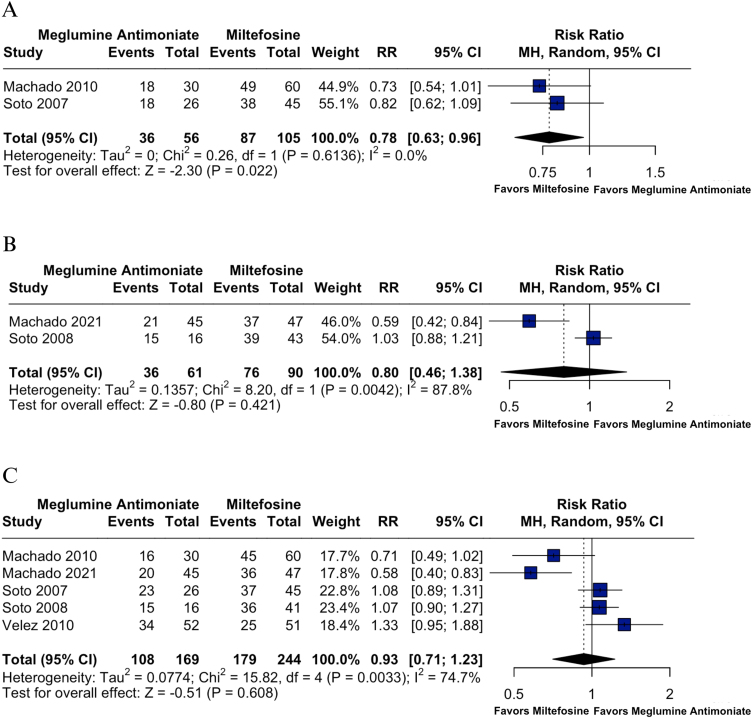 Figure 4
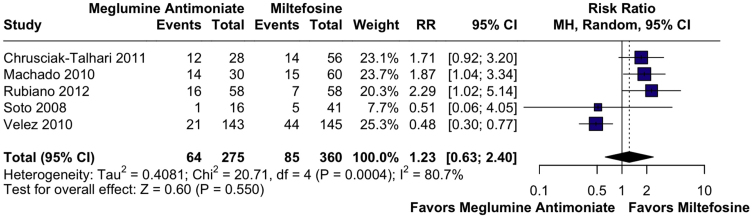 Figure 5
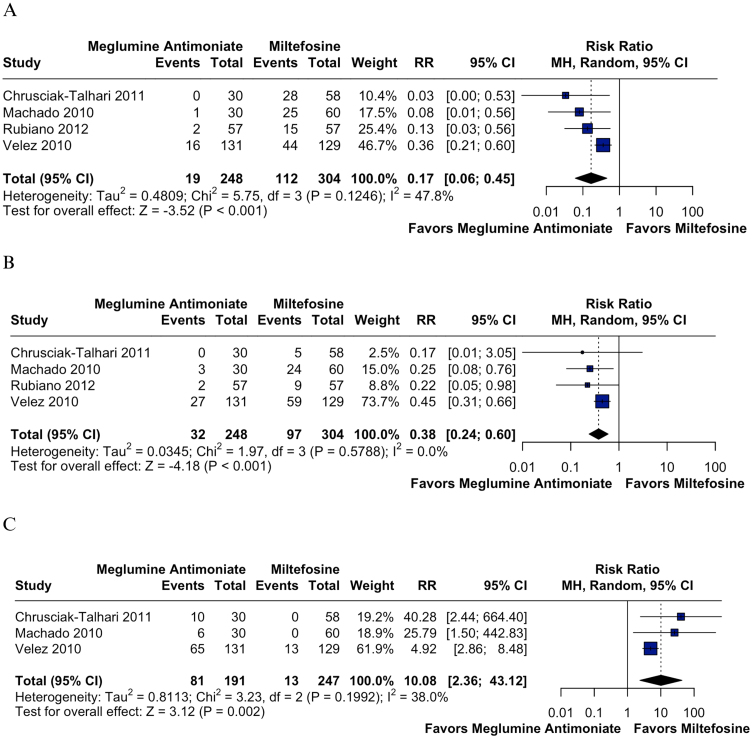 Figure 6
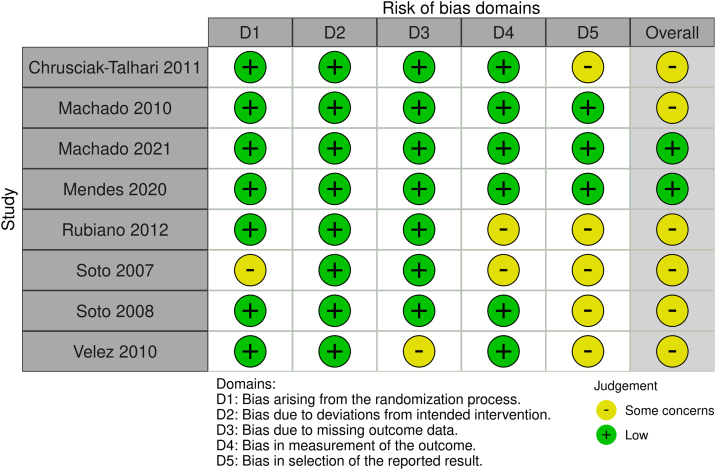 Figure 7
Peer Reviews
No public reviews on file for this paper yet. If you reviewed it on a platform where reviews are public (OpenReview, ICLR, NeurIPS, ICML), you can paste yours below so the community can read it here.
Videos
No videos yet. Explain this paper in a talk, walkthrough, or lecture? Add one.
Taxonomy
TopicsResearch on Leishmaniasis Studies · Multiple Sclerosis Research Studies · Eosinophilic Disorders and Syndromes