External Validation of a Clinical Prediction Tool for the Use of Manual Therapy in Patients With Temporomandibular Disorders
G. Asquini, V. Devecchi, G. Borromeo, P. Tessera, A. Russillo, A. Michelotti, R. Bucci, D. Falla

TL;DR
This study validates a model to predict which patients with jaw disorders will benefit from manual therapy, showing that pain patterns and expectations are key factors.
Contribution
The study externally validates a clinical prediction model for manual therapy outcomes in TMDs and identifies a novel interaction between treatment expectations and central sensitization.
Findings
The original model showed strong discrimination (AUC = 0.95) and fit (R² = 0.75) in predicting pain reduction after manual therapy.
A significant interaction was found between treatment expectations and central sensitization inventory (CSI), with high CSI negatively affecting outcomes in those with positive expectations.
New models predicting one-month outcomes showed excellent discrimination (AUC = 0.96) using similar baseline predictors.
Abstract
Manual therapy (MT) is frequently used to manage temporomandibular disorders (TMDs), yet patient responses vary significantly. Predictive models may help clinicians tailor treatments to individual patients. The primary aim of this study was to externally validate a previously developed prediction model for identifying patients with TMDs who are more likely to benefit from MT. Additionally, new prognostic models to predict outcomes at a one‐month follow‐up were developed. A cohort of 124 adults with a diagnosis of a TMD received a four‐week MT program (one session per week) applied to craniomandibular structures. Predictors collected at baseline included clinical and psychosocial variables: pain during mouth opening, pain localisation, treatment expectations, and the central sensitisation inventory (CSI). The primary outcome was a ≥ 30% pain reduction post‐treatment. Model performance…
Genes, proteins, chemicals, diseases, species, mutations and cell lines named across the full text — each resolved to its canonical identifier and authoritative record.
Click any figure to enlarge with its caption.
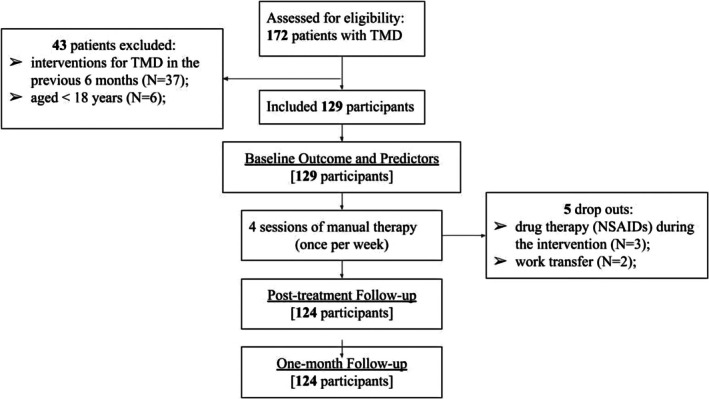 Figure 1
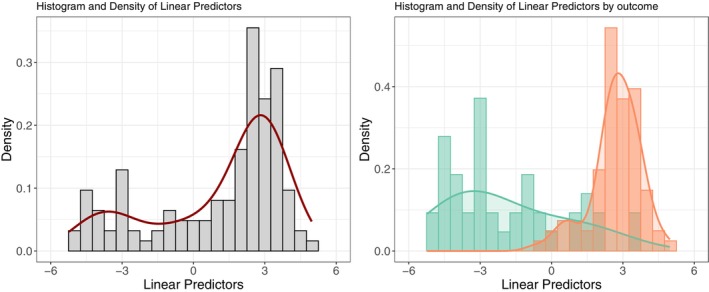 Figure 2
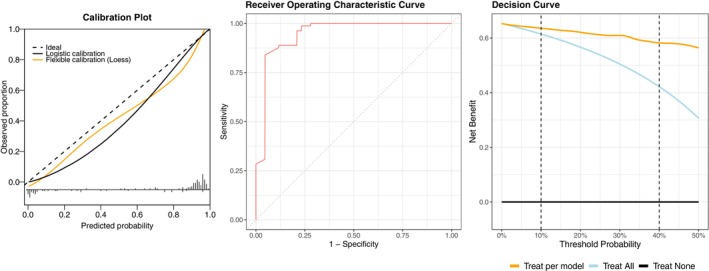 Figure 3
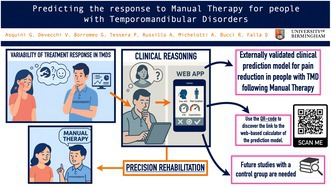 Figure 4
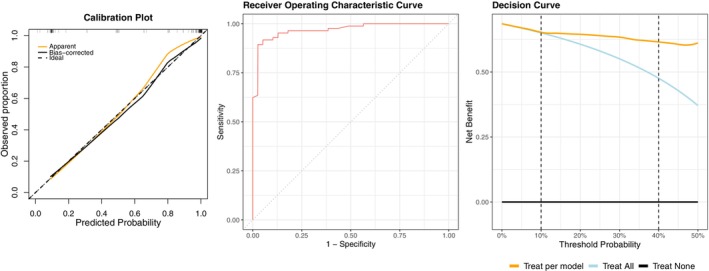 Figure 5
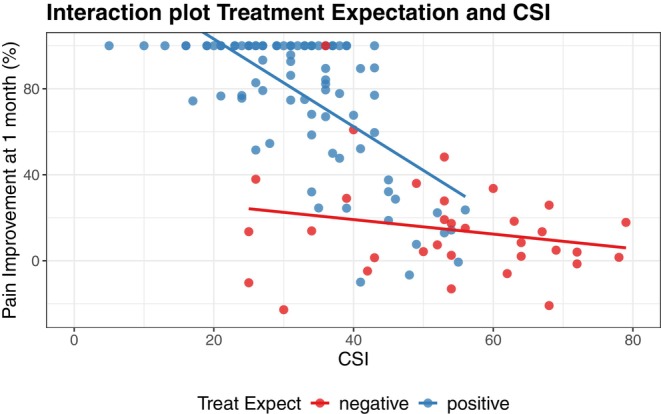 Figure 6
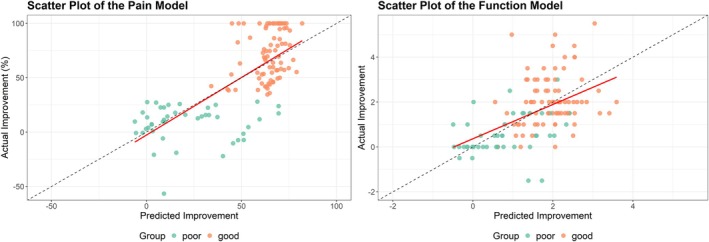 Figure 7
Peer Reviews
No public reviews on file for this paper yet. If you reviewed it on a platform where reviews are public (OpenReview, ICLR, NeurIPS, ICML), you can paste yours below so the community can read it here.
Videos
No videos yet. Explain this paper in a talk, walkthrough, or lecture? Add one.
Taxonomy
TopicsTemporomandibular Joint Disorders · Orthodontics and Dentofacial Orthopedics · Myofascial pain diagnosis and treatment